From ICE to Big Tech, the Resistance Stories We Can’t Afford to Forget
“It’s going to be movement momentum, or nothing, so we can’t afford to let up,” says Kelly Hayes.

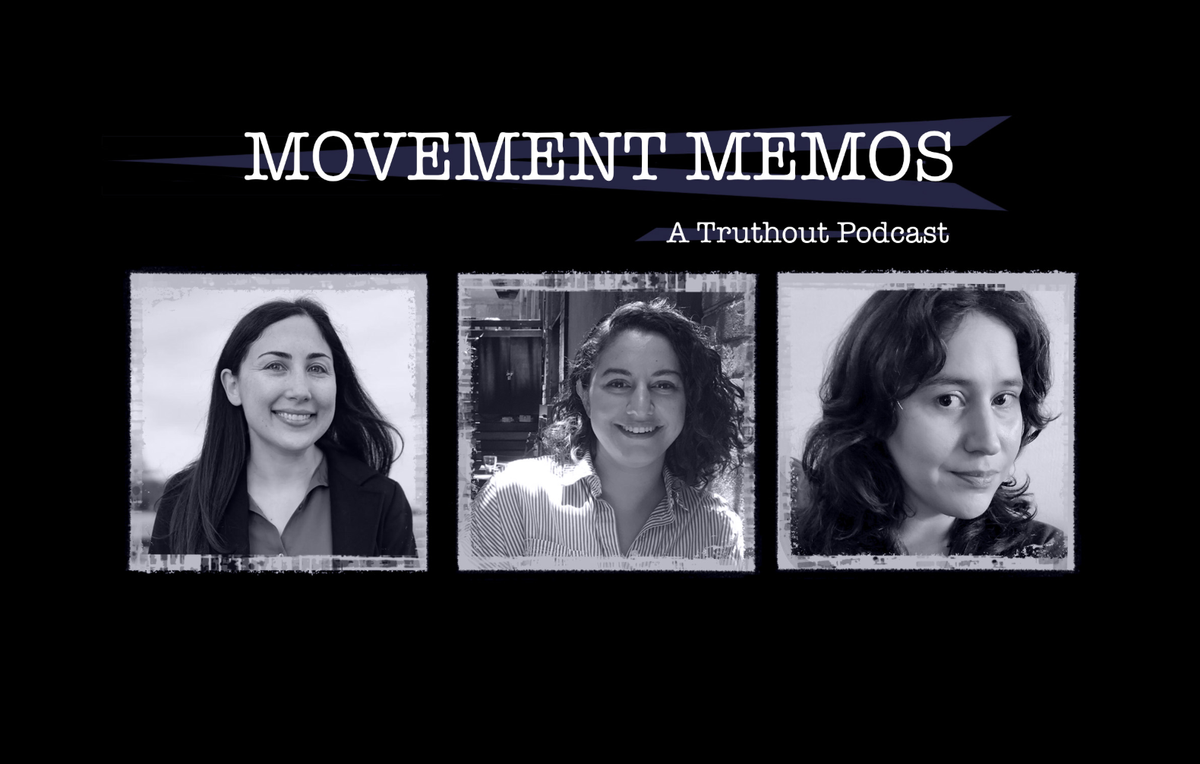
From health care workers resisting ICE to incarcerated trans people fighting for their rights, communities organizing against data centers, and the growing threat AI poses to independent journalism, 2026 was a year of extraordinary struggle and resistance. In the final episode of "Movement Memos" this year, I am joined by Truthout’s Negin Owliaei and Maya Schenwar to revisit some of the year’s most important reporting, reflect on lessons from grassroots struggles, and discuss what we need to remember as we prepare for the fights ahead.
Music: Son Monarcas, Sarah the Illstrumentalist, Justnormal, Dylan Sitts, Jobii, Yomoti, and Timothy Infinite
Kelly Hayes: Welcome to “Movement Memos,” a Truthout podcast about organizing, solidarity, and the work of making change. I’m your host, writer and organizer Kelly Hayes.
Today, we’re going to do something a little bit different. This is our final episode of 2026, and it’s been one hell of a year. So much has happened, and so much gets washed out of our minds so quickly, in the churn of the 24-hour news cycle. So, I wanted to take an episode to revisit some of my favorite reporting from 2026. Today, we’re going to hear from the authors of a handful of articles that tell stories that are really worth remembering, as we move into a new year — and we’ll consider what lessons these stories can teach us about the moment we’re living in and about where we can go from here. From trans rights to ICE resistance and how AI is swallowing the media landscape, these are struggles we can’t afford to let up on, and that means remembering where we’ve been, and paying attention to where we’re going.
To dig into this discussion, I’m joined today by my friends and colleagues Negin Owliaei and Maya Schenwar. Negin Owliaei is an award-winning journalist and the editor-in-chief of Truthout. Maya Schenwar is an author, editor, and the director of the Truthout Center for Grassroots Journalism. Maya and Negin also co-authored one of the pieces we’ll be discussing today, all of which were published in Truthout.
If you appreciate this podcast, and you would like to support “Movement Memos,” you can subscribe to Truthout’s newsletter or make a donation at truthout.org. You can also support the show by subscribing to “Movement Memos” on Apple or Spotify, or wherever you get your podcasts, or by leaving a positive review on those platforms. Sharing episodes on social media is also a huge help.
Truthout is an independent news organization, publishing stories that the craven corporate press won’t touch. We are a union shop with the best family and sick leave policies in the industry, and we could not do this work without the support of readers and listeners like you. So thank you for believing in us and for all that you do. And with that, I hope you enjoy the show.
[musical interlude]
Kelly Hayes: Maya and Negin, welcome to “Movement Memos.”
Maya Schenwar: Thanks so much for having us, Kelly.
Negin Owliaei: Yes, thanks so much. I’m so happy to be here today.
Kelly Hayes: I really appreciate the two of you joining me today. Maya, you’ve been with us before on the show, and Negin, I know some of our listeners will be familiar with your work, but for the unacquainted, what would you two like the audience to know about who you are and what you do?
Maya Schenwar: I’m Maya. I’m the director of Truthout’s Center for Grassroots Journalism, and I’m also Truthout’s board president, and I write books about prisons, incarceration, and all kinds of other cheerful topics.
Negin Owliaei: Hi, I’m Negin. I’m Truthout’s editor-in-chief. I’m a journalist covering mostly U.S. foreign policy and militarism. So again, just as cheerful as Maya.
Kelly Hayes: Well, we all know I am renowned for my cheerfulness and pep, so we’re going to make quite a crew. But in all seriousness, Maya was the editor-in-chief of Truthout for 13 years, and her leadership really shaped this publication. And Negin, who is our current editor-in-chief, is someone whose thinking I deeply trust. So, I am really happy to have you both here, as colleagues and as friends, as we round out the year with this discussion.
We’re going to revisit some of my favorite articles of the year, hear from the people who wrote them about what they hope we’ll carry into 2027, and talk about how the lessons of those stories can inform the struggles ahead.
So, with that in mind, I want to begin by playing a segment I recorded with Marianne Dhenin, who wrote multiple pieces that blew me away this year, including an article called Nurses Forge Alliances to Protect Patients From Trump’s Immigration Crackdown.
[musical interlude]
Marianne Dhenin: I’ve been super inspired reporting on health care worker organizing last year, on health care workers organizing in solidarity with Palestine. And moving into this year, reporting on the ICE attacks on Minneapolis, health care workers organizing in hospitals there, and then a broader movement that grew and really gained momentum after Alex Pretti was murdered. He was a nurse and the National Nurses Union came out calling for ICE to be abolished after he was killed by federal agents. And so in each of these stories, I’ve been really honored to work with health care workers who are bravely organizing their workplaces and standing by their commitments to patients, even when they’re being put in really difficult positions between demands of administration, witnessing violence in their workplaces. And something that I would love for folks to take away from this is the knowledge that for every two or three sources that I interviewed, there is a whole crowd of nurses, support staff, doctors who are involved in these campaigns and these organizing spaces behind the couple that I talk to that make it into these pieces.
And it takes every single one of them to be able to organize their workplaces and achieve the wins that I covered here to improve hospital policy, to protect patients, to ensure that staff in hospitals and workplaces are safe from the incursions of federal agents that we’ve seen in health care settings, and to demand bigger changes from our government so that these incursions don’t keep happening.
Kelly Hayes: Can you talk a bit about what some of the resistance efforts have looked like and what people are risking by undertaking those efforts?
Marianne Dhenin: Yeah, the risks are huge. Some of the folks that I’ve interviewed have faced retaliation for making the choice to speak about the organizing that’s going on in the workplace, about the abuses that are going on in their workplaces. And those people keep speaking out and I think that’s really important. So the stakes are really high and the organizing that gets done really matters. When I reported on the immigration raids, the crackdowns in Minneapolis, at the beginning of the year, hospital workers in Minneapolis hospitals developed a sort of three-step plan to protect patients. And the three steps were “Know Your Rights” trainings, which helped health care workers understand when they could push back, when they witnessed abuses. They also developed response networks, ways to report abuses that they witnessed in the hospital. And they also developed sort of outward facing communication networks so that when those abuses occurred, they were able to mobilize and go to the press or demand action from their elected officials, as well as strengthening hospital policy, that was something that they were working on when I talked to them and they had some wins after my writing was published.
And once Alex Pretti was killed and some of the larger labor unions got on board with this call to abolish ICE, I think those demands went national in a way that we hadn’t seen yet. And so it became even more, some wider reaching and public facing. And some of the wins have been, I think, really meaningful. Even something that seems really bureaucratic, like getting a new hospital policy in place, can make a big difference to a patient who’s been brought in from an ICE jail and is being shackled or the federal agents want to shackle them to the bed. And health care workers that know that that’s a violation of the patient’s rights, know to press back, and have a hospital policy behind them that allows them to do that, makes a world of difference in that patient’s life.
I think it’s important to keep in mind what a vulnerable space health care is, both for the patients who are coming into these spaces, and also for the health care workers who often are putting their own health, their own bodies on the line to take care of patients, even in their day-to-day work, especially frontline rank-and-file nurses and support staff, even when there aren’t these additional pressures and attacks coming from immigration agents that we’ve seen this year. And I think that supporting health care workers in their work to organize their workplaces funding health care, we’ve seen in the midterm elections, opportunities to fund health care on our ballots. I think supporting those initiatives is important, especially after the Trump administration has rolled back so much funding for health care and for health care workers.
And other things I’d like people to keep in mind, selfishly, I’m continuing to report on this and particularly, on ICE abuses in medical centers and medical crises in ICE jails. And so healthcare workers who might be listening or folks who have information that they’re willing to share about this intersection between these immigration crackdowns and our healthcare system, I’d be really interested in hearing from. So that we can continue to shed light on these abuses and on how healthcare workers and labor organizers and others in these spaces are pushing back and demanding just and fair treatment for all patients in our health care system.
[musical interlude]
Kelly Hayes: I have so much gratitude for those health care workers, and to Marianne for their reporting. And as we’re talking about this, I really do want to encourage any health care workers who are listening and feeling inspired, to check out Interrupting Criminalization’s Beyond Do No Harm Network, because I know this is all very high-stakes, and can feel overwhelming, but there are people you can talk to who are doing good work around this issue who want to support each other.
Negin, what’s coming up for you, as we revisit this story?
Negin Owliaei: So as I’m hearing Marianne talking, I’m just reminded of the moment when Alex Pretti was killed and we started to revisit what health care workers were doing right now in terms of pushing back against ICE. So Marianne touched on this, but this story first came to us thanks to the connections they made reporting on repression of health care workers who spoke out against the genocide in Palestine. Marianne did this incredibly powerful piece for us last year that documented the kinds of actions these workers were taking to be in solidarity with Palestinian health care workers who were and are continuing to be killed by Israel. I would be remiss if I didn’t point out that literally today, the same day that we’re recording this, there was an Israeli strike on a hospital. So it was some of these sources that Marianne was talking to back then that were actually able to come back to them and uplift the work that was being done in these health care settings now to protect immigrants.
So one thing that I really love about Marianne’s work that I think comes through in both of these pieces is the kinds of possibilities for solidarity that they highlight. So for example, thinking about how you can grow a movement that has been standing up against genocide into one that is protecting immigrants who are literally your colleagues and your patients. This story also highlights how this is a labor issue as well. So there’s the obvious connection there with unions coming out, calling to abolish ICE after the killing of Pretti, who was a union member himself. But also a hospital that’s poorly staffed leaves workers less equipped to do the kind of organizing that’s happening here and the political education that needs to happen to do the community defense work that the people Marianne was talking to were doing. So as they document, it was strong unions that were able to put these rapid response networks together so quickly at a moment in time that I feel like really could have felt so disempowering … It was stories like this one that reminded me of what people can do when they’re organized and ready.
Kelly Hayes: Absolutely. I think a lot of us took hope this year from everyday people who came together in their neighborhoods and workplaces and figured out how to protect and defend each other, and how to build power where they were. My friend Mariame Kaba recently emphasized something that I think is really important to remember amid all the attention we’re seeing around Congress right now, and that’s that the political momentum we’re experiencing came from everyday people who dug in to defend each other, to create as much safety and justice as they could under dangerous conditions, and who organized to make the midterm victories possible.
And it’s going to be the same in 2027. There’s a greater range of possibilities, in some ways, but any meaningful momentum toward change we see is going to come from us. It’s going to come from the grassroots, from our neighborhoods and our workplaces. It’s going to be movement momentum, or nothing, so we can’t afford to let up. And I think that’s a really important lesson for us to carry into 2027.
Next, we are going to revisit Gabriel Arkles’s piece, “Trans People Behind Bars Share How They Are Navigating the Dangers of Visibility.” Here’s what Gabriel had to say about that piece when we spoke recently.
[musical interlude]
Gabriel Arkles: So it’s never not been scary to be trans in the United States, at least in my memory, especially if you’re not white, wealthy, U.S. citizen, non-disabled and free. But the attacks have been intensifying and accelerating with profound impacts on trans people all around the country and the world. And for Trans Day of Visibility, I got curious about how trans people in prison are navigating these questions of visibility in light of everything that’s going on politically. And so I spoke with some trans people in prison and with some people who work closely with them to find out what’s changed. There’s some data that for trans people on the outside, a lot of us have taken steps to try to get more visible. A lot of us have taken steps to try to get less visible, and I wanted to find out what that looked like inside prisons.
So like people on the outside, trans people inside have moved in different ways. Some people like Rain Violet said, “I am who I am. I haven’t changed anything. I’m still here. I’m still me. I’m still advocating.” Then there were some people who made somewhat different choices to protect their agency. So I spoke with Ari who said that they chose to stop taking hormones on their own terms. They didn’t want to wait until their hormones were taken away from them. They chose to stop. And they’ve also taken up martial arts training as a way to try to deter attacks. And then there are others who have actually gotten, if anything, louder. So I think Jacinda Allenbaugh was one of the people who said, “I wear more makeup. I speak up more.”
She makes trans and LGBTQ flags and displays them. And a number of the folks on the outside talked about the broader context. So Dee Farmer, who is an extraordinary advocate at Fight for Justice Project and who was incarcerated herself for many years, talked about how the climate of everything that is going on right now means that even where there isn’t necessarily a direct policy change in prisons, there’s more violence. It’s clear from the highest levels of government that violence against trans people is being encouraged. So prison staff hear those messages and it makes trans people in prison more vulnerable to things like that. And Nell Gaither from Trans Pride Initiative really challenged the idea of visibility of even being a very useful way to explain the different ways that people make choices to try to navigate the systems they’re in and protect themselves and each other and fight for change.
And even with everything that’s going on and even with the additional challenges and the additional violence, people are still finding ways to create community. People are still finding ways to advocate for themselves and make change inside and outside of prisons.
Kelly Hayes: So the political terrain is changing right now, and our attention is being pulled in a lot of directions. Amid all of the catharsis and relief people may be experiencing, what are you hoping people will really remember and hold onto about this story, as we move into a new year?
Gabriel Arkles: So I think with all that we’re up against, we need to remember that we’re strongest together, and that means we have to be connected in our communities across prison walls. We need to be connected in our communities in multiracial, mixed gender, intergenerational formations. And that means tangibly that those of us who are on the outside need to be connected with people on the inside, both because we need their brilliance, we need their leadership, we need their insights to learn how to deal with the level of repression we’re facing on the outside. Pooja Gehi, who I work with at the Alyssa Rodriguez Center for Gender Justice, I think said this really well. If we want to learn how to deal with intense censorship, retaliation, surveillance, then who can we learn better from than gender justice leaders and trans advocates who have been dealing with that in prisons?
And then also people on the inside need us on the outside to show solidarity. We’ve seen so many people, so many trans people around the country facing loss of access to health care, facing forced haircuts, facing heightened violence, and facing just increased incarceration and placement in solitary confinement. And people on the inside said across the board that there’s a lot they can do, but they also need us on the outside to be in touch with them and to be calling into these facilities, joining campaigns that are organized by people on the inside. And for folks who are looking for ways to plug in, there are so many great ones, including the organizations that I just mentioned. There’s Trans Pride Initiative in Texas. There’s the Alyssa Rodriguez Center for Gender Justice on the East Coast. There’s Fight for Justice Project, which does a lot of work at the federal and national level. There’s F2L [Fight to Live] in New York, but just find some inside/outside organization that works with trans people, that’s led by trans people and find a way to plug in.
[musical interlude]
Kelly Hayes: There’s so much to think about here.
Maya, I know this is an issue you’re very passionate about. What do Gabriel’s reflections bring up for you?
Maya Schenwar: I am so grateful for Gabriel’s piece, including the interviews with folks inside that are expressing the fraught nature of visibility at a time when trans people are being so overtly targeted from the highest levels on down. And I think trans people in prison are in some ways experiencing one of the most extreme forms of fascism, which they were experiencing long before this administration was inaugurated. I want people to remember that in prison, the state controls every aspect of daily life in an authoritarian fashion. When you can move, when you must stay still, what you can eat, who you’re allowed to associate with, when you must take all your clothes off in front of an officer of the state, what you must do with your time, what medication you are allowed access to. And for trans people, that medication includes life-saving gender-affirming health care. So if you want to know about the daily mechanics of living under overt fascism, ask a trans incarcerated person.
I’d also underscore that thanks to the cis-heteropatriarchal oppression that is so overt during the Trump administration, but also obviously far predated Trump, a full 16% of trans people in the United States have been incarcerated at some point in their lives. But at the same time – and this is so important – at the same time as Gabriel is powerfully uplifting, trans incarcerated people are creating and organizing and leading efforts to disrupt the system and to care for each other in the midst of this horrific brutality. So trans incarcerated people are also providing some of our most powerful examples of organizing against fascism. I think all the time about one of the winners of Truthout’s essay contest for incarcerated writers last year, EM, who wrote about the experience of being trans in prison when Trump’s anti-trans executive order came down in early 2025, and she was suddenly grabbed from her cell and told that she was going to be moved to a men’s prison.
I’m just going to read you a quick quote from EM. She wrote, “While in prison, I have learned to choose my battles. I can roll my eyes at some petty issues, but others are so serious that they have to be treated as long uphill struggles for change. The battle I’m in right now is for my very existence.” So to me, EM’s essay raised a really powerful point about visibility and its limits. EM was taking her fight all the way to the top. She was the plaintiff in lawsuits. She was speaking with queer organizations on the outside working to advocate for herself and for other trans people. She was writing this essay to help educate a wide range of readers about what was happening behind bars. But then at the same time, she chose to use her initials as her byline. She used a pseudonym to forestall some retaliation, and same goes for the lawsuit. She stayed anonymous and she chose to keep her own name private. And for her, that too was an act of survival. So her activism was an act of survival in care and her choice to go with anonymity was an act of survival in care. These things are both true when it comes to visibility.
I also want to echo real quickly that it is on all of us out here to advocate for incarcerated trans people. We’re going to be entering our third year of this administration’s horrific anti-trans policies, and for trans people behind bars, the horror has become even more intensified. Gabriel provided some excellent resources for taking action, so if you have resources or time or energy or skills, anything else to give, and you’re not acting to support trans people in this political moment, please, please, please start now.
Kelly Hayes: I really appreciate those thoughts and that call to action. And I want to emphasize something here, because when we talk about incarcerated trans people, it can be easy to speak as though they’re simply waiting for the rest of us to defend them. But as Gabriel and Maya have reminded us, people are organizing, fighting for one another, and finding ways to push back under incredibly brutal conditions.
And even now, under this horrendous regime, there are wins happening. In October, the Supreme Court left in place an order blocking the Trump administration’s restrictions on gender-affirming care in federal prisons. The lawsuit, brought by incarcerated trans people, is still moving through the courts, so this isn’t a final victory. But it’s important. And like a lot of movement victories right now, it’s a win that gives people the opportunity to keep fighting. When our enemies try to foreclose something, we have to create openings, and that’s what the trans folks waging that lawsuit have done.
And I think this question of how our communities are showing up for trans people is really relevant right now, inside and outside of prison walls. Are people listening to folks who are organizing in defense of their lives? Are people amplifying demands? Are they refusing to capitulate? Because some Democratic candidates set a really dangerous example during the midterms by selling out trans folks, and we have to push back against that. We have to send the message that when our leaders sell out trans people, they are selling everyone out. Because what begins in the margins can be brought to anyone’s door.
I think we need to think deeply right now about what it means to refuse to abandon anyone, or leave anyone behind. We have to take stock of who is being disregarded in popular narratives or treated as expendable. And as anti-fascists, our efforts have to begin there. Our politics can’t just address the rhetoric of people who are clearly our enemies. We also have to address the gaps our would-be allies create with their political shortcomings and compromises, and push for something transformative. Otherwise, we are going to lose ground, even when it looks like we’re winning.
And that brings me to another important thread running through the organizing we’ve seen this year: people refusing to let powerful institutions dictate the terms of a struggle. This is a theme we’ve seen play out in the growing movement against data centers.
Derek Seidman wrote a piece for Truthout called, “Want to Resist a Data Center? These Organizers Share How They Did It.” Derek has written a number of great articles for Truthout this year, but I really wanted to single this one out, because it’s such a stellar example of what movement journalism should be: It amplifies the voices of people doing important work, and helps us think about how to win.
[musical interlude]
Derek Seidman: Yeah, so I first had the idea to do this Truthout Round Table with data center organizers because it was just clear that these types of struggles were popping up everywhere all over the country. And there were a lot of people involved in them that might’ve had prior organizing experience, but there were also a lot of people that were just getting politicized by this data center issue. And so I mean, with so many campaigns and struggles arising locally around these, it seemed like it would be helpful to gather from the experiences of people that have gone through trying to start these local campaigns. So that was really the goal of the Round Table, to pull together different campaigns into a discussion. And I mean, they were really like a cross section, you had ones that were happening in cities, you had ones that were happening in rural areas. There was a big geographical cross section.
And so I wanted to pull out some of the lessons that people had to share with others, just based on their experiences. And I think that there was really just some helpful advice that the participants had. For example, they talked a lot about really needing to find ways to get the word out, using social media to get the word out about data centers, door knocking, flyering. I remember people saying to me in the interview, you just need to talk to anybody. There were people that were going out to art festivals and music festivals and handing out flyers. And I mean, a big part of this is because they also really stressed and emphasized how quickly these data center projects get moving and get going and just how on top of everything you really need to be because it all happens very quickly.
And one thing that I also found really interesting is that they mentioned that you really need to try to find and build up as a campaign your own expertise. And there’s a lot of different ways to do that, but the way a lot of these processes and hearings happen, you go and you make arguments and the other side is going to posture like they’re the experts and the elected officials and regulators, like they tend to defer to people in power and take them more seriously. So you have to come up with your own arguments and your own studies and testimonies from the community, your own expertise to be able to counter that.
And so, one thing that I also really loved that was echoed pretty widely was the sort of need to really make people in power feel uncomfortable. You got to get big numbers out to public meetings, to hearings and make noise. It’s not necessarily using the sort of typical decorum. And actually, there’s a big data center project right by where I live in Buffalo. It’s about 30, 40 miles away. Though right now we have a temporary, a yearlong pause on data center construction, but there’s a proposed data center about 30, 40 miles from where I am in Buffalo, and it’s being proposed right on the border of the Reservation of the Tonawanda Seneca nation. And I went to one of the hearings and to this point, it was just really unbelievable. There must have been several hundred people there, probably 99% of the people there were against the data center and were just getting up and making their voices heard and making noise. And this is the type of stuff that people were talking about in the interview.
One of the persons that was in the Round Table was KeShaun Pearson, who’s the head of the Memphis Community Against Pollution, which is taking on Elon Musk’s whole expanding polluting supercomputer colossus data center complex in Memphis and into Mississippi. And he had really interesting things to say about how that campaign has drawn on years of alliances and organizing that was already in the community. So it’s not like these things are always just popping out of thin air. They’re built on previous organizing and relationship buildings, and it’s really important to think strategically about what those things look like and how you can mobilize those pre-existing relationships in new ways.
But I’m probably forgetting some stuff, and people can go back and read the Round Table, but it was really just, there were a lot of really rich insights in the Round Table, I think, that people brought from their own experiences. And honestly, it was just really inspiring too because everybody was just really eager to talk about the lessons that they learned. We had a lot of fun doing the Round Table. There were also some very moving things that were said, some very sad things about the impacts of data centers and environmental racism.
But it was also a cool moment just having us all there together talking about campaigns and the lessons. There were people who, this was their first real political organizing thing that they did. There were these folks outside of Madison in a small village in Wisconsin, DeForest. And Blackstone, the world’s biggest private equity firm, it owns one of the major data center companies and it came into their community and proposed this data center in DeForest. And these people, many of them had no organizing experience, they just organized their own campaign and stopped the data center, and connected with other campaigns around Wisconsin. So it was really kind of inspiring stuff.
And just one other takeaway that I want to emphasize from all this is just taking a step back and looking at the different sort of Truthout reporting that I’ve done, not just around data centers, but around other things, it feels like we’re really living in this moment where you have a lot of different local campaigns happening, a lot of people getting politicized around data centers, around public power and trying to achieve energy democracy, tenant unions, Palestine solidarity, immigrant solidarity, immigrant rights solidarity, anti-ICE campaigns, and you can go on. There’s just really all of these sort of local struggles that are happening in different ways that people are fighting for their communities and taking on the far right, taking on corporate power, and they’re making different coalitions and alliances and they’re all organizing around these really important issues, housing, energy, data centers. And it just really feels like it’s kind of a matter of time and maybe it’s already happening, but until these local fights continue to be stitched together into a bigger movement that’s not really just impacting things locally, but even having a bigger impact beyond that.
[musical interlude]
Kelly Hayes: As someone who spends a lot of time thinking about this issue, I really appreciated what Derek had to say, and I also want to highlight something that Lee Ziesche, one of the organizers featured in the roundtable shared. Lee said, “Once we realized that the big ‘public meetings’ about the data center were propaganda sessions, we held our own events to expose the disinformation and present the truth and discuss next action steps.”
I think that’s a really important lesson to revisit and carry with us, as this struggle continues. It really connects with what I’ve heard from other folks involved in this struggle, and with what we’ve seen in other moments when local officials were collaborating with particular forces to manufacture the illusion of community consultation. I’m thinking about the public meetings that were held in Chicago ahead of Rahm Emanuel’s school closures. That’s former Chicago Mayor Rahm Emanuel, who closed clinics and schools, and ran cover for a racist murderous police department—a man who was widely loathed when he left office, who is currently being treated like some kind of resurgent political genius by the corporate press. Anyway, those meetings, which were engineered to pacify our communities, came right out of a playbook that was written by the Broad Foundation called, School Closure Guide: Closing Schools as a Means for Addressing Budgetary Challenges. That guide was all about the management of opposition, and when the project is massive, and important to ultrawealthy people, there is always some kind of playbook to manage opposition at work. I know I’ve previously mentioned on the show that in Gray’s Lake, when the village government started canceling meetings, due to overwhelming community opposition, people just kept gathering outside, when the meetings were supposed to happen. They just talked to each other about their opposition to the project, and they organized, right there, on the spot. Which led the village to start holding meetings again, because they had to try to regain control.
So, I want us to think about that, and what it means for us to create the space we need to navigate these struggles on our own terms, and how we can refuse to be managed. Because there’s always a plan to contain and manage opposition. So, what does that look like, and how do we disrupt that process, or sidestep it, as the folks in the article did?
Negin, do you have any thoughts, looking back on this piece?
Negin Owliaei: Definitely. I’m so grateful to Derek for covering the local pushback to data centers just so early on for Truthout. We were covering this for over a year now, and I’ve heard from people who actually printed out Derek’s piece and shared it among people they were organizing with in terms of these data centers or they cited his work for Truthout at their local city council meetings. And I really encourage anyone who’s in this fight to read this one and to actually really sit with it because it’s a super helpful roadmap for just how to even build an organizing campaign against one of these centers in their community. This topic has felt so deeply personal to me this year, and I’m sure that other listeners can relate to this. We have three planned data centers in my county alone. There are three of them. Derek mentions this, but there was one near him too, and one of the ones near me is actually a collaboration between the University of Michigan and Los Alamos National Laboratory, and it could be potentially used to do nuclear weapons research. And as someone whose main motivating factor in this life is actually the movement against militarism, I’m so terrified by this.
But also … And I think Derek highlights this. In some ways there’s an opportunity here because data centers are bringing all of this moral rot into our society into this specifically local fight because the fight against them is also the fight against tech oligarchy. It’s the fight against the climate crisis and environmental racism. It’s resisting private equity and financialization, which is actually how he came to start reporting on this for Truthout. In my case, it’s the fight against nuclear weapons, and oftentimes it feels like the management of those fights was specifically centered around DC or removed from the places we actually live and exist. So they always felt inaccessible. So maybe you can’t always stage a sit-in the halls of Congress, but you can refuse to let your city council conduct business as usual when they’re trying to put one of these in your backyard. So that’s something I really appreciated about what Derek was reporting on, and again, what you’re saying here too. These data centers are just so horrifying, but I think that they offer us this opportunity to actually help regain control in a way that I don’t think that the oligarchs who were trying to build them were really anticipating.
Kelly Hayes: Absolutely. I really appreciate those insights, and I think this is going to continue to be one of the most important resistance stories moving into the new year. We’ve also heard some important insights about these struggles from “Movement Memos” guests like Saul Levin, Brian Merchant, Krystal Two Bulls, and Joseph White Eyes, and we’ll be sure to include some organizing resources in the show notes for people who want to learn more or get involved. We all need to be ready to fight data centers in our communities, in the same way we need to be ready to resist ICE raids and the construction of new detention centers.
And speaking of ICE resistance… I know a lot of us hear those words and think about neighborhood-based efforts, but our next piece brings something else into focus: the organizing efforts of people locked up in immigration detention facilities. In May, immigrants imprisoned at Delaney Hall in Newark, New Jersey, went on a hunger strike that helped draw attention to the resistance efforts of incarcerated migrants. The conditions migrants face in ICE custody have long been intolerable, as Silky Shah has discussed on the show, but those already abhorrent conditions have been made more torturous under the second Trump administration. At least 31 people have died in ICE custody this year, and the high-profile protests inside and outside Delaney raised awareness about what migrants are up against once they wind up in the system.
But Victoria Valenzuela wrote a piece for Truthout that highlighted something I don’t think most people realize, which is that resistance inside the immigration detention system is happening all the time. What was extraordinary about Delaney was perhaps the scale and the fact that protests inside and outside the facility made national headlines. But I really appreciated Victoria’s piece for giving us a look at the deeper, ongoing story of migrant resistance behind detention center walls.
[musical interlude]Victoria Valenzuela: So for this story, I interviewed scholars, activists, and formerly incarcerated people about protests in immigrant detention centers. And basically the takeaway was that protests in immigrant detention centers happen more than people think, whether it’s one person leading a hunger strike or in solitary confinement or a mass, maybe multiple dorms holding sit-ins during count or hunger strikes. There is a lot of resistance inside immigrant detention centers and it is really notable because they’re working with activists, they’re fighting for their demands, and these demands can be anything from medical care.
And a lot of medical neglect happens inside, so just trying to get their needs met. Adequate food, sometimes mold is found in food and the portions are really small. Sometimes they’re fighting to get out of solitary confinement for bureaucratic reasons, and so they’re just sticking up for their basic needs. And so I think that speaks a lot to conditions in ICE detention centers too, the fact that even in these conditions that they’re living in, they have to rise up and kind of band together and fight for their basic needs, fight for basic living conditions.
And I think that just shows how terrible these detention centers are. And also I think it speaks to the resilience of people inside. And I think that’s something a lot of us can learn from on the outside, that if they’re willing to get together in these conditions, that us who are on the outside who have more resources, who have access to internet and social media can also take a lesson from that and also engage in our own activism.
Kelly Hayes: Can you talk a bit about the importance of inside/outside solidarity in highlighting these struggles?
Victoria Valenzuela: Sure. A big reason why the organizing is possible is because there’s solidarity from activists. And so whether it’s activists helping get the message out that there’s protests going on inside, if there’s something like sit-ins or other kind of protests going on, it would be hard for the public to know unless the media reports on it. But the first, all of that comes from activists who are engaging in that work and sometimes activists also engage in solidarity protests.
So sometimes in the case of a daily protest, there was actions outside where the children and the families were protesting in the yard. And then at the same time there was a protest happening outside the detention center with activists. And so I think solidarity is a big thing. And so I think people should be supporting the immigrants who are detained, who are fighting for their basic needs.
I think there’s ways people can get involved with these activism groups, like California Collaborative for Immigrant Justice is a big one. And so I think people should just figure out who’s in their area, what’s happening, and how they can get involved.
[musical interlude]
Kelly Hayes: This was such a powerful piece, and I’m so grateful to Victoria for writing it.
Maya, you have written a lot about conditions inside carceral facilities, and I know you’ve spent a lot of time thinking about how people can build power with our incarcerated siblings. What do you think we should take away from this piece, and how should we be thinking about this subject as we move into 2026?
Maya Schenwar: I really appreciated Victoria’s piece, particularly for its attention to the range of protest in immigrant detention centers. I think a lot of people think about the idea of protest being confined to a certain narrow range of activities like big marches in the street, or in the case of prisons, it could be mass hunger strikes that make the news. Maybe an armed rebellion might make the news, but certainly not the everyday acts of resistance with which people who are incarcerated, including in ICE jails, are both resisting and building together. So people in prison resist through smaller hunger strikes, through labor strikes, through organizing outside call-in campaigns, making zines and other publications, writing articles, creating communication networks, filing lawsuits, that’s resistance, creating book groups and self-led education formations, that’s resistance. Making art. And I think also simply saying no to unjust demands while incarcerated and so much more.
Resistance happens every day. And I think one of the reasons Victoria’s piece is so important is that it reminds us that wherever there is oppression, there is resistance. And people behind bars, most of whose names the public will never know, are making these acts of resistance a regular practice, a daily practice. And this is a call to all of us to ramp up our solidarities and think about what our own daily acts of resistance might be. And I also want to call attention to something Victoria mentioned about the horrific conditions in ICE jails. Food, solitary confinement, medical neglect. We see these conditions echoed across the whole carceral system, including in county jails, state prisons, federal prisons. And so as we recognize the torture that people are enduring in ICE jails, it’s also a reminder to recognize that conditions of confinement more broadly constitute unacceptable harm.
So what is medical neglect? It’s putting someone at risk of dying. What is solitary confinement? The UN calls it torture, and the resistance to all of this is a fight for life, for the sheer survival of incarcerated people. To me, both the exposure of these conditions and then also the undying fights against them are really a call to all of us to prioritize the dismantlement of these death making systems and to say no to stealing the lifetimes of people who these cruel systems of power have deemed to be less than human.
So going into 2027, I would really challenge folks to find out more about what’s being done in your municipalities, in your states, to challenge and dismantle incarceration, whether that be ICE jails, youth jails, traditional prisons, or other institutions of confinement. And I’ll say, for example, here in Illinois, we’ve got the No New Prisons campaign working to stop the building of two new prisons for nearly a billion dollars over the next couple of years at a time when people are constantly talking about a state budget crisis, cutting education, and all kinds of other essential priorities. The No New Prisons campaign is not in the high-profile, national spotlight, but this campaign against building new prisons, it’s directly challenging the very systems that make fascism possible, like incarceration. And crucially, it’s also fighting for thousands of real human lives. So going into the coming year, I encourage as many people as possible to join campaigns like these against prison construction for a reason that overlaps with the need for campaigns against data center construction. Both of these are fights for our collective humanity.
Kelly Hayes: And on the subject of fighting for our collective humanity, let’s talk about how AI is being used to disrupt our access to knowledge and information.
The last article that we’re revisiting today is a piece the two of you co-authored with Ziggy West Jeffery called “We’re Already Living Through Journalism’s Dystopian Future.” This is an incredible piece, and I think it’s so important to any discussion of what we’re up against when it comes to Big Tech. We’ve talked a lot on this show about tech as an industry that’s swallowing other industries, and even governments. But we’re also confronting tech as a force that’s devouring knowledge itself, and undermining our ability to produce and share facts and analysis.
So I want to hear from the two of you about this piece. What did you most want to get across that you hope people will carry with them into the new year? And how has your thinking about these issues developed since you wrote it?
Negin Owliaei: Yeah. Kelly, first of all, thank you so much for having us on to talk about this one. This is a subject that Ziggy and Maya and I talk about probably every single day, and this article felt like a way for us to send a warning signal about all the things we were seeing and worrying about as people who think about the stability of independent journalism in ways that might not yet seem like an emergency to others at this current moment when there are so many urgent things. So for listeners who haven’t read the article, we’re responding to a change from Google that I think folks will largely be familiar with, which is the increasing use of AI summaries when you use Google search. So for example, if you Google “Movement Memos,” you might get a link to this podcast, but alongside it or even potentially before it, you could get an AI overview from Google that tells you what Google’s AI thinks you should know about this podcast, which is pretty scary. The implications of this are just truly terrifying.
For journalism outlets like Truthout, what that means is that AI summaries could basically crib our reporting and spit it out in ways that Google finds acceptable. And we’re also already seeing some pretty noticeable hits to our traffic as people just read an AI summary and don’t care to click on and read the actual reporting. And for anyone who’s not familiar with journalism business models, that’s a huge threat to our ability to sustain our work. And in a moment when we’re watching news outlets shut down at just a really alarming pace, this is just so concerning. But more broadly, beyond this existential level threat for journalism that you mentioned, what does this mean for all of us who rely on accurate information to make decisions about our lives, which is basically everyone.
Do we really want Google to be the one who’s telling us about what privacy concerns Gmail might now be uncovering or safety issues with Google owned self-driving cars, especially in this moment when we’ve watched these big tech oligarchs attach themselves to Trump and his administration and the right more broadly? So they’ve already shown that they’re willing to capitulate to Trump, and we already know that Trump is so obsessed with controlling media narratives. And so what we wanted to get across while we were writing this is that this isn’t something that could maybe potentially one day happen if we’re not careful. This is right now, this is the current reality that we’re living in, and it’s the one that we need to work to remake if we really care about access to truthful, accurate information making its way out into the world. And as we know, it’s a really, really important thing if we want to fight back against fascism is to acknowledge what reality is.
Maya Schenwar: Absolutely. I think in writing this piece, we wanted people to come face-to-face with this truth and be able to process and confront it as an existential threat for journalism, but we didn’t want people to come away with a sense of AI-driven nihilism. There’s this inevitability trap that comes with AI, and you’ve written about it, Kelly. People assume the worst is coming no matter what, and then it’s an impediment to action. So to us, rejecting that mindset is the first step to pushing back. And when it comes to AI-related attacks on journalism, you can take action right now. So first of all, it’s time, past time, for all of us to build our media literacy, take charge of our own practices of reading the news. Just one example of this, experiment with pretending it’s the ’90s. Bookmark Truthout, bookmark other independent media on your home screen, old school. You don’t have to rely on social media or Google to find our stories. Visit your trusted news sites every morning, read them like a newspaper, sign up for email newsletters. I’m very partial to Truthout’s own newsletter, which is daily, and it includes news and analysis of the most urgent issues our society’s facing, but figure out which publications you trust, turn to them, read deeply. It is possible for us to turn back to those practices because we know how to do them. It’s a muscle that we need to rebuild.
Then on a broader scale, the inspiring fights against data centers are absolutely connected to this journalism struggle, and plugging into those movements can help us confront what we’re facing. It’s this wider struggle against AI, and the more we recognize those connections, the more equipped we are to fight these fights. We also see media workers challenging AI from a labor vantage, which is really hopeful. Actually, at our recent Movement Media Alliance convening, we were trying to learn what are the different ways to fight back against AI. And the labor front was one of the more interesting because workers are able to confront these practices from the ground up and say, “We don’t want AI writing our stories, not only taking our jobs, but getting in on that work that should be coming from a human, and we can all lend our support to those fights.” There are also child advocacy groups and mental health advocates that are challenging Meta and other corporations from a standpoint of how they’re profiting off addiction. So those that are moved to join those struggles, plug in there. And there’s a corporate accountability component. A corporate accountability struggle against how big tech companies are pouring massive amounts of money into elections and bringing back the urgency of overturning Citizens United and implementing reforms on that front. So there are so many entry points to push back and get active against AI’s encroachment into journalism.
Kelly Hayes: I really appreciate those thoughts. And I keep coming back to this idea that we need to actively engage with the things we believe should exist. There’s an agenda right now to deskill people, to destabilize our position in the labor market, and to devalue our role as thinking human beings. And I think we really need to be intentional about how we read, how we learn, how we make art, and how we engage with one another. As Maya was saying, we need to be thoughtful about where we direct our attention, but I think we also need to think about what we’re helping to sustain, and what we want to make possible. Because our attention is part of that, and capturing our attention is a means of controlling or subverting our potential.
And that brings me to independent media, because this whole episode is really a reminder of why independent journalism and movement journalism matter. To build movements that can win, we need to understand the issues, and to learn about what other people are doing, and how they’re winning or losing. We need journalism that helps fuel movements, and we’re never going to get that from the corporate press.
We’ve been highlighting Truthout articles today, and of course, a lot of my favorite reporting comes from this organization. I really believe in the work we do together, which is why I’ve been here since 2014. We’ve been through a lot in that time, covering moments of mass activation and catastrophe in ways that I think have really helped people take action. I think that’s important, and I’m super grateful to everyone who has supported that work by making a donation or becoming a sustainer. This is really a tough time to keep an independent publication afloat, and our sustainers have really kept the lights on and made it possible for us to continue doing this work.
So I’d love to hear from both of you about what people can do to support independent media right now, and about any projects you’re working on that you want to make sure people know about.
Maya Schenwar: Absolutely. Kelly, you’re absolutely right that the most important thing that people can do is sign up to become a sustainer. Most journalism organizations rely on traffic to survive, whether they survive on ads or if like us, they survive based on reader donations, and that only works if readers are coming to the site and donating at any level. Feel free to give a dollar a month. It actually really matters. Also, I would say if you’re connected with philanthropy, with foundations or major donor networks, share with them the obstacles that journalism is facing right now and why it’s incumbent upon foundations and funders to recognize this as a crisis for movements rather than just for media in isolation.
On an individual practical level, if you are not subscribed to the newsletters for the independent publications you care about, sign up now. You won’t have to read The New York Times. You’ll get your daily news and your analysis that helps you make sense of it from publications you trust. In addition to Truthout, another newsletter I’d urge you to sign up for is the monthly YES! Media newsletter. So YES! is now under the Truthout umbrella. It’s one of the projects that I’m most excited about over the past year. And the monthly newsletter is entirely focused on solutions journalism, covering what people are doing around the country and also internationally to build the world that we want to live in. And this is a key role that movement journalism plays right now, so I’d urge folks to read and support YES! in addition to Truthout.
Truthout is also home to the Truthout Center for Grassroots Journalism, which I run. And over the next year, we’re hoping to launch some experiments for Truthout and other independent media organizations to try and build audience and community beyond Google and Meta. So we welcome any resources folks can share, not just money, but also your insights, your suggestions, your ability to share our work with your networks. Feel free to reach out at center@truthout.org. And I’ll also mention I’m involved in co-coordinating our Movement Media Alliance, which is a coalition of 23 independent journalism organizations working together to face down the crises and opportunities of our current landscape. And this is also an important nexus from which to confront the AI takeover. None of us can do it alone. We have to find the alliances, the coalitions, the partnerships, and the relationships that are going to allow us to effectively struggle together.
Negin Owliaei: And I just want to echo what both of you said. Kelly, you’ve been talking about we’ve had this moment with the midterms and that’s one moment, but what comes next? So right now we’re thinking, what is it that we want to cover next year at Truthout? With every moment, it feels like our possibilities in movement spaces are just expanding so much and changing so rapidly. And I know that we’re really eager to keep expanding the horizons of what we can actually do, both at Truthout and within these spaces. So we need to keep existing. So despite the media consolidation we’re seeing, despite the continued threat of AI, we have every intention here of Truthout of sticking around for the long haul, and that’s really thanks to the support of our readers in our community. So yeah, please keep reading, keep sharing our articles, keep engaging with our work, keep acting as sources for our reporters.
And again, like Kelly and Maya have both said, the most important thing you could do really if you can, is to help us sustain our work by becoming a monthly donor at truthout.org. And if that’s not a possibility, there’s still plenty of ways you can support what we do. You can click past the AI summary, read our articles, share them, add us as a preferred source on Google and just keep engaging with us. But I really want to urge people to think about the role that journalism plays in their lives because I think it’s about to get a lot more visible as we see this media consolidation, as we see more news outlets shutter in the coming years. I really hope that people can look and think about the kinds of value that truthful, accurate, rigorously reported information brings to them and the ways in which it can make the world better.
Kelly Hayes: Thank you both for those ideas and insights. I also want to extend an invitation to our listeners. As someone who’s trying to make media that’s useful to people who want to change the world, I really want to hear from folks about what they’re doing and what they’re grappling with. What organizing is happening in your community that deserves more attention? What are the burning questions you’re wrestling with? What do you need to understand better?
I want to hear from you all about these things because I want to build “Movement Memos” episodes around the questions people are asking and the problems they’re trying to solve. I think everyone at Truthout could benefit from that kind of input, and I know my newsletter would as well, so please feel free to hit me up. You can reach out through my website kellyhayes.org. And if you just want to say hi, and tell me what you like about the show, or what would make it more useful to you, I want to hear that, too.
I’m grateful to everyone who’s been on this journey of learning and growing and grappling with us, and trying to keep the truth alive in a world where some very powerful forces are working to extinguish it. I’m looking forward to continuing that work in 2027.
And as we wrap things up and close out another year of “Movement Memos,” I want to ask you both, as people who are thinking deeply about everything we’ve discussed and so much more: Is there anything else you’d like to reflect on, share with, or ask of the audience?
Maya Schenwar: Yeah. I feel like we are at a vulnerable and precarious and also hopeful moment right now in the wake of the midterms. And at moments like this, it’s so important to remind ourselves of recent movement history. This is a blank space for so many people, including organizers in our minds. And so I’m thankful for this chance to reflect on recent stories of resistance and remind ourselves that we are not starting from scratch. I’m particularly thankful to you, Kelly, that we got to chat today about resistance that’s happening behind bars, particularly in migrant detention and among trans incarcerated people. I think resistance to carcerality is resistance to fascism, and people have been struggling against carceral institutions for as long as they have existed. So the more we can return to those lessons and recommit ourselves to these struggles, the more we are going to build real longevity for our movements against fascism.
I also want to put the hope into the universe that our audience takes some time for celebration and lightheartedness and even silliness as we go into this new year. On the left, we have this impulse sometimes to be serious about absolutely everything, but Kelly, you and I are big believers in karaoke and we need that too in order to sustain ourselves over the long haul. If I can’t karaoke, it’s not my revolution, but it doesn’t have to be karaoke. Not everyone loves that for some reason. Maybe you dance, maybe you make art, maybe you juggle, maybe you twiddle your thumbs, I don’t know, but find the thing and let’s go into 2027 with some of that spirit too.
Kelly Hayes: And for those of you who don’t love karaoke, maybe you should give it a try. That’s all I’m saying. Maybe you haven’t given it a full hearing is all I’m saying.
Maya Schenwar: For real, for real.
Negin Owliaei: I feel personally attacked as someone who’s not done karaoke with you yet, maybe one day, but-
Maya Schenwar: You’ve viewed it.
Negin Owliaei: Viewed it, yes. Yeah. Everyone needs their joys this year, and especially this year, just looking through these archives with you, Kelly, over the past weeks as we talked about this, 2026, what a year, what a year. And I was just so grateful to have this time with you both to just take stock of everything we’ve covered at Truthout over this past year. And of course, there’s just so much more that we didn’t even touch. So in our website this year, we had dispatches from federally occupied Minnesota and Memphis and DC. We had reporting out of Gaza, out of Iran, Lebanon, Sudan. We were able to cover so many different innovative organizing efforts. So everything from the attempts to increase funding for transit, to shutting down weapons factories, to mobilizing Muslim voters in Michigan in the face of some just truly serious Islamophobia.
But when I’m looking back on it and thinking about it, I’m just so grateful to all the people who have made this possible. So that’s our incredible writers and our staff for sure. But again, all the people who felt compelled to share our work or read an article or listen to this podcast or to print something out that we published to make a zine for their community tabling event or to help our work keep going with their donations. And just during such a heavy year, one of the things that really brought me lightness was being in this community of people. And it was just such a source of hope for me personally. So thank you. Thank you, Maya and Kelly, and thank you everyone who’s listening to this.
Kelly Hayes: Thank you for that, Negin. As we close out the year, I’m feeling a lot of gratitude, and I really appreciate Maya’s call for joy. I’m going to take that to heart as we take a little break from the show. You’ll still hear from me periodically, but in December, I’m planning to spend as much time as I can with my loved ones, laughing as much as possible, and hopefully restoring myself a bit. This has been a heavy year for so many of us, and there’s a lot of struggle ahead. We’ve got to sustain ourselves, nourish our souls, and take heart when we can. And I’m glad we have each other.
I hope folks listening know where to go to find some of that joy and connection. And if you don’t, please keep reaching for people. Look for opportunities to join a conversation, sing a song, dance, and maybe shake your ass a little. You know, however it goes. Please have some fun and find some people to have it with.
As we close another year of “Movement Memos,” I want to say that I am really grateful for this conversation, for all of our amazing guests, for our listeners and readers, and for the Truthout team that makes this show possible. I feel really lucky to be in the struggle with you all.
Maya and Negin, I appreciate you both so much. I am grateful for your work, your insights, and your friendship. Thank you for being here today.
Maya Schenwar: Thank you so much, Kelly and Negin. I have never had such a lovely, cozy conversation about the worst threats to our very existence. It was such a pleasure.
Negin Owliaei: Yeah, thank you so much, Kelly and Maya. This was just such a lovely way to close out such a hard year and it makes me excited for what’s ahead.
Kelly Hayes: I also want to thank our listeners for joining us today. And remember, our best defense against cynicism is to do good, and to remember that the good we do matters. Until next time, I’ll see you in the streets.
Show Notes
- We’re Already Living Through Journalism’s Dystopian Future by Maya Schenwar, Negin Owliaei, Ziggy West Jeffery
- Want to Resist a Data Center? These Organizers Share How They Did It by Derek Seidman
- Trans People Behind Bars Share How They Are Navigating the Dangers of Visibility by Gabriel Arkles
- As a Trans Person in Federal Prison, I’m Being Punished for Existing by E.M.
- Nurses Forge Alliances to Protect Patients From Trump’s Immigration Crackdown by Marianne Dhenin
- It’s Not Just Delaney. Immigration Jails Have Had Hundreds of Hunger Strikes. By Victoria Valenzuela
- The Beyond Do No Harm Network brings together health care workers, impacted communities, advocates, and organizers working across justice movements to challenge the role of health care and public health institutions in facilitating and supporting criminalization.
- MediaJustice’s The People Say No: Resisting Data Centers Toolkit is an offering to build knowledge, power, and resistance to one of the most dangerous extraction projects of our time—AI and data center expansion.
- Want to fight deportations? Check out Block It! A Mini Toolkit to Take Action to Disrupt the ICE Kidnapping, Detention, and Deportation Machine.
- If you would like to support incarcerated trans people, check out the Trans Empowerment Project’s Inmate Advocacy Project.