Geo Maher on Venezuela, Popular Power, and US Intervention
“This has absolutely nothing to do with either drug trafficking or democracy.”

Most people in the United States encounter Venezuela not as a country with a history, but as a set of talking points. Those talking points — about mass migration, economic collapse, sanctions, authoritarianism — circulate without much attention to how they were produced, what they leave out, or whose interests they serve. That lack of grounding has mattered in recent weeks. When news broke that the United States had kidnapped President Nicolás Maduro and First Lady Cilia Flores, many people were caught between competing narratives: reports of celebration among some Venezuelans, warnings about fascist imperial expansion, and reminders of the U.S.’s long, costly record of failed regime-change efforts. That collision of narratives made clear how little shared context exists for interpreting what the U.S. was doing — and to what end.
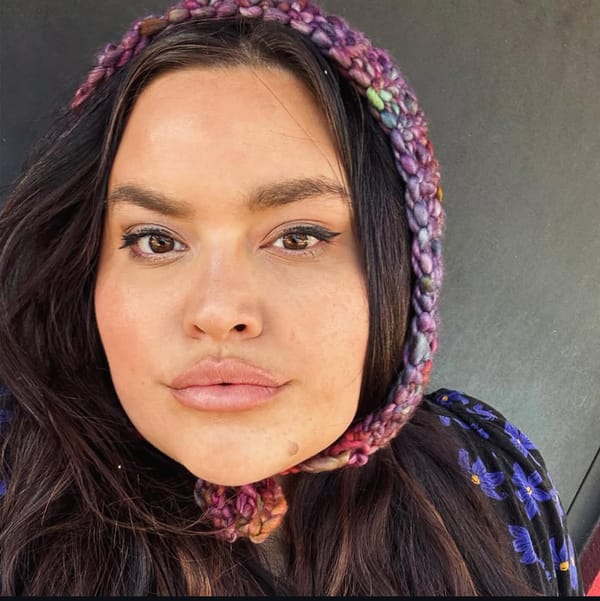
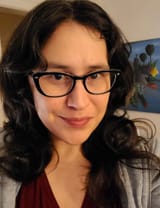
Geo Maher is a political theorist and longtime scholar of Venezuelan politics whose work examines popular power, the Bolivarian Revolution, and the role of U.S. intervention in shaping Venezuela’s crisis. He is the author of several books on these themes, including We Created Chávez: A People’s History of the Venezuelan Revolution (a bottom-up account of Venezuelan social movements and the Bolivarian process) and Building the Commune: Radical Democracy in Venezuela, which explores the participatory politics of Venezuelan communal institutions. Geo also recently hosted an informal, ask-me-anything–style conversation on Facebook that stood out for its clarity and careful attention to context — qualities often missing from mainstream coverage.
I wanted to build on that conversation by asking Geo questions aimed at orientation rather than reaction. In this interview, Geo offers some historical and political context that makes current events legible, and may help readers think critically about what comes next.
Many readers have heard the phrase “the Bolivarian Revolution” but don’t actually know what it refers to. What was the Bolivarian project, and what was it trying to change in Venezuela?
As the name suggests, the Bolivarian Revolution in Venezuela finds its roots long before Hugo Chávez himself took up the name as a mantle. In recent Venezuelan history, it has come to name a struggle against imperialism and global capitalism and for the construction of a revolutionary alternative to export-oriented development grounded in Venezuelan reality and based on directly democratic socialist principles. As I have long emphasized, this was never the work of a single man, but of thousands of grassroots organizers, community activists, and militants, and in that sense, the question is less what was the Bolivarian project and more what is that project today and what will it be moving forward.
You’ve emphasized that the Bolivarian Revolution dramatically improved the lives of millions before the country entered a profound crisis. What did those improvements look like in everyday terms — housing, healthcare, education, political participation?
We can understand the process in roughly three stages. The first phase, from around 1999-2005, was characterized by laying a new democratic foundation and reclaiming natural resources to be dedicated to social welfare programs that dramatically reduced poverty, provided universal access to healthcare and education, and built millions of housing units. The second phase, from around 2006 to 2012, sought something far more ambitious: to transform the political structure through the expansion of grassroots councils and communes, with the ultimate goal of putting everyday people in charge of their own lives, producing what communities actually need, and replacing the traditional state with a new socialist “communal state.”
The third phase, since Chávez's death, has been characterized by a profound economic, political, and social crisis. While this crisis began with the mismanagement of the exchange rate, its true source and certainly the severity of the catastrophe, were the result from the absolutely brutal and murderous sanctions regime instituted by both Barack Obama and Donald Trump, which has devastated oil production, crippled the economy and forced the Maduro government to take a range of desperate and defensive measures in an attempt to stabilize the economy and feed its people.
You’ve said that the death of Hugo Chávez didn’t create new contradictions so much as unleash existing ones. What shifted after Chávez’s death, and how did the terrain change under Nicolás Maduro?
I appreciate your focus on the terrain rather than the individual, because it was precisely the terrain that shifted, and quickly. Despite being elected in free and fair elections in 2013, Maduro immediately confronted violent aggression from the US-backed opposition, including the so-called “peace” prize winner María Corina Machado, the collapse of global commodity prices (including oil), and the powerful symbolic absence of the figure of Chávez himself. Once Obama declared Venezuela a national security threat to US interests and began to target the country with sanctions the crisis only deepened.
In US media, Venezuela’s crisis is often framed as the inevitable result of “socialism” or government incompetence. You argue that sanctions are central — not incidental — to what followed. How should people understand the role sanctions played in pushing Venezuela into catastrophe? I’ve read repeatedly that the country was already spiraling before sanctions were imposed. Is that inaccurate?
Now, building socialism in a capitalist world is an uphill struggle, we should be clear about that. By which I mean that the attempts to institute socialist price controls and other measures in Venezuela were severely punished by the global capitalist system. But for me, as I have long argued, this was an argument for more socialism, not less, for shifting fully away from any reliance on the private sector and the painful in-betweenness of half measures.
But yes, despite all of the misdirection today, there is no way to overstate the impact of sanctions and their murderous brutality. I don’t think most Americans truly understand how the sanctions work. Again, this began under Obama but was made much worse by Trump in 2017, with an economic analysis by Mark Weisbrot and Jeffery Sachs (yes, the Jeffrey Sachs), concluding that sanctions had led to 40,000 deaths in just 2017-2018 — many more have died since. Today, these sanctions are in reality a total blockade that is strangling the Venezuelan economy, making it impossible to produce and even sell the oil necessary to import the basic food and medicine necessary for everyday Venezuelans to survive.
You’ve been very clear that declining support for Maduro does not equal growing support for the Venezuelan opposition. Why is that distinction so important, and how does it challenge the way Venezuela is usually discussed in the US?
This is an important point: of course a decade of economic catastrophe has decreased support for Maduro — this is only natural, and it’s the stated goal of the sanctions. But it has long been true that this doesn’t simply translate into support for a widely unpopular opposition, and still less for its policies (where it even offers policies at all). This is especially true of the most visible and intransigent opposition leaders like Machado, who thanks to her longstanding support for US military intervention will never enjoy the support of the majority of Venezuelans. Machado, and many other opposition leaders, have no solution to the economic crisis beyond simply handing Venezuela’s oil back over to US multinationals.
You’ve questioned whether “authoritarianism” is even a useful category for understanding the Maduro government, describing it instead as marked by inertia and weakened authority. What does that framing help us see more clearly — and what questions does it raise about repression and political prisoners?
It’s incredibly important: we want a revolutionary process to have authority, a collective authority grounded in the desire for social transformation. Liberalism offers the separation of powers, disguised as a safeguard against tyranny, but which functions by design to sow inertia and make radical change (from the right or the left) impossible. We ourselves are living through that inertia today, where we see the impossibility of actually transforming a political system in which the electoral college, Supreme Court, and Senate operated as conservative brakes on change.
Maduro has from the beginning struggle to coalesce and exercise authority in a context of crisis, so the framing doesn’t bring much clarity to the situation. The true measure for me is and has always been the question of how grassroots revolutionary movements can interface with elements of the state to press for radical change. This dynamic was powerfully present under Chávez but has waned in recent years, and if anything, crisis and imperialist aggression have strengthened the hands of other, more conservative sectors of Chavismo.
Your work highlights communes, communal councils, and territorially rooted movements as key sources of resilience. How have those forms of popular power survived the crisis, and where have they been most damaged?
As I argued in Building the Commune, grassroots struggles in Venezuela beginning in the 1980s engaged in a process of territorializing political organizing, which culminates in the communes as a new form for the spatial organization of socialist production and participation. I think that any truly revolutionary process needs to seize space and govern territory, and we see this in our own Occupy movement, student encampments, and police-free self-defense zones. This territorialization of power is especially necessary because it is far more durable than other forms of political action like marches and voting, and because it builds community through participation.
The communes have suffered tremendously throughout the crisis. While on the one hand, the dramatic reduction in imported goods gave an impulse to communal production — out of sheer necessity — they also lost access to any imported supplies, tools, fertilizer and to almost all state funding. But they remain and continue to produce, struggle and organize the people. They will be the front line against any invasion, and also against any attempt by the right to seize power.
For readers trying to understand the U.S. seizure of Maduro and Cilia Flores: what context do you think is most missing from mainstream coverage? What questions should people be asking that they usually aren’t?
We should be absolutely clear that this has nothing, absolutely nothing to do with either drug trafficking or democracy. Trump has been kind enough to make that as clear as day. So we shouldn’t get too distracted by all the claims about dictatorship or drugs since we know that’s not the actual motivation — it’s misdirection that is meant to distract us, and we shouldn’t fall for it. We need to be demanding that the bogus charges be dropped, that they be returned to Venezuela, and above all that the sanctions be immediately lifted so Venezuelans can build the kind of society that they choose without imperialist threats from abroad.
Many public accounts — especially outside Venezuela — are framing Venezuelan responses to Maduro’s kidnapping as broadly positive or unified. How do you respond to that framing? And what kind of reactions, tensions, or contradictions get flattened or erased when outside observers talk about “the Venezuelan response” as if it were a single thing?
There’s no single “Venezuelan response” and no unified Venezuelan perspective. While many are today demanding that we “listen to Venezuelans” they often mean a specific kind of Venezuelans from a specific class background or political orientation. The reality is that the loudest voices abroad are also the most right-wing, and that on the ground there are many different perspectives, many Chavistas who are critical of their own government but unwilling to hand it over to the US or the right-wing, many sympathetic with the opposition who don’t want their oil to be given away or a return to neoliberalism.
And the most important voices that are rarely heard belong to those grassroots organizers in communes and social movements who continue to work and continue to struggle every day.
Finally, what do you think Trump’s aggression toward Venezuela signals more broadly? How does it connect to the other fascist or expansionist fantasies he’s expressed, and what kinds of actions should people of conscience in the United States be taking right now?
Trump knows that the US empire is in decline, that its hegemony is openly in question if anything, he’s more honest than liberals about this fact. And his response is to turn to what he calls the projection of power — projection in the sense that this is a performance of power and a threat to be wielded — to gain access to markets, natural resources, and political leverage on the global scale. The goal is to dismantle and indeed terrorize progressive forces globally but also domestically, as we’re seeing in Minneapolis and elsewhere, and to build a global fascist alliance to make this possible.
This is why we at Abolition School understand that we can’t be abolitionists without also being anti-capitalists, internationalists, and anti-imperialists, without understanding that abolishing police and prisons means abolishing ICE, border patrol, and the border, understanding that from Philly to Palestine we’re up against the same forces of reaction, and understanding — as Venezuela makes absolutely clear — that US police and military are two sides of the same brutal coin.
Organizing My Thoughts is a reader-supported newsletter. If you appreciate my work, please consider becoming a free or paid subscriber today. There are no paywalls for the essays, reports, interviews, and excerpts published here. However, I could not do this work without the support of readers like you, so if you are able to contribute financially, I would greatly appreciate your help.