Activists Are Preparing to Defend Elections This November
“It's about relational organizing,” says Ash-Lee Woodard Henderson.

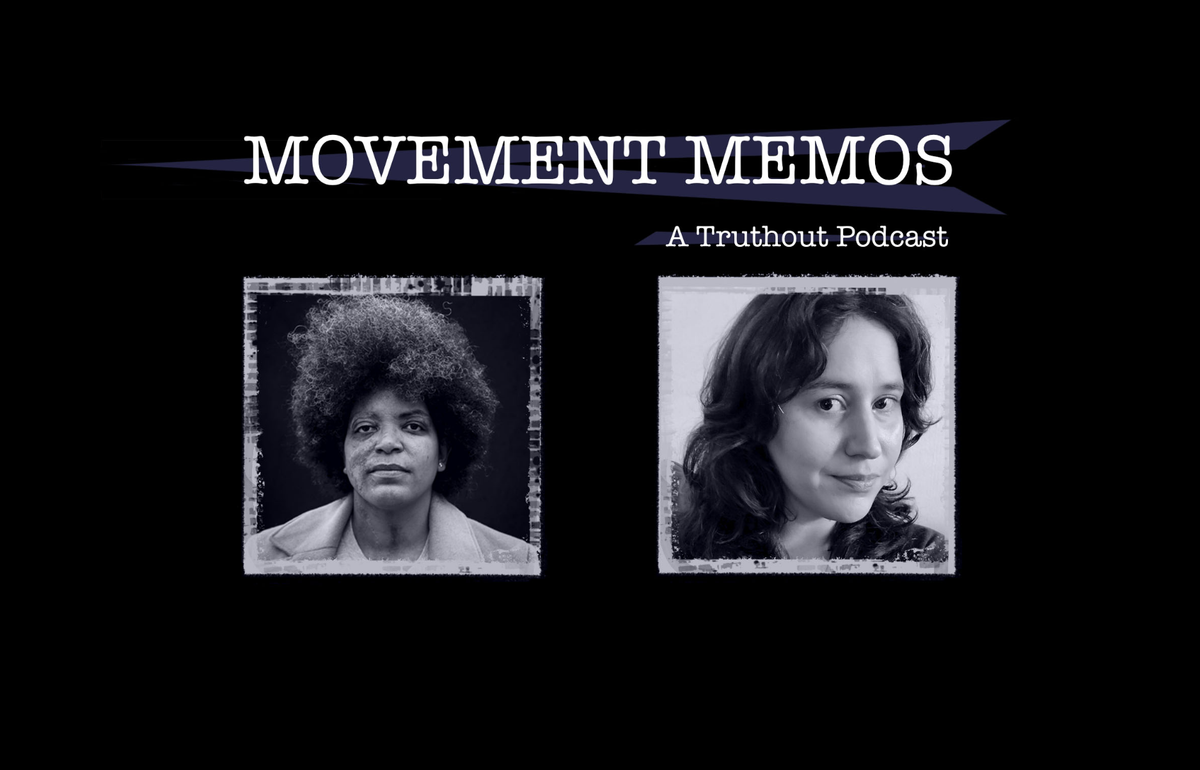
In this episode of Movement Memos, I talk with organizer Ash-Lee Woodard Henderson about what it means to defend an election under authoritarianism, beyond simply telling people to “vote harder.” We discuss the “win, prove, enforce” framework, the strategic case for early voting, how ordinary people can help protect the voting process, and why relational organizing and staying in right relationship across political differences will matter in the months ahead.
Music: Son Monarcas and Sarah the Illstrumentalist
TRANSCRIPT
Note: This transcript was originally published in Truthout. It is shared here with permission.
Kelly Hayes: Welcome to “Movement Memos,” a Truthout podcast about organizing, solidarity, and the work of making change. I’m your host, writer and organizer Kelly Hayes.
As we head toward the midterms, the right-wing agenda is clear: undermine and sabotage the voting process by any means possible. From gerrymandering and voter-roll purges, to an expanding citizenship-verification effort — and a scheme to sabotage mail-in voting that has failed in court, for now — it’s clear the GOP doesn’t believe it can win without mucking up the process entirely. And if Republicans endure big losses, there are also very real concerns about whether they will honor the results, or what efforts they may make to obstruct the seating of a new Congress in January.
As we consider these possibilities, and what concerned people can do, we will be hearing from my friend Ash-Lee Woodard Henderson. Ash-Lee and I recently talked about the “win, prove, enforce” framework for electoral defense, the strategic value of early voting, and what people can actually do between now and the point when election results are enforced.
If you appreciate this podcast, and you would like to support “Movement Memos,” you can subscribe to Truthout’s newsletter or make a donation at truthout.org. You can also support the show by subscribing to “Movement Memos” on Apple or Spotify, or wherever you get your podcasts, or by leaving a positive review on those platforms. Sharing episodes on social media is also a huge help.
Truthout is an independent news organization, publishing stories that the craven corporate press won’t touch. We are a union shop with the best family and sick leave policies in the industry, and we could not do this work without the support of readers and listeners like you. So thank you for believing in us and for all that you do. And with that, I hope you enjoy the show.
[musical interlude]
Kelly Hayes: Ash-Lee Woodard Henderson, welcome to “Movement Memos.”
Ash-Lee Woodard Henderson: Hey, Kelly. Thanks for having me.
Kelly Hayes: How are you doing today, friend?
Ash-Lee Woodard Henderson: We’re in the home stretch. Some would say maybe the roller coaster downhill spiral into November-3rd land, which you know all too well is the midterm election. It’s a busy time. To pull the quote that all the lefties are talking about right now, “It is a time of monsters.” I’m feeling that. I feel scared. I feel concerned. I feel angry and sad and grieving about the state of this country and its impact on our people. But I’ve also never felt closer to the wins that we’ve always wanted, that could fill the vacuum that this administration and corporate Democrats are creating. In Gemini fashion, I’m feeling all the feels today, Kelly, but feeling really grateful for the ways that people across differences are coming together to try to fight for some semblance of democracy in this place.
Kelly Hayes: That resonates so much. My stress level is sky-high lately, but also feeling really heartened by the ways that I see people moving and taking action, and also encouraged that a lot of people are asking what they can do and how they can help out right now. I’m glad people are asking those questions and looking for ways to be constructive, because I think a lot of things about this moment are confusing by design.
Ash-Lee Woodard Henderson: That’s right.
Kelly Hayes: And I’m really excited to be in conversation with you, as someone I really trust around these issues of electoralism, and how lefties and radicalized folks should think about engaging with these things. I am interested in your guidance, right now, not just for my listeners, but also for myself. But before we dive into that, can you tell the audience just a bit about yourself and your work?
Ash-Lee Woodard Henderson: Sure. Well, like Kelly said, my name is Ash-Lee Woodard Henderson. My homies call me Ash. I use she/her/her pronouns. I’m a Black woman who’s about caramel-skinned with skin grafts and a big salt and pepper afro. And I come from Southern Appalachian, Black South folks, who came together also across difference to learn from each other and build community and family together. I’m an organizer, I’m an activist, I am a Southern supremacist who is particularly biased towards the great state of Tennessee. I’m from Southeast Tennessee.
Some folks know me because I’m a former co-executive director of the Highlander Research and Education Center or the Highlander Folk School that is based in East Tennessee. I’m a founder of Utopian Visions and Experiments4Good. I have served in leadership capacities of a lot of different frontline movements, including the Movement for Black Lives. Long story short, I’m a missionary Baptist preacher’s daughter and a Black Panther party member’s daughter. I’m just trying to win and live in a world where we have healthy, sustainable, and equitable communities and don’t have to fight this damn hard. I’d rather have different problems after this particular era of fightback and building. That’s the quick and dirty. I’m just trying to do good in the world.
Kelly Hayes: Well, I appreciate the good you do. And I really appreciated an article you wrote recently called, “What To Do During A Coup” that aims to help people through the nitty gritty practicalities of how to organize and move through this moment, with regards to the midterms. I think a lot of people are feeling exasperated and overwhelmed by all of the ongoing assaults on the voting process. You’ve argued for an organizing approach that goes beyond working turnout. Can you tell us what the “win, prove, enforce” framework consists of, and what it asks of people who want to see the freest, fairest elections possible?
Ash-Lee Woodard Henderson: Yeah. I wish I was smart enough to be able to take credit for that framework, but actually it comes from a dear friend, and someone who I think will go on to be a superhero in the fight against authoritarianism, Hardy Merriman. He and the folks that have contributed to the Hold the Line framework, I think really did a lot of thinking about, what are the lessons globally from folks who have fought back and beaten back authoritarian attacks? And one of the things that came out of the synthesis of the learnings was this concept of “fight, win, prove and enforce.” Some people know it as “ensure, win, prove and enforce.”
To keep it super simple and move it out of this sort of jargon that it can sometimes become in movement spaces, it’s really quite simple and could be applied to probably any kind of campaign, but the framework is really specifically about elections and its creation. So step one is ensure that there are elections in the first place. You cannot have a healthy democracy if folks aren’t actually getting to participate in the process to choose who governs them. Ensuring fighting to make sure that there are elections in the first place is the first part of the framework.
Winning, in the context of the elections, is win the elections and even more importantly, win them beyond a reasonable doubt. Win them in such large margins that it becomes much harder for the authoritarian regime to steal it. It’s not my estimation or assertion that they actually care about the law, that they actually care about elections at all. In fact, I don’t think the right wing gives two shits about elections. I think they are intentionally trying to make as much chaos and confusion as possible to consolidate as much power and wealth as possible. The elections are just a means to an end at this point.
Think about it from our perspective, the perspective of people of goodwill, regardless of your ideology. If we win it outright by huge margins, whatever the Senate or the House seat – if it’s a governor’s race, if it’s your dogcatcher, whatever the race is, if you win it beyond the margin of error, and it becomes really, really clear that the people have said what they want, lots of things then become more possible.
If the right wing still … If the authoritarian regime still steals it, cheats, doesn’t seat duly elected people, then obviously you have a base, a community of people, folks who voted en masse, who can be politicized in that moment and encouraged to be more non-cooperative. You did the thing that was the least risky in some ways. You did the thing that was exhausting administrative remedies and they are still doing this evil thing, you should now be even more non-cooperative. So it’s an opportunity if you’re thinking like a strategist and like an organizer to move to the next tier of the escalation plan and fighting back against an authoritarian attack.
And on the flip side is if you win it outright and they don’t steal it, then you won and you use that as an opportunity to show people that when they use their rights, organizing gets the goods. So mobilizing and organizing that intersection gets the goods. So either way, winning beyond a shadow of a doubt and beyond the slim margins, winning so big that they can’t even argue with you is proof that they can’t fight against in court. And if they still steal it, if they still put an energy to fight back against it, it gives your people an opportunity to mobilize. So that’s “fight,” that’s “win.”
“Prove” is prove that you won. Some people say that this is where election defense and protection work starts. I disagree with that assessment, but it is true that it is connected to that sacred work. This is where we make sure that every single vote gets counted. We make sure that the chain of custody with the ballots does not get broken and therefore makes it impossible for us to prove that our people came out and voted and it was legit and these folks deserve to be seated because our people voted, used their voices and voted, voted for these folks.
And then last but certainly not least is “enforce.” It’s to enforce the results that we have proven. It’s basically just like the life cycle of a vote. You want to make sure that you get to cast a ballot, you want to get everybody you know to also join you in doing that and win outright. You want to be able to prove that those votes existed and were properly administered, and then you want to enforce the results of that decision. That’s the real basics.
And to me, all four of those stages are critically important. All four of those stages, in my estimation, are election protection and defense work. Some people will say that the sexy work … Certainly folks that have critiques of electoralism, which includes myself, sometimes we’re like, “Yeah, that GOTV work is a distraction from some of the other real issue area and identity politic work that we do.” And what’s real is if that stage doesn’t happen, there’s no election to prove and enforce.
And then once we do get those folks out, that “prove and enforce” work becomes really critical and sometimes we don’t take it as seriously because we’re just so focused on getting a vote out. So all four of those stages are really important. We need all of them.
Kelly Hayes: I appreciate your point about how the right doesn’t really care about elections. I think the fact that the right is so determined to kill any semblance of a democratic process has led to some liberals and leftists feeling ambivalence around the election — like, well, why pour so much energy into winning an election if they’re just going to sabotage it or refuse to honor it? The prospect of that happening can make people feel like the election itself isn’t really where the fight is.
But the fact that the right wants to hopscotch right over the election doesn’t mean that we can afford to leap past it. Because, the truth is, we need electoral outcomes to point to, both legally and narratively, in order to wage the fights that might come next. Those struggles may happen within the legal system, and they may happen in the streets, or both, if it comes to that, but we need to establish the will of the people. We need that legal and narrative stake in the ground.
Ash-Lee Woodard Henderson: That’s right. It’s also to me, as a Black Southerner, just quite simple. There’s a difference between non-cooperation and non-compliance and just non-participation. And I feel like all too often, some of us on the left conflate them as all the same thing and they’re not. If you are refusing to participate in the midterms because of your ideological stance. Like, “Okay. I’d love to hear grounds around how that’s strategic and willing to be in principled struggle around it.” But let’s be so for real, if there’s not a strategic plan that tells me and my neighbors that I am accountable to and from how we’re going to keep them safe and get them more power, then the absence of that strategy makes it absolutely implicitly not non-cooperation and not non-compliance. It just makes it non-participation with the expectation that sometime in the great by and by we’ll have enough randomly consolidated power to be able to do something. That’s just not convincing in a time of authoritarianism.
I just think we have to be sharper about what we can do, what we do have the power to do, and not in the magical thinking of moving strategies with the movement we wish we had or the movement we used to have or with strategies that we wish were possible in a pre-figurative world that does not yet exist. We have to build that world and we have to build the base that will make that world come into being, the strategic alliance that will bring that into existence. I think we have to be a little self-critical that we just haven’t done it yet.
Kelly Hayes: I agree that we need to be real about where power exists right now, and about the power we do and don’t have, as things stand, to work our will. And I know this is a touchy subject for a lot of people. It’s one I’ve felt differently about at different points in my life, and I think that’s probably true for a lot of people who are listening. And I think it’s important to say that we don’t have to be entrenched in our positions around a tactic, or relitigate every choice we’ve ever made, or argument we’ve ever had. This authoritarian moment can really just be evaluated strategically, right here and now, and we can think about who it makes sense to try to wrestle some power and legitimacy away from right here and now, in an urgent way, wherever we can. Not everything has to be an absolute statement about how we feel about electoralism, or how it makes sense to engage with every election, now and forever.
But we often fall into the trap, I think, of feeling like we have to make absolute statements about things, or have end-all, be-all positions about what a tactic does or doesn’t mean to us. I think this is especially true about voting. There are extremes of fetishization around voting that I see among liberals and leftists. You see some liberals for whom it is the end all be all. It is everything. It is all they really think they owe the world politically.
Ash-Lee Woodard Henderson: That’s right.
Kelly Hayes: And then sometimes you have leftists who fetishize non-participation as meaning things that I simply don’t think it means.
Ash-Lee Woodard Henderson: Yeah, that’s right.
Kelly Hayes: Like, sometimes, I see people talk about not voting as though that refusal gives them clean hands, and washes away their complicity, and that’s never made sense to me. There is no way to purchase innocence in the heart of empire by simply doing or not doing this one thing on the civic social to-do list. In the same way that showing up on Election Day and getting your sticker doesn’t mean you’ve now paid your dues to the human race, not showing up doesn’t mean you now get a sticker that says “I’m not complicit in this country’s harms.” We’re all complicit, either way. We’re all on this train. Having nothing to say about how fast it’s going or what turns it might make doesn’t wash us clean.
Ash-Lee Woodard Henderson: That’s right.
Kelly Hayes: And right now, there are a lot of very immediate outcomes that many of us are concerned about, that these elections are directly tied to. And as someone who isn’t — as far as I know, at least, because this is admittedly a fast-changing world — in a ton of immediate danger, I also see electoral participation, even when it’s a begrudging, frustrated act, which I think it often is, as a way of showing people who are living under very direct threats right now that I am invested in their well-being and survival.
I am willing to make moves to try to change the math a bit right now. Even if I don’t think that’s what’s going to ultimately save us. Even if it’s messy, and not really reflective of the world I want. Because I am out here reaching for that world while still living in this one, and I care about who gets to keep trying to make it from this world to that one.
Ash-Lee Woodard Henderson: That’s it.
Kelly Hayes: I can talk all day about being committed to someone’s liberation, but if I am not demonstrably committed to their well-being and survival in this authoritarian moment, I doubt they’re gonna take me very seriously.
Ash-Lee Woodard Henderson: That’s exactly right.
Kelly Hayes: So, that’s where I’m coming from around this, and if there are folks listening who are feeling a little squirmy, like, Kelly, please, I don’t like this subject. Please just be patient and know that I don’t like it either, but I’m here talking about it with my friend because I think it matters right now, and because I care about what happens, in very immediate terms, to each and every one of you. And these electoral outcomes are going to be part of it.
Ash-Lee Woodard Henderson: That’s right.
Kelly Hayes: And there are a lot of people who’ve been disenfranchised, either very directly, by having their ability to vote stripped away, or by gerrymandering efforts that have diluted the impact of their vote, and so I want us to think about what solidarity with those folks looks like, too, right now. I think across the board, whether it’s electoral participation or anything else, I want us to be thinking about what it looks like to have a demonstrated investment in each other’s well-being and survival right now.
Ash-Lee Woodard Henderson: Yeah. It’s quite that basic to me. It is quite basic that my baby brother cannot legally vote in the state that we were born into over decisions that were made by white supremacists, who don’t want Black people to be able to self-govern. That impacts every waking moment of his life. It impacts the jobs he can and cannot get. It impacts the amount of money he has to spend at the grocery store for him and his children. It impacts the schools that those kids then get to go to. Every single thing in his life, every obstacle and every opportunity is impacted by the decisions that are being made by people who he legally cannot say should have an elected position or not.
It is personal to me in a real micro way. And then to your point, I also live in a state that is being ruled by a minority of … Like ideological concentration in a single party formation. “As goes the South so goes the nation” is not an opinion, it’s a fact. I know I say that all the time and I usually get people to head-nod when I say it, but if this moment … If this political era is not evidence what happens … The guinea pig that we get treated as what happens where we are in the largest, Blackest, queerest, most working-class region in the United States, if you don’t believe that what happens here will inevitably control the country, this political era should prove it because we were saying that this was coming since Reaganomics. We’ve been saying that this was coming since the Tea Party. We’ve been saying that this was coming since the first Trump administration.
I get that people sometimes make the decision to not participate because of real shit, the terrible things that this country is doing to people domestically and abroad and because they believe in other tactical interventions. I get it. I do too. But what my elders and ancestors said was by any means necessary, not by one tactic necessary. They meant by all the means. And if my Black Panther mother, who was more radical than most of us, still thought it important to take me to go fill out her ballot, then who the hell am I to say that there is not a role in people having a decision about who gets to represent them in elected positions in this country? That’s just how the cookie crumbles. It’s what we’ve inherited.
And until somebody has the power and positionality to change the governing structure to something else, that is something that my people just cannot afford to not participate in.
Kelly Hayes: So let’s talk a bit about the landscape of trying to participate. Since you wrote about the Trump administration’s attempt to impose new restrictions on mail ballots, that particular effort has been blocked by the courts. At the same time, we’re still seeing fights over voter roles, citizenship verification, redistricting, and federal authority over elections. When you look at the landscape now, what are the developments you’re most concerned about heading into November?
Ash-Lee Woodard Henderson: So many things. And I’ll say, again, I have a personal stake in the conversation about the Postal Service. My mom was a postal worker.
Kelly Hayes: My dad was too.
Ash-Lee Woodard Henderson: You know what I mean? It’s where a lot of our people could get jobs, you know what I’m saying? Shout out to the veterans, shout out to Black women, shout out to working-class people, who got jobs that were union jobs, that were also service to our communities, big ups to all of the folks in the Postal Workers Union. Shout out to all of the managers who are not terrible to their employees, et cetera. I love USPS.
Where the essay ended was with the administration returning the case around mail ballots to the Supreme Court. Like you said, that’s now resolved. When I say resolved, I mean it quite lightly, and I’ll say why in a second. Yes, it is true that the Supreme Court blocked the Postal Service from imposing new mail voting restrictions for this November midterm election.
I want to be super clear about a couple of things. Let me wrap what happened, and then I want to be clear about a couple of things that we should not allow to confuse us about what actually happened. The Supreme Court decided to keep a lower courts freeze in place. They wrote that the government is unlikely to succeed on the merits of the case, and only Justices [Samuel] Alito and [Clarence] Thomas joined the dissent. [Brett] Kavanaugh concurred and wrote that election officials don’t have time to implement the rule before the election. He didn’t disagree because it’s just really wrong and evil to do. He said that the timeline was bad.
I just want to be clear about a couple of things. One is that it is not my belief that any of your mail handlers want to be tools to negatively impact our ability to have free and fair elections. I just want to say it out loud. It is not election workers. It is not postal workers. Those folks get into this job because they have integrity and they want to serve their communities. It’s not because they want to manipulate elections. I just want to be real, that doesn’t mean that the right wing isn’t organizing and training lots and lots of people to do that very thing. But I just want to say that in my 40-plus years of living, that has not been my experience as the granddaughter of a poll monitor and poll worker and as the daughter of a postal worker. So I want to say that out loud.
The second thing I want to say is that the ruling leaves open whether the restrictions are legal overall. It feels really important to say out loud because people are like, “Oh. Well, the Supreme Court threw it out. It’s dead.” I’m like, “No, it’s not. It’s just on pause.” Because again, Kavanaugh said that this is just bad timing. We don’t have enough time to effectively implement this rule before the election. That should tell us they’re already planning to think about it for future elections. So we should be intentional about saying that it’s blocked for this election, but it has not been struck down.
I think other fronts that I have concerns about as well are not going to be particularly surprising to people who have been paying attention to what’s been happening in the South post the Louisiana v. Callais case. I am concerned about voter purges, and I know people that have taken a civics class are going to say, “Oh, Ash-Lee, it’s the quiet period. They’re not going to do any more purges,” but that’s not real. They are currently doing purges.
And we’ve seen so many attacks on people’s ability to be enfranchised through the Department of Homeland Security doing really terrible things. In July, they said that they had identified 250,000 potential non-citizens registering to vote, including nearly 15,000 in Pennsylvania. They’re coming for you if you live in Pennsylvania. Federal prosecutors charged 16 different people across the country with non-citizen voting. Really, there’s only been headline-level detail about either of these. Some of these declarations that non-citizens are voting are really just the government saying random stuff without any concrete factual evidence behind it.
I know many of you, like me, subjected ourselves to watching Trump’s press conference about election security, but the only people that are actually making our elections more insecure are right-wing judges and folks in the administration, his lackeys that are actually intentionally targeting our ability to have a free and fair election. So I’m concerned about voter rolls. I’m concerned about this argument that pits us against our under and undocumented siblings. I just want to be real that the vast majority of the things that I could find when I was researching for the article said that actually … A lot of the actual numbers of non-citizens that were on the rolls were actually on there improperly because they were folks who had gone through the legal process of becoming citizens and were still listed as undocumented. So just want to be real, that’s not the problem with our elections. The fascist sort of attempt to steal elections is the problem with our elections, and people should be checking their registration regularly.
Again, just to share a personal story, if I had not checked my own registration, and mind you, I got my voter registration as an 18th birthday present wrapped in a box with a bow on top. I have voted in elections. It’s a thing that my family does as an event together. If I had not checked, I wouldn’t have known that I too … When I went on the website to check my voter registration, it wasn’t found. And I had to call and make sure that my stuff was in before, so I could participate in the primary election that just passed. Even for those of us that think that we’re pretty solid, check. I check every week. It’s a part of my day to be thinking about it and encouraging people to check and make sure that they’re still registered to vote before the deadline passes.
Some of our states allow you to register the same day or register beyond a particular deadline but vote on a provisional ballot. And some states, you miss the deadline, you don’t vote in November. So really take it seriously, find out the rules where you live and make sure that you’re registered.
The next thing that I’m concerned about is this ongoing conversation that we will be in post-midterms about redistricting. Kelly, what has happened to the Voting Rights Act post-Louisiana v. Callais in April is devastating. It’s quite frustrating that many folks in national movement said that if the Voting Rights Act fell or if elections were canceled, that there would be a hypothetical storming of the barricade, that that would be a red line.
But they did cancel elections and they did gut the Voting Rights Act and basically use a post-racial America argument about why we don’t need Section 2 of the Voting Rights Act anymore. And then the administration did what the administration does. It called governors all across the South and told them to call special sessions and to redraw the maps to make it easier for Republicans to grab power all across the South. [Tennessee Governor] Bill Lee called a special session literally right after the decision was made and crushed … The legislature came back together and crushed the last remaining majority Black district in our state with a new Jim Crow map that basically split Memphis into … Its ninth congressional district into three districts.
Governor Kemp in Georgia ruled out new maps for ’26, because voting had already started, but he said new maps could be drawn before the 2028 election and we should just expect that that’s going to happen in Georgia. And people are fighting. People are fighting and I feel proud of the fight that we made in the South, but a tit-for-tat, where we changed to a Jim Crow map and big states outside of the South try to redraw to make it easier for Democrats to win, it’s not actually a sustainable model for trying to have free and fair elections. And I think we actually have to grapple with that, especially as we get closer and closer to the census, which is also going to impact what these districts look like.
And frankly, we should expect to see places like California lose density because many, many, many, many Black and Brown people are moving back to where their families are in the South. So we could see the South gain seats and we could see places like New York and California, I think, lose seats and we need to be paying attention to that. So voter rolls and the census and citizenship questions, redistricting are all on my mind and this mail ballot fight continues to be, but I think that we have to be really faithful over a few things.
And what I would say is sort of the culmination of all of my thoughts around the concerns is that … This is a part of what Steve Bannon said was their “shock and awe” process. They’re throwing lots of different things into the water, whether it’s legal or not, for the sake of creating as much chaos and confusion and making it confusing for our people as possible. Our job as people of goodwill, whether you decide to vote or not, is to make it as easy as possible for people to participate if they want to, as safely as they possibly can.
And so making sure people know where to vote, making sure people know when to vote, making sure people are registered by the deadline so that they can vote because what the right wing is doing is trying to make sure as few of us as possible can vote, that we don’t know where to vote. And then if we do vote, that those folks don’t get seated. That’s my rambly way of saying it’s bad out here and they’re throwing everything at us to make it impossible for us to ensure and win the election. That’s what part of the season that we’re in. And to set themselves up to be able to steal it relatively quietly, I think, in the prove and enforce part of the framework.
Kelly Hayes: It doesn’t help that most of us aren’t super familiar with how these processes play out, beyond the part where we show up to cast our ballots. In your recent piece, you really get concrete about election administration. You talk about who moves the ballots, where they go, who signs for them, and what observers can see. Can you talk about why it’s important to dive into all of that right now?
Ash-Lee Woodard Henderson: Yo, as I was researching for it and writing it, I found myself over and over again being really angry that they have made it intentionally complicated and then wholly removed us from learning about the process, so that it is easier, I think, for them to manipulate elections. Why do I think it’s important? It’s because then we know where to be paying attention, so it’s harder for them to just steal it and gaslight us and say that we just don’t understand the process.
I was like, “Well, I want to understand the process.” And I feel like what was also happening is that many of us that particularly are in national movements or have responsibilities for organizations and locals, where we think there’s going to be some turn up or folks that are doing statewide organizing around election protection and defense work. We’ve been doing scenario-planning stuff almost all day, every day for the last several months, it feels like.
As that was happening, I was like, “What would I do if I were them?” And if I were them, I wouldn’t try to replicate January 6th on January 3rd. What I would do is I would try to get as much power as I could before it became a big national story. I would try to scoop it in Georgia before the certification got to D.C., or I would try to scoop it in Florida or Michigan or Texas or Tennessee. I would try to manipulate something at the state level or local level, so that we could blame it on election security and not on the party staging a coup.
And so it got me thinking, and in a rabbit hole about, “Well, what is the actual process?” The article, “What to Do During a Coup” is really my attempt to be like, “These are a few examples of what the process is.” Because some of our states have different laws around what the process is. And the House has its own process for swearing folks in and the Senate has its own process for sitting its delegates. So just to say it’s confusing, I think it’s confusing on purpose. I think it’s complicated on purpose. We have a very wild way of doing elections.
What also was interesting to me in the process is that once you understand the multiple stages of what happens in the life cycle of a vote, you can see that every handoff is another person in your community that you might have some relative connectivity to. There’s a chain of custody. There’s a person that puts a seal with a number on it, on a log, signs a signature when they get a bag of our ballots for those of us that still do paper ballots. There are people that are looking at what is happening with our voting machines. There’s just a real process for making sure every ballot gets counted, boards certify them and courts can be used to litigate if there’s any funny business. And that also is a really important part of the process.
I feel like why it’s critically important for folks to understand each stage of it is because one, we’re literally about to be in it and better for us to know ahead of time, so that we can be paying attention and making really smart tactical decisions about how we’re going to pay attention and not let this election be stolen. For example, I think … There’s a way that folks are thinking about election protection. Like, “Okay. Well, we have to stage protests. We should just keep escalating and pushing for things like No Kings and May Day Strong and the broader labor movement to do more and more non-cooperation.” And I think there’s a time and a place for that. I’m certainly supportive and trying to help plan some of it myself.
But what’s also real is when my neighbors, people from my faith community, some of my relatives that work elections are inside of their commission building counting ballots, I’m not trying to protest them. I’m trying to celebrate them for making sure that my vote gets counted. But you know who is going to be really excited if what we do is go and protest and make weird ungrounded demands of election workers? The Trump administration, who’s already blaming them and already has been blaming them, since the Stop the Steal movement for any irregularities in elections, when really, again, it’s been him and his party who have been manipulating elections for the sake of consolidating their own wealth and power.
So I just think we’ll make smarter choices about how to be in community with one another, putting more and more of us in right relationship and an inside-outside strategy as we move towards making sure that we stop the already ongoing coup.
Kelly Hayes: I think that’s such a good point, around being thoughtful about where and when we protest, being clear about who’s being targeted, and not creating the kind of imagery that the right wants, at any given time, that may help serve their narratives around the election.
But I do get why some people are flailing, and may be in a knee-jerk kind of mode. A lot of people are overwhelmed by the scale of these attacks on the voting process, and some people have told me that it feels like there’s no plan, and like they’re just being told to vote harder. What would you say to someone who feels that way right now, and who genuinely wants to be useful around this issue?
Ash-Lee Woodard Henderson: Yeah. One, I would say … I hear Gwen Patton from Alabama in my head saying, “Keep it simple, just keep it simple.” I would argue that the plan is not “vote harder.” It might be “vote smarter,” but it’s actually even more simple than that. It’s like if the bad guy is telling us not to vote, we vote. And if you can’t vote, then what can you do that feels like it’s not obeying in advance? It’s not just non-participation without a plan. It is not cooperating in advance. What is the thing that you can do?
I’ve been encouraging people to just figure out what is the thing they can do. What is your “yes”? And it can be in your one county or your one state or with your people. And it has to be between now and when this election is complete, which is when those folks that have been elected are seated. So from now, hopefully through January, what is the thing you can do? I wrote about making plans and I think there are at least five questions that I’ve been considering and encouraging folks in my community to consider. It’s like, “Can you watch the polls and what is the process for that? Do you have to do it through a party or a candidate? Can you just be there in a precinct that isn’t just the one that you want to hang out in, but in the one that you think might have the most drama? How do you make sure that the people in that place are protected and are able to do what they need to do? Can you watch or work the polls there?”
The second one is, if you can’t do that, are you the kind of person that likes feeding people and caring for people’s material needs? Maybe you’ve got a Food Not Bombs kind of calling on your life or a Rainbow Kitchen calling on your life. Can you make sure that folks are fed and have water? Do you know the process by which you can do that? I think there’s a question of, what is the skill or talent that you have that you are willing to use in service to your community, whether you vote or not between now and when these people get seated? Because it’s going to be a wild time and it’s an opportunity for you to build right relationship and do some relational organizing or mutual aid with your community and a thing that many, many, many of them are going to do together.
Part of what I love about Election Day is it’s just a time where I get to see all of my neighbors all in the same place, which is an organizer’s dream. You know what I mean? I’m like, “I didn’t have to organize this. I didn’t have to spend no money on this, and all these people are going to be in one place and I could talk to them or listen to them and hear them and support them.” It’s got me thinking about the early vote activations that are going to happen all over the country on October 17th. It’s like, “Okay, if you don’t live in an early vote state, then have a protest and say you want early vote or bring people together and make an early vote plan.”
If you don’t want to focus on voting, it could be a great time to bring people together to do expungement clinics or again, feed people, teach them about their rights. Do trainings about the budgets. The world is our oyster in relationship to tactically and issue-wise, what we can be able to do. And so my question to overwhelmed people is like, “What is the faithful step you could take toward being in right relationship with the members of your community who really are trying to grapple with participation in this election?” That’s the simplest, most not complicated or movement jargony way to do it is to say, “What do you want to do? What is the thing that you would do in service to your community, whether it was an election or not and is there a way to incorporate that into the work that’s going to happen during the rest of this electoral cycle?”
Kelly Hayes: You mentioned early voting, and there’s been some discourse around this recently — which is weird to me, if I’m being honest. To me, it just makes sense, as an ask to extend to people, right now, given the uncertainty around what things could look like on Election Day, in terms of efforts to disrupt the vote, or other harms that could play out — it makes sense for as many of us as possible to be fully available that day to do other things, including community defense. Some of us who are involved in Rapid Response work in Chicago were encouraging people to vote early during the Illinois primary this year, because we wanted to make sure folks were available to respond if ICE attacked our communities on Election Day. To me, it’s just a practical move. Is there anything you’d like to say about early voting, or any of the takes that are circulating around this?
Ash-Lee Woodard Henderson: I mean, a couple of things. One, and you probably, Kelly, saw my temper tantrum on the internet. This move of No Kings from mass mobilization and protests to this early vote, trying to build the biggest early vote activation that this country has seen is not evidence that … I see tin foil hats being like, “See, it was always a Democratic Party front.” That’s not true. In fact, most of the leadership of No Kings has big disdain for the Democratic Party, myself included.
What I would offer is it’s an attempt to do a couple of things, and you hit one of them already. We are trying to make sure that people are able to vote in droves together. We can’t make the argument that we keep us safe and then encourage people to individualistically figure out how to go and do this thing, especially in places like where I live. There’s a lot of violence at the polls, Proud Boys showing up, open carry states, these white supremacists showing up with … Even if they don’t bring their guns, they’re wearing their holsters to intimidate people. That’s not even including ICE and National Guard deployments that have happened all over the country. And now the government is going to be sending in these monitors.
We should be concerned about our people’s welfare and safety and security and encouraging them to go out and early vote and not just be standing in line all day on November 3rd. I think it’s just a obviously low-hanging fruit tactical intervention. The second thing I’d say is like … Another obvious reason to do it is because it gives us more time to fight and make sure that your vote actually gets counted. If you wait until November 3rd and we find out you were purged and you can maybe vote on a provisional ballot. It creates so many more nightmares to not have enough time to make sure that your vote actually gets in and counted and is secure. So the earlier we do that for the majority of our people, the safer and more integrity there could be in the election.
I think the third thing I would say is that it’s an opportunity for us to help support candidates who actually are champions of our people, folks that we don’t actually have to feel like we’re compromising on as much. For those of us that are blessed to be able to vote for people that we actually are in accountable relationship to in movement and candidates that will believe and practice co-governance. We can see the numbers better when we know how many people have already turned out. It gives us enough time to do what we got to do, regardless of their party affiliation.
This is for informational purposes, but it gives us an opportunity for the folks that are going to do that kind of heavy lifting and work a better shot at doing that win part of the “ensure, win, prove and enforce” work. I think there’s a lot of reasons, but for me, it’s also like … It just gives us a lot more hands on deck to do other work. When they’ve already voted, they can go watch the polls on the third, they can feed people, they can give people rides, they can do childcare, they can deescalate. They can do all sorts of things if they’ve already done the very simple thing of making sure that their ballot is cast.
So I think there’s plenty of reasons why voting early is smart and tactically sound and grounded. But if I was keeping it simple, Kelly, I would just say it frees more people up to do more other kinds of important work.
Kelly Hayes: So in your work and in this conversation, you’ve named a number of ways that people can get involved and help out that may not sound like what people envision when they hear the words “defending an election.”
Ash-Lee Woodard Henderson: Mm-hmm.
Kelly Hayes: You’ve talked about giving people rides, providing childcare or food, helping people stay in line, deescalating conflicts, learning the rules, and knowing where to report problems. For people who are listening, who want to help out, where should folks try to plug in?
Ash-Lee Woodard Henderson: Yeah, I mean I think these are things that you can do whether you’re in an organization or not, whether you’re going to vote or not. Partly when I started thinking about it. One, I just thought about what my family and my community does when we go vote. These were things that our communities provided for each other to make it more possible for more of our neighbors to be together doing it. Maybe that’s a Southern thing, maybe it’s a Black thing, maybe it’s a Black Southern thing, but it just didn’t seem like rocket science.
When I was writing “The 89 Million Memo” and the “Go Get Your People” essays, somewhere between 86 and 90 million people didn’t vote in the 2024 election. I just really wanted to … Particularly for Black people, where this all started, I wanted to understand why the 14 million of us didn’t vote. And one of the major reasons … There were three reasons. One was that folks were systemically locked out. They were people who would’ve voted if they could have voted, but there were systemic barriers that kept them from being able to, whether it’s like my brother who was formerly incarcerated, and so he had lost his right to vote and it just hasn’t been restored yet.
Or it’s folks like the working-class single mom who was like, “I have to choose between taking PTO because it’s not a national holiday or making this money to be able to take care of my family. I’m going to just not take this PTO. I can’t afford to. I need this overtime.” Think about folks that are like, “I don’t have access to public transportation, I don’t want to spend money to have to get to where the election commission is or my polling precinct is.” Whatever.
So there were real concrete barriers, usually economic, but sometimes related to the criminal injustice system that are keeping people from being able to participate. So some of it is just literally being one of those worker bees that’s willing to remove those barriers from as many people as possible. Then there were other folks that were like, “My material conditions just haven’t changed under Republicans or Democrats alike. I was poor under Biden. I was poor under Obama. I was poor under Reagan. I was poor under Bush. I was poor under Trump. If you give me a candidate that changed my mind about that, then maybe I’ll vote.”
Think about working-class folks in New York of all stripes who maybe hadn’t participated in an election when [Rudy] Giuliani was running or when Eric Adams was running, but then when [Zohran] Mamdani ran, they were like, “Oh, yeah. Okay, I’d vote for him.” That’s that kind of folks. It’s young people who feel politically homeless. They’re like, “We don’t like any of these options and we don’t want to participate, but if you give us somebody that we can believe in, we would show up.”
So what are the ways that we can meet people’s material needs now to build trust with communities in these last 40-some odd days that help them see that there actually is a commitment to their material growth and change and not just a vision for it being better? Again, feeding people, being the folks that care for people when there’s a loss in the community and actually show up beyond just asking them to vote.
And then last but certainly not least are again, our friends that are ideologically just out. Like, “I can’t do it. I’m not voting for someone in the system.” And those folks again, it’s like we maybe aren’t trying to convince them to vote unless they’re organizable, and some of them have been. Again, Mamdani is a perfect example of that. There are people that I know that are ideologically opposed to participating in the electoral process, who were willing to take a chance on this person because of accountable relationship with the bases that he was serving.
They can be moved, but at the very least, they can be encouraged to take faithful actions that actually are way less about just getting folks to vote and way more about, what does it look like to be in right and accountable relationship with people in our own bases, who are going to continue to participate in this process until we give them a better alternative? So it’s about base building, it’s about relational organizing. It’s about building community regardless of the tactical interventions that folks do or do not choose to participate in.
There’s a multitude of ways to, again, to this question and the previous one, to throw down in your community based on the gifts and the talents and the callings that you feel pulled toward. I think organizationally, there’s a bunch of people all over the country and probably in a neighborhood near you doing incredible work. All of the No Kings coalition partners are doing these things. On the state level, State Voices is doing stuff like this. And in so many states across the South and the Midwest, Black Voters Matter is doing things.
And if you are looking for even more than that, what I would encourage you to do is maybe start with those. And if those aren’t the ones you want to get down with, ask those folks, “Who else is around?” Google is not our friend, but Google is a resource to tell you what kind of organizations are doing work on the ground where you are. I don’t believe that there’s nobody doing anything everywhere, but what I do believe is that if it really, really, really, after that research hasn’t happened where you are, then it’s incumbent on you to be the change you want to see in the world and make that thing happen.
I think there are a lot of organizations that are doing GOTV work, that are doing election defense and protection work, that are doing meaningful mutual aid, that is politicized and are meeting the needs of our people. And it’s incumbent on us to do the sort of reaching for those folks to see how we can plug in. If you want to do it outside of the confines of a nonprofit or an organization, I still would offer that you can’t do it alone. So who are the two or three people that you could partner up with, your friends, your homies, your comrades, your family members, your friends that would be willing to show up and show out to do some of this work with you? I promise that if you take a faithful step, the world makes a way for you to find your people. That certainly was my story.
As the granddaughter of a maid that used to clean white people’s houses on Lookout Mountain of Tennessee that Martin Luther King Jr. talks about in the “I Have a Dream” speech, I can promise you that that is true because there’s no way I would be talking to Kelly Hayes on this podcast had I not taken a faithful step because I was mad that white people wouldn’t register me to vote.
Kelly Hayes: I appreciate you mentioning that some folks are not going to be engaging with the voting process, and that we can still be in right relationship with those people. I know we all have strong opinions around this stuff right now. But one thing I really want to emphasize to folks is that shaming each other about those differences is always a trap and a waste of time — in addition to being the most politically ineffective thing you could do, if you actually think any of this matters, and actually want to change people’s minds. And our enemies really want us to be divided and arguing in circles right now, reliving the same debates we’ve had every couple of years since forever, and burning bridges over that shit. That’s what our enemies want for us. They want us to pronounce each other politically dead. Because we are going to need each other, in so many situations, to address so many crises in the coming months and years.
So, if people are thinking about how to move, in the run-up to this election, my plea for you all is to make this your step one: Do not fight with people on the internet about this stuff. Not only are you wasting time and energy you could devote to something meaningful, but you’re creating more rancor, schisms, and ill will that we’re going to have to wade through later, during real emergencies, and no one needs that right now. So when people aren’t on the same page about something strategically, it’s fine to make your case, but please remember that the endless doubling down and the lashing out, it’s not gonna help us, and it’s not organizing. It’s what people who feel politically helpless often do with their energy, and we are not helpless right now.
I want us to think about what invitations we can be offering people that make sense, that help get results, and if one kind of invitation doesn’t work for someone, what kind of invitation might?
Ash-Lee Woodard Henderson: That’s right. That’s right. It’s not rocket science, y’all. It’s finger painting. The goal here … if I was keeping it simple, I would say what the bad guy wants is for us to be more fragmented in a time where he’s creating chaos and consolidating power and wealth, while we fight each other. And so what non-cooperation looks like and non-compliance looks like is being in the liminal space and in the uncomfortable contradictions with my people because they’re not my enemy, even when I have difference and disagreement with them. And, and, and, and to build the kind of power and be in the right relationship and accountable relationship enough to then have the ability to do what my people say they want and need.
It’s not for the sake of a lack of a power analysis and a desire to build power. It’s that we can be on parallel tracks going towards the same North Star without fragmenting any more than we already are, if we’re willing to be emotionally and politically mature enough to be in the contradictions with each other and not against each other. And I think that that is totally possible. We have to decide every day that, like, “Yes, all these people get on my nerves, the Black ones, the white ones, the rich ones, the poor ones, the left ones, the right ones. All of them get on my nerves, y’all.” Every single day, every single day somebody says some shit that makes me want to pull my eyelashes out.
And what’s real is that it is my job to regulate my own emotions enough that I can stay at the table and figure out how we get back to a grounded place that helps us be more strategic, so that our people stop suffering, so that our people can thrive, so that we can get on the other side of this and actually figure out governance. And I feel like that is totally plausible if we all decide that we’re going to have that level of maturity with one another.
Kelly Hayes: Well, Ash-Lee, I have appreciated this conversation so much. As we wrap things up here today, is there anything else you’d like to share with or ask of the audience today?
Ash-Lee Woodard Henderson: Yeah. The beginning, middle, and end of it all for me, Kelly, is like … I think the calling that is on my life is to encourage our people to just have a little faith. We’ve talked about this so many times, Kelly. We are at the precipice of something and two things are happening at once in contradiction with each other. The way that was is dead. The America that a lot of people thought we were, that mythology is dying and the infrastructure to sustain the myth is dying. Neoliberalism has failed. Capitalism is in crisis. Now, some of my lefty friends will say it always is and it adapts, and that is also true. But what is real is a particular way of being a capitalist in America in the United States quite specifically is dying.
There are people who are grieving that, and there are certainly people who are grieving the impact of that on their communities, whether that’s working-class people and Latinx evangelicals, who are realizing that they lied to them. The Latinx folks that voted for Trump that didn’t think that ICE was going to come for them too, and they are, or the working-class white people who thought that they would get good jobs out of this and they didn’t.
For the Black men that thought that they would get their records expunged with a swift flick of a pin from Donald Trump and he didn’t. There’s a bunch of people. They’re realizing they got sold a bag of goods. Those folks are grieving, and that could be an organizer’s opportunity, if we were paying attention and not conceding the territory to the right. For some folks, this is a moment where … I hear Vincent Harding in my head saying, “A new America still needs to be born. Let us be the midwives.” And that new America … In what, two years, Trump has destroyed what some folks have been getting $100,000 grants to destroy for decades. That vacuum is open. The right has written a whole Project 2025 plan for what they want to do to the vacuum.
The corporate Democrats have plans for plans, I guess. They have the positionality to fill the vacuum with a whole bunch of foolishness that isn’t exactly what we really want and certainly not what we deserve. And then there’s all the rest of us, people of goodwill across the political spectrum, most of us left, who also need to have a plan for what to do to fill the vacuum, not just a vision that the vacuum be filled with our jargon about socialism and abolition and this and that and the other. We actually need a plan.
And I feel like people that I am accountable to and love, the neighbors that I come from, the communities and the people and the traditions that I come from are waiting on us to actually have a serious conversation about our answer to the question of, how do we keep them safe and how do we govern? Especially without eating our own. And I think that we are at the precipice of being able to answer some of those questions. The quick and dirty of what I hope, if nothing … Obviously I want you to vote. I want you to vote early. I want you to do everything in your power to make sure as many of us as possible do participate in this midterm, so that it’s … People like me that live in southern states aren’t just fighting for our lives while everybody else pretends like this is not what time it is on the clock of our country.
But if you can’t do anything that I offered in relationship to that, I just want you to have a little bit of faith. I want you to have a little bit of faith. I want you to give people some grace because it’s a really scary time and people are doing really, really hard things for the sake of trying to get us all positioned to be living much, much easier lives. And then I want to encourage you once you find that faith, however you find it, if it’s in the power of the people or nature or whatever it is for you, that you figure out what is a faithful next step you can take away from the problems that we’re living in to make that faith a little bit more contagious for other people in ways that change people’s lives for the better and a little further away from the problem. I think if more of us were doing that diligently every day, organizations and institutions or not, we would be a little bit less in a position as shitty as this one.
Kelly Hayes: Well, I want to thank you so much for this conversation, Ash-Lee. I really appreciate what you’ve shared here today, and I also just really appreciate the work you do in our communities and in this world, and am just so grateful to be in relationship with you.
Ash-Lee Woodard Henderson: Yeah, I love you so. Thank you for being a bridge builder across so many of us and for all of the opportunities that you give our people to share what we’re thinking and to tell and preserve our stories. You are a gift to our movement, so appreciate you.
Kelly Hayes: I love you too, friend.
I also want to thank our listeners for joining us today. And remember, our best defense against cynicism is to do good and remember that the good we do matters. Until next time, I will see you in the streets.
Show Notes:
- What To Do During A Coup by Ash-Lee Woodard Henderson
- You can learn more about Ash-Lee’s work here