How Communities Are Fighting AI Data Centers and Winning
“There’s so much power in this fight,” says Saul Levin.

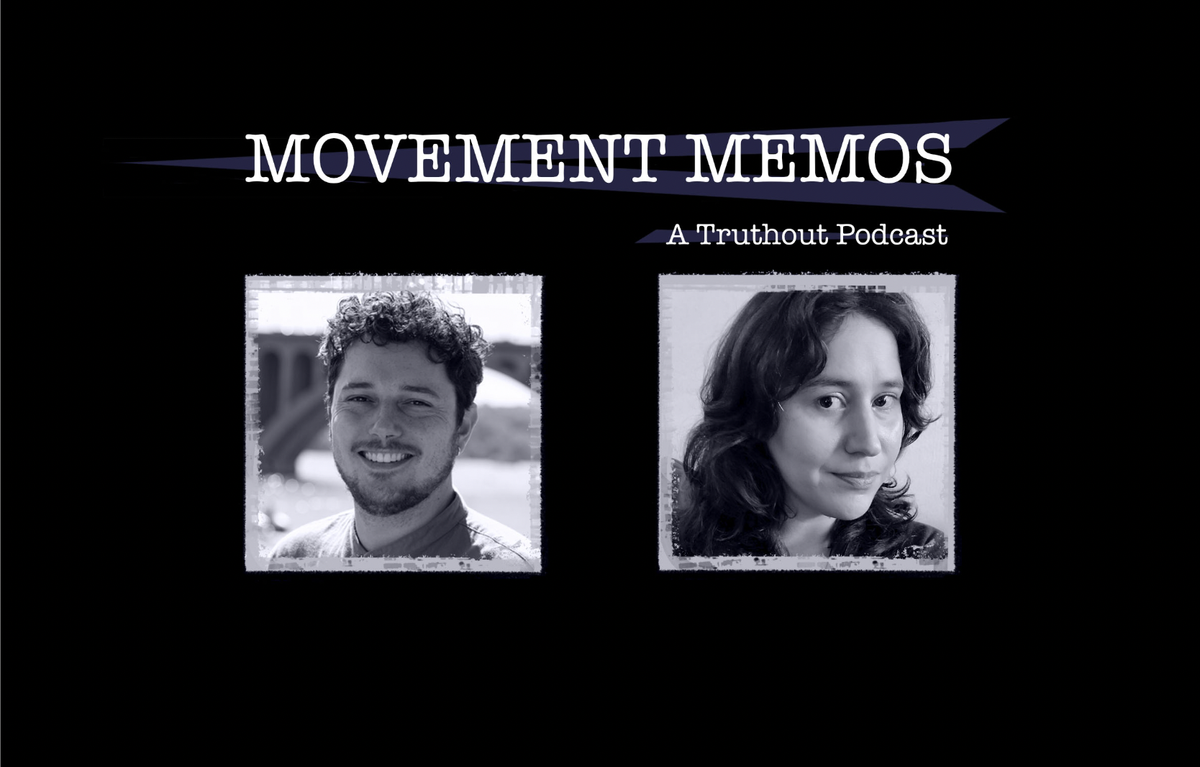
Across the country, communities are fighting back against the construction of AI data centers and winning. In this episode of Movement Memos, Kelly Hayes talks with Saul Levin, host of The Hum, about the growing movement against Big Tech’s infrastructure boom and the strategies organizers are using to stop these projects. They discuss how unlikely coalitions are building power, sharing tactics, and challenging the political and corporate forces seeking to override local communities.
Music: Son Monarcas, Jobii, and David Celeste
TRANSCRIPT
Note: This a rush transcript and has been lightly edited for clarity. Copy may not be in its final form.
Kelly Hayes: Welcome to “Movement Memos,” a Truthout podcast about organizing, solidarity, and the work of making change. I’m your host, writer and organizer Kelly Hayes. Today we are talking about the movement against data center construction. Big Tech has spent years embedding itself into nearly every aspect of our lives. It is an industry that’s devouring every other industry, degrading our information ecosystem, systematically deskilling us, and looting the world, all while trying to convince us that its dominance and its products are inevitable.
But the infrastructure required to sustain the current AI boom is creating a political problem for these companies. Data centers require large swaths of land and consume enormous amounts of water and electricity. They can drive up utility costs. And when tech companies have attempted to bring their material infrastructure into communities around the country, many people have fought back.
So what can we learn from these ongoing struggles? And how can we build the power we need to challenge Big Tech and fight for the kind of resources and infrastructure our communities need and deserve? Today, we’ll be hearing from Saul Levin. Saul is the Program Director at the Center for Nonviolent Conflict Research and host of “The Hum,” a podcast about data center resistance. We’ll talk about how people are stopping data center projects, and what tactics and strategies can be replicated in struggles around the country.
If you appreciate this podcast, and you would like to support “Movement Memos,” you can subscribe to Truthout’s newsletter or make a donation at truthout.org. You can also support the show by subscribing to “Movement Memos” on Apple or Spotify, or wherever you get your podcasts, or by leaving a positive review on those platforms. Sharing episodes on social media is also a huge help.
Truthout is an independent news organization, publishing stories that the craven corporate press won’t touch. We are a union shop with the best family and sick leave policies in the industry, and we could not do this work without the support of readers and listeners like you. So thank you for believing in us and for all that you do. And with that, I hope you enjoy the show.
[musical interlude]
Kelly Hayes: Saul Levin, welcome to “Movement Memos.”
Saul Levin: Thank you. Thank you so much for having me, Kelly.
Kelly Hayes: How are you doing today?
Saul Levin: I’m great. I’m feeling energized about organizing happening all over the country, even as I’m worried about the march of big tech companies trying to take over everything.
Kelly Hayes: I hear that. Well, I’m so glad to be in conversation with you today. Before we dive in, could you take a moment to introduce yourself and tell the audience a bit about yourself and your work?
Saul Levin: Sure. My name is Saul Levin. I use he/him pronouns. I host a podcast called “The Hum.” “The Hum” is a podcast dedicated to the fight against AI data centers, and we interview people fighting big tech in different ways, but primarily fighting AI data centers. And we interview farmers and social workers, beauty salon workers, as well as researchers and journalists and politicians, all about why they’re opposing AI data centers and what are the different things that are bringing them together with other people and what are their strategies. So that’s a big project right now.
I also coordinate a program called The Movement Incubator where we coach up-and-coming activists on their fights against all manner of things. And it’s an educational program where we help people figure out how to design campaigns. And just for a little more context, I’m from Michigan originally. I live in DC, and before I was doing this work, I was the political director at The Green New Deal Network. I worked for Congresswoman Cori Bush and [former Interior Secretary] Deb Haaland doing climate and labor policy on Capitol Hill. And during that time, I co-founded the Congressional Workers Union with a bunch of friends and we started unionizing Capitol Hill for the first time. So I come from a climate and labor organizing background to this fight against big tech and authoritarianism.
Kelly Hayes: So what prompted you to start talking with so many people involved in fights over data centers? What were you trying to understand when you began those conversations?
Saul Levin: Honestly, I was worried about where I’m from. In the state of Michigan, Governor [Gretchen] Whitmer and the Democratic Party, we were so excited to support getting into office to have democratic control in Michigan, started pushing through industry-friendly policies. They were trying to give unlimited Great Lakes water to companies. They were pushing forward huge tax abatements and incentives and I just felt like there was so little reporting about it. And someone told me about it and I thought that should be bigger news. If there was ever a bipartisan issue in the state of Michigan, it’s that we don’t want to give away our water or pollute our water. And there was so little reporting.
And I called a reporter who had written one of the only stories about this, a couple years back, and he was like, “You’re one of the only people that’s called me and I’m bamboozled. I mean, this is absolutely astronomical amounts of potential harm and we’re barely talking about it.” And so I started looking into the data center issue where I’m from, because I heard about it and was very worried. And I started asking around and people were like, “I don’t really know what you’re talking about. I don’t know.” And then suddenly people started calling me back and saying, “Hey, we have the same problem. Did you figure out what to do? This is really awful.” So it was really just finding out about politicians selling us out to tech companies back home in Michigan.
Kelly Hayes: And since then, some of those betrayals have become more public. Some of our listeners will remember that, back in June, Michigan Governor Gretchen Whitmer was caught on a hot mic during a conversation with Oracle CEO Clay Magouyrk about a proposed data center in Saline Township. In the clip, Whitmer was widely reported as saying, “We’re used to people saying ‘fuck no,’ and doing it anyway.”
Saul Levin: Yeah, it was pretty horrifying. I mean, her actions backed that up, but I think for a lot of people who haven’t been as engaged on the issue, they realized, “Wow, Gretchen Whitmer’s smart and she really knows what she’s doing,” which is siding with industry against the wellbeing and desires of Michiganders. And that’s a really scary thing when a politician that you elected to represent you is actually representing some really rich people from Silicon Valley.
Kelly Hayes: I really relate to what you’re saying about seeing a gap in the way stories are being told and feeling the need to step into that role. That’s how I got involved with movement journalism, back in 2014. I was frustrated with the way the campaigns we were organizing and the protests we were waging were being covered. Sometimes the coverage wasn’t there at all, and sometimes our stories were so mangled that most of what mattered had been filtered out. So I started trying to tell those stories myself.
And I hope that, in addition to whatever people take away from this conversation about the fight over data centers, listeners also feel empowered by that idea. If something is happening that you care about, and you’re in a position to learn about it and understand it, there is real value in helping other people understand it too. Especially given what’s happening to the media landscape, we need to deconsolidate knowledge, to have more people learning, documenting, explaining, and circulating what our communities need to know. And we need people writing this work into the pages of history, or at least creating a record that makes that possible, because within a fairly short set of years, a lot of stories get lost if we don’t try to preserve them.
You’ve talked about seeing a lot of potential in these fights for broader transformative change. What is it about data center organizing that makes you think these struggles could become something larger than battles over individual projects?
Saul Levin: That’s a great question, Kelly. I mean, it’s because of what people are saying. And as you mentioned, I got into doing this podcast, not because I… I never wanted to have a podcast. I don’t even like podcasts that much. I mean, everyone: keep listening to Kelly, but I was hearing amazing stories from people about why they were fighting data centers and how creatively they were fighting back despite limited resources. And I was honestly profoundly inspired by what I was hearing, and none of that was being captured in half a sentence quotes that were making it into the newspapers or headlines that said, “Farmer opposes data center,” and weren’t capturing not only the story, but the feeling that people had about these projects. And so that’s what inspired me to record these conversations in the first place. I was so moved.
The reason that we believe that there’s so much power in this fight is a few reasons actually. The first one is that data centers are just a really bad deal. There are about 20 to 25 different reasons we hear from people about why they’re fighting AI data centers regularly. There’s so many things not to like. Of course, most people know they can raise your utility bills, they use and pollute water, they can interrupt fertile lands, they power dangerous, “super intelligent” AI. All of those things are true, but there’s a much longer list.
And so one reason is that it’s such a bad deal that people from all walks of life have something to hate about data centers and AI data centers and very little to gain. And so that brings all kinds of different people together for potential movement building.
The second reason is that we see or I see AI data centers as a physical manifestation of really so many feelings and experiences that all of us have of a loss of control. When we think about, let’s say you’re going to a concert and your ticket has a huge fee on top of the price of the ticket, or your kids come home from school and they’re immediately addicted to social media despite your best efforts or what have you, that’s really upsetting and a data center is a physical representation of so many of those things that are so deeply wrong, if that makes sense.
Kelly Hayes: It really does feel like a culmination of what Big Tech has been doing to our lives. We’re talking about an industry that has been eating every other industry for years, contributing to the atomization of our communities, while trying to make privacy — or even the idea that your own words and art can belong to you — obsolete.
And now, the mass theft of every piece of art and writing these systems could devour has helped fuel a kind of monster that also needs these companies to devour huge swaths of land and unthinkable amounts of water, while jacking up the cost of powering our homes. It feels like an escalating, physical materialization of something that’s been many years in the making.
And I think that becomes especially clear when we understand AI not as some particular technology, because it isn’t any one thing, but as a political project, and one that can only perpetuate itself by devouring the things we make and the things we need.
So can you talk about what happens when people come together and rally against that political project by opposing data centers? Beyond stopping individual sites, what are people reclaiming in the process?
Saul Levin: The developers go around saying there’s so many pros to AI data centers. The biggest benefit I’ve seen from AI data centers is actually the social connections that people make fighting them. There’s so many amazing friendships and stories of different kinds of people coming together.
One interview that we did was with a woman who actually works in IT. Her name’s Lorraine. She told a wonderful story of how she loves using AI at work and uses it every day, but she was really concerned about an AI data center project coming in right next to the residential community that she lives in in rural North Carolina. And she described, as almost everyone we talk to does, a totally motley crew of folks. There was a public school teacher and her, an IT worker, and the mother of an autistic child who had gotten experience lobbying politicians to try and fight for her son’s rights and education and different health care settings and a retiree.
I mean, they just got a group of folks together who never would’ve known each other otherwise and maybe didn’t agree politically or socially on everything, but they said, “You know what? We can agree on one thing, this data center project is for someone else. It’s not for us. It’s going to be harmful to us, and let’s use everything in our power to fight back.” And they won a moratorium in their town, and that’s the story we’re hearing over and over again, these beautiful new acquaintances, friendships, camaraderie that’s developing out of people recognizing how harmful these projects are and coming together.
Kelly Hayes: This reminds me of a story I heard from an old friend of mine named Heather Lynn, who is organizing against a data center project in Grayslake, Illinois. Heather told me that opposition had become so overwhelming at public meetings that officials just started canceling them. But people kept showing up anyway.
So instead of people going inside and challenging their elected officials, people just gathered outside the canceled meetings, networked, and built relationships. It was a huge miscalculation on the part of those officials, because pissed-off people were finding each other, connecting, learning from each other, and building solidarity. And it was all centered around this experience of the government trying to shut them down, which really had the opposite effect.
To me, that’s such a powerful example of how we can leverage the missteps of elected officials when they slight us and underestimate our communities, and really turn these efforts to shut us out of what’s happening into new openings for political action.
Is there a moment you’ve heard about in your conversations for “The Hum” that you think really captures the potential of this moment?
Saul Levin: Sure. Gee, there’s so many. One that comes to mind is a conversation that I had with a guy named Drew Small in Nashville. He’s a music advertiser, producer, has a family business where he, as he’s described it, buys Facebook ads for musicians. And I asked him about, “You have these skills, they’ve helped you in making social media accounts to talk about the data center fight. That’s really interesting that people are using their professional skills after work in these fights.” But I said, “Where’d he get started? I mean, I assume you don’t know about soil quality testing or land use zoning or things like that, and here you are working with your neighbors to fight an AI data center in Nashville.” And he said, “Listen, they thought we were dumb and we actually didn’t know this stuff, but we’re smart and we know how to learn things.”
And so he went to the public library and worked with the librarian at his local library in Nashville to go through 200-plus pages of this document that had been prepared as this sort of land use application by the company. And he had circled a handful of pages where he didn’t understand what was going on, and the librarian directed him to the right aisles of the library to go to find out what was going on. I think that really shows how people are just, they’re not being shy, they’re not giving up. They’re saying, “You know what? What do I have? I know how to learn stuff,” and that’s enough. And so Drew, by the way, was part of a small group that won this moratorium, which is very powerful and comes with substantial detailed regulations in the city of Nashville. And it started with being underestimated by the companies and just being willing to be like, “You know what? I don’t know how to do this, but I am willing to learn to protect my community.”
Kelly Hayes: I love that story. There’s just so much there, including the fact that deskilling us, and making us less capable of that kind of learning and informed action, is part of the larger political project of AI, and part of the business model of these major chatbot platforms — and this story gives us a strong example of how that deskilling empowers the people behind this project. In addition to, as Sam Altman says, turning intelligence into a utility we have to pay for, these people also want us helpless. That’s the same reason Republicans and neoliberal Democrats have worked for years to defund public education and make college less accessible to poor people. Roger Freeman, who was one of Richard Nixon’s people, warned against the threat of an educated proletariat, but Big Tech’s thinking is bigger than that. They don’t want a thinking proletariat, and Drew Small is out here reminding us why.
And I know my friend Mariame Kaba, who co-created the For The People Leftist Library Project, will also appreciate how this story underscores the importance of public libraries. I think when we’re talking about what we don’t want in our communities, and where these unfathomable amounts of money are being spent, we also need to talk about what should exist — what should be valued, expanded, and fortified. And public libraries are a great example of that.
As Ruth Wilson Gilmore recently stated at the Socialism Conference in Chicago, when we’re talking about Locally Unwanted Land Use fights, or LULUs, “Those fights are always about everything …. They are about the social wage. They’re about the use and control of land, but also therefore what it is that people and the environment can expect from the next round of capitalism, saving capitalism from capitalism.”
And on that note, I’m wondering, as someone who spends a lot of time thinking about the harms that AI and data centers are causing in our communities and in the world, what do you think we need to be fortifying or building up instead? What is the counter agenda to the AI political project that is truly human and justice-centered?
Saul Levin: Yeah, I mean, I think there’s so many public institutions, even as these AI data centers are being subsidized by state governments, by federal governments, by reduced permitting requirements from the Environmental Protection Agency, we’re seeing enormous historic cuts to Medicare and Medicaid, to SNAP programs, to the basic programs that provide people food and shelter and health care. And so I think the alternative for one thing is just to make sure that people can access basic services and have their human rights fulfilled in this country. But instead of data centers, there’s a few categories of things.
We talked to some folks on the Seminole Reservation in Oklahoma, and I talked to a guy named Chebon. He’s a reverend and he’s a member of the city council. And Chebon was basically like, hey man, we decided to pass a permanent ban on AI data centers because it wasn’t really what we wanted to be thinking about on our council because we’re trying to improve the community center and find ways for people to come together instead of ways for people to be split apart. It was a beautiful story, and I think that’s exemplary.
We also had an amazing story coming out of New Brunswick, in New Jersey, there was a plan to build an AI data center, and when some Gen Z activists were able to lobby with their neighbors and some immigrant coalitions to get the plan canceled, it automatically triggered the building of a park because the other option was to build a public park.
And so I think these are some of the examples, physical infrastructure like community centers and public parks and public libraries are things that people actually want and benefit from so they can study and get exercise and learn and see friends. This is the alternative, and it’s much broader, of course. I mean, a park can include a skate park and basketball courts for kids to be able to run outside and adults too. So there’s the physical infrastructure, but there’s also the question of instead of data centers, what should we be spending money on? And to me, it’s programs to reduce pollution, to expand clean energy, to fund Medicare and social security. And those are exactly the programs that are being cut even while we’re being sold this idea that it’s necessary to funnel basically infinite money into AI.
Kelly Hayes: I really appreciated hearing Ruthie talk about this, because of the parallel she drew between organizing against data centers and organizing against the prison boom of the ‘80s and ‘90s. She talked about how these Locally Unwanted Land Use struggles traditionally bring together people who have little else in common, who probably have a variety of reasons for opposing a particular project — which I think is one of the things that a lot of people find exciting about the data center movement right now. It’s doing that in a big way. And Ruthie emphasized that the organizing opportunity, in these cases, where you have people with wildly different politics and worldviews coming together around saying no to a particular thing, is really in the absence of a shared alternative vision, the absence of a blueprint for what should be instead, which creates space for us to uplift a particular way of thinking about the problem, and a particular way of thinking about what should be, among some angry, motivated people.
So, while we’re talking about what we have to learn from past movements and past organizing, I’m wondering, what previous struggles or organizing experiences are you drawing lessons from as you engage with this moment, and what are you seeing people draw on in their work?
Saul Levin: Sure. It’s a really interesting question. What are the historical precedents here? I mean, certainly the most common thing that people talk about as it relates to the data center fight is the anti-nuclear movement of the 20th century that comes up frequently as a place where people were fighting over a broader discussion about how technology should be used, and we’re also fighting over specific sites and instances of its development. So I think there’s interesting things to pull from there.
But honestly, some of the main examples that we’ve been pulling from and thinking about are broader perhaps struggles like the Civil Rights Movement. There’s a huge amount of people who are stepping out of their comfort zone to fight AI data centers because there’s a fundamental idea that everyone’s life is getting worse when a data center is built. And I think learning from movements that really push people to think about how harming one person or one group of people or people in a certain area is actually screwing over everybody is extremely helpful in this moment because the developers are really trying to divide people and say, Well, if we don’t build it here, we’re just going to build it one community over.
That’s what they did in the Civil Rights Movement. They said, If we give Black people the right to vote in these different rights, then it’s going to take away power from white people. And one of the big lessons that we can learn from these different movements is that people standing together in those moments and saying, You know what? Actually, we’re not impressed by this argument. We actually want to build power together and we’re excited to do it, has been extremely inspiring and effective. If you actually read the financial documents of financial institutions analyzing data center construction and markets, it costs them millions of dollars to have to pick a new site after they’ve been going in a direction. And so also learning from movements, the movement against fossil fuel infrastructure, the climate movement, learning about the importance of slowing things down, even if it’s not a complete win, has been something that I think a lot of people have referenced as well.
[musical transition]
Kelly Hayes: We met because I heard you speak at the Socialism Conference. You were on a great panel about data center resistance, and during that conversation, you told a story about a protest organized by two eight-year-olds. Can you tell us about that protest and what you took away from it?
Saul Levin: Yeah, well, two eight-year-olds in Bastrop, Texas, which some of you may recognize is the place in rural Texas where Elon Musk has his secret lair and bunker, organized a protest against an AI data center that was proposed to be built right near their school.
And it’s an amazing story in part because of the recruitment. I mean, basically their mom, Holly, posted a video of them talking about why they didn’t want the data center and inviting people to attend the protests on her Facebook page. And then they posted an extremely cute poster that was drawn in crayon inviting children of the forest to unite against the data center, and a hundred people came to their protest in rural Texas. And talking to Ivan and Oslo about it was just incredibly meaningful because they just have a sense about these things. They’re just like, “This isn’t a good deal for us.”
And a quote that really stood out to me later was that this eight-year-old kid said, “Listen, if they came here and said we need to build an apartment building so people have a home, they would say we don’t have enough water here for that.” But then they want to build a poisonous data center and suddenly it’s like, “Take whatever land and water you want. And I don’t understand why that would be.” And I was like, “My God,” I mean, these are sharp eight-year-old kids, but a lot of eight-year-old kids are sharp, and they’re seeing what’s happening in the world and extremely troubled by the value propositions that are being made for us by these enormous tech companies and bought out politicians, and how those decisions don’t make any sense for their lives and where they live.
And they also started talking about how the farm that they live on with their parents is a hundred acres. They’re worried that it’s going to be targeted for an AI data center where they raise different animals and stuff with their folks. So it was a really cool story about how if these eight-year-olds can do it, in my mind, so can you, and also use what you have. Ozzy is a shyer kid, but an excellent artist and drew the poster. Ivan is a little more comfortable on the microphone and took a little bit of the extra burden of leading chants and giving speeches at the town hall. But they did it together with a bunch of their friends, and it seems like they’re threatening to do another protest if the project doesn’t get canceled. But yeah, I thought it was a really, really heartwarming story. It was a lot of fun talking to them.
Kelly Hayes: I’m sure it was, and I really loved that episode. And I just want to encourage anyone who needs something heartening in their life to go find that episode and check it out. It’s called “Children of the Forest Unite,” which is also a great title.
So I’ve heard you say that your podcast, “The Hum,” is about how to win. After talking with people around the country who have fought data center projects and in some cases stopped them, what have you learned about how people are actually winning these fights?
Saul Levin: Yeah, it’s a great question. I mean, a few things. There’s some patterns in what people are doing, and then there’s some specific tactics that I think are working really well.
The patterns are, number one, a very broad coalition. People are having much more success when they say, “To be here, you actually don’t have to agree on anything, but you don’t want the AI data center project.” And that way people can come in and be comfortable, build a much wider net, and also find out things that they wouldn’t expect to have in common with some of their neighbors and maybe even enemies who they didn’t even know or didn’t have much in common with.
That’s a huge contrast to, in a lot of other movement spaces I’ve been in, there’s like 20 rules of what you have to do to participate. We’ve seen groups doing that. They’ve had very limited success fighting AI data centers. I mean, really the secret sauce starts with a coalition where it’s like, we’re not going to fight about whether we use ChatGPT or Claude or nothing. We’re not going to fight about whether we like this pool or that pool in the community or who we’re voting for. We all know that this is a horrible deal that’s benefiting billionaires in Silicon Valley and not us, and we need to come together and stop it. So that’s number one, in the secret sauce to winning, at least from what we’ve observed in our dozens of interviews and organizing conversations.
Number two is that people lean into the skills that they have, whether that be professional or personal. So much work by women, especially Black and Brown and Indigenous women has been undervalued in our society for millennia. But even now, when we’re seeing so many moms who can hold a million things at once in their heads and in their arms and in their strategic brains, coming up with incredibly creative strategies to fight AI data centers. We’ve seen mountain bikers in West Virginia pouring over topographic maps to figure out exactly where the data center is going to be built potentially. We’ve seen, as I mentioned, music industry advertisers in Nashville building Instagram accounts from scratch and rapidly getting millions of views on content, promoting or raising awareness about the problems of data centers.
So I’d say number two in the secret sauce is whatever skill people have professionally, whatever skills they have personally, maybe you’re good at storytelling, maybe you’re good at listening, maybe you’re good at going and hanging out with a group of people you don’t know well and figuring out how to get along and what you do have in common. I mean, these are the skills that people are using to fight billion and trillion dollar companies and it’s really unbelievable. So I’d say that’s the second piece of it.
And then the third piece is prioritizing that we’re seeing where people win is getting out awareness and going fast. In other words, most people already don’t like AI data centers. And so the big question is, can you get them aware of the project before it’s already moved forward? Because then people can go to the town hall and put politicians, put their feet to the fire and they can build a lot of power. And we’re seeing that again and again, that once people find out, you just have to keep calling your neighbors and keep letting people know and keep knocking on doors or whatever way you’re getting in touch with people, then they’re mad and they don’t want it there either and they’re grateful to be contacted because 70-plus percent of Republicans, Democrats, and independents all don’t want to live near an AI data center. So I think that and doing it fast because these companies are trying to move before… They’re putting out NDAs and moving in secret and trying to not let you find out what company it is, doing the speedy outreach and research is extremely important.
So that kind of answers your question about what helps people win in terms of what are some of the patterns? But just if I can go a little deeper into it, what are some things we’ve seen that are extremely effective? Well, I’ll give you just a brief list and we can talk about them more if you want.
One example is in the state of New Jersey, the activists at CRAN, Climate Revolution Action Network, a wonderful group of Gen Z environmental activists, printed out a blank AI data center moratorium. In other words, they cut out the name of the town and did a Mad Libs thing, and then they passed it out to residents all over the state and were like, “You know what? Everyone here is smart and knows what they want, but this will save you time.” And so people started just going to city halls and town halls all over New Jersey with the document in hand, printing it out and saying, “This is what I want. Write the name of the town and vote on it right now.” And it just cut through these bureaucratic lies and random arguments and NDAs that were happening at the local level in New Jersey. We’re about to hit a hundred local moratoriums or bans passed in the state of New Jersey, and CRAN’s work with these blank moratoriums is a really big part of that.
So that’s just one example. There’s other tactics about using really narrow FOIAs, Freedom of Information Act requests that we could talk about. And also the big trend now, which we can get more into is combining a moratorium with regulations. And that’s what we’ve seen in Nashville where when the moratorium passed, it said, “Well, we’re not going to do anything for six months, but we’re not going to pretend like we need to study this and no one’s dealt with this before. We’re just going to make rules about how far data centers have to be from schools and churches, how much they have to pay for their own power, the fact that they can’t be polluting the water, the fact that backup generation needs to be renewable energy.”
All of these different rules were put in place at the time of the moratorium. So the momentum went into much greater rules so that even when the moratorium ends, it’s much less likely for the community to get screwed over by an AI data center project in town. So that’s another one is combining those two things that has been really powerful. I’m happy to go on, but I’ll stop there and see what you think.
Kelly Hayes: I’m really interested in what tactics feel portable. I’ve heard you talk about the importance of replicability, of identifying tactics and practices that can travel from one struggle to another. What have you seen that feels the most replicable and what parts of this work have to remain specific to local conditions?
Saul Levin: I mean, to me, it’s about starting with something instead of starting with nothing. And what I mean by that is try what people have tried elsewhere and then adapt it to your home that you know best. What I mentioned in New Jersey about passing around a fill in the blank moratorium, that could be done in Michigan, that could be done in Montana. Now, the exact language of the moratorium might be updated or different for those places, but the basic gist of it is the same and it’s the legislator’s job to figure out how to adapt the language to be precise wherever you live.
So I think that that is a really good example of the type of replicable thing we can do. Also, the problems with AI data centers are remarkably consistent and it’s better to be safer than sorry in the sense that if you copy really robust regulations and moratorium language from another place, it doesn’t matter if you haven’t seen the problems that are mentioned there yet, you don’t want to see them in the future.
So I think starting from a draft bill or moratorium that includes issues on transparency, on water and energy, on light and noise pollution is an incredible opportunity to have a foundation upon which you can add local concerns. In West Virginia, there’s been a bunch of problems and now in New Jersey, a bunch of problems of flooding related to AI data centers and spills of different wastes and fossil fuels and figuring out how to hold companies accountable for this stuff. Those are the types of things that we want to see replicated.
I also think that there’s so much cross strategizing that we see on the corporate angles. For example, we almost every day hear about people connecting between India and the U.S. and Chile because there’s a Google data center in each of those places and they’re trying to share what are the company’s tactics and what has worked against them. Then we’ll hear about people in Pennsylvania who only by being connected to some of their neighbors in the Poconos realized they had all the right people in the room to end a data center project before it started. And all it took was realizing that they were all on the same page and getting all connected to each other. And so there’s also a sort of dynamic about researching and understanding what the company’s strategy is that’s really consistent across lines.
But I think people want to get caught up and say, “Well, where I’m from,” people are proud and they should be. “Where I’m from in Kentucky is not like anywhere else in the country.” Well, it’s not like anywhere else in the country, but the company’s going to treat it like it’s anywhere else in the country and they’re going to ram through a data center project like it’s anywhere else in the country and they’re going to try and run over the community like it’s anywhere else in the country. And so there are things that you can learn from those fights and those regulations that people are putting up elsewhere as a foundation so you’re not starting from scratch.
And all of these companies are building off of each other. They’re renting compute from each other. They’re lying together about how much money they’re making, and it would be a huge disservice in the fight if all of us operated independently. So it’s been really exciting to see the level of generosity of people just spending time coaching folks way far away on a totally different electrical grid from them, expressing solidarity and sharing tactics has been really, really heartwarming and honestly unbelievable.
Kelly Hayes: Your work involves coaching activists and organizers, and I’m really curious about these conversations that you’re describing between folks on different local fronts. Can you say more about what organizers are learning from each other across some of these campaigns?
Saul Levin: Well, one thing that people are learning a lot is where to start. I mentioned the public library. I mean, if you think about it, it’s like this massive company is coming to my town, one of the richest companies in the world, to build an AI data center that’s going to be a hundred times the size of my house. What on earth am I supposed to do as a teacher or someone who works at a nonprofit or a beauty salon worker? And so one of the things that people are trading is basic optimism and hope and a realization that something is actually possible. And it’s pretty amazing the way that we’ve seen that play out.
The conversations go a little bit something like this. People are like, Well, I don’t really know what to do and I don’t know what I’m going towards. And so what you say first is, Well, somewhere like Nashville or it’s been introduced but not passed in the state of Oregon, there’s really bold, ambitious legislation that actually begins to take on the problem of AI data centers and some of the related issues. And so what you’re going towards can be that and a pause and then you can figure out things along the way.
And suddenly people are like, Oh, so I just have to edit something that’s my goal. I don’t have to come up with it from scratch. And you’re like, Yeah. And then you say to people, Well, but what do you really want? People already know. They know if there’s no library or no hospital in their rural community. I mean, people are aware of the things that they actually need, and we still haven’t met anyone on the podcast who said, The thing I really need in my community is an AI data center. And that brings us back to the movement against prisons. I mean, these amazing organizers were maligned and people said, Well, this is the only way to get economic development in this community. And it’s like, go ask the people who live there if they think the highest form of their community is to have a prison or a jail. Basically, people don’t feel that that’s the gold standard at all and that much more is possible.
That’s kind of how I think about it. And I want to highlight one story because it’s really cool. Early on in the podcast, and honestly, one of the things that inspired us to do it in the first place, I talked to Taylor Frazier McCollum, who’s now an organizer in Prince George’s County, Maryland, and she told me the story of her doing body waxing at a beauty salon as her job. She was up late reading and watching videos on YouTube and whatever, and came across information about a data center proposed near where she lived, and she was incensed. She was worried about the impact on her daughter’s health, and she started organizing her neighbors. She ended up quitting her job at the beauty salon to organize a fight for a moratorium.
Well, after she started doing that, she realized she had a lot of skills in connecting with people and talking to strangers because she had done this intimate and difficult work at a beauty salon. So she got a lot of her former clients and friends in the industry to sign a petition and eventually won a moratorium in Landover where she lives and was instrumental in fights in other parts of Maryland and Virginia in coaching people and saying, Hey y’all, I actually didn’t know or think I knew how to organize before, but my skills connecting with clients at the beauty salon actually positioned me well to be a leader, to speak publicly and confidently and clearly with folks who might be uncomfortable or new to something. She really transitioned those skills into being not only a badass leader, but someone who gives other people hope all over the region and the country. I think that’s the kind of intangible currency that people are exchanging to fight corporate power and a takeover by big tech of their communities.
Kelly Hayes: What a beautiful story. A lot of people you interview on “The Hum” didn’t enter the fight against data centers as experienced activists. They were just people who learned a data center was coming to their community and decided they had to do something about it. What have you learned about how people are making that transition from being concerned or angry to actually organizing?
Saul Levin: Yeah, I mean, people are diving in for all kinds of different reasons, which is why the industry and a lot of politicians, especially in the Republican Party, but really in both, have tried to tamp down the movement in different ways. It’s been very difficult in part because people are coming to this movement in so many different ways and from so many different directions. The biggest pattern, as I mentioned, for people getting started is they just start doing something that they already know how to do, and then that transitions. And so Taylor in Maryland started talking to people because she was good at talking to people. The other thing that I noticed is that people are copying strategies that they’ve seen on social media, and that’s where the replicability is important. They say, “Well, either we’re going to go have a town hall,” and then they call and they say, “Well, we want to have a town hall,” and the city officials have signed NDAs or whatever, and they say, “Well, we’re not.”
And then as you mentioned, then they go meet up there anyways and start organizing with each other. So people are not accepting no for an answer, and they’re outraged and indignant at the idea that the people who they elected to represent them are selling them out for basically corruption and money.
So the anger is fueling this, but also the pride. We did an interview with a wonderful woman named Emily in Oregon who is a farmer. She grows trees to become telephone poles. She’s also a social worker, and so she had a diverse skillset to start organizing, but the organizing that she and her neighbors and friends started was partly out of anger. They got a hundred people to come to a town hall initially, and by the way, this same group of farmers, after much work with other people around the state, got the governor and her opponent to flip to be pro-moratorium at a rally last week, many months after they had started, but just an amazing story.
And Emily was in this for pride. She was almost hesitant to come on the podcast because she was like, Saul, our community is so awesome. We live in a utopia in the Willamette Valley with wonderful fresh food. We could basically have a grocery store just by buying food from our neighbors and each other. You throw a seed at the ground and it grows, and I want my kids to have a chance to live in this place and other people’s kids to have a chance to live here too. And because there’s no rules on AI data centers, they’re just building them in some of the most fertile and lush soils in the entire world. What an attack on not only mother nature, but what an attack on our industry and our way of life here, and what a disgraceful way to use valuable resources and a beautiful community just because you’re not willing to take the time to figure out a less harmful place to build this or to question whether you should be building it at all!
So people do come in out of anger, and a lot of people start with research and try and figure out what the hell’s going on, but there’s also a sense of pride about the land people occupy and develop, the places people call home. It’s pretty amazing, and it really makes you think about the meaning of home and some of the sort of stereotypical values of patriotism are really being turned against this incredibly rapacious industry.
Kelly Hayes: So as people are getting activated and getting in motion to try to prevent some of these data centers from getting built, what are they finding are the actual pressure points? Who do you actually take on in order to win these fights, and what does action at the point of decision look like?
Saul Levin: Yeah, great question. It kind of depends what stage of the fight you’re at. If there haven’t been any known proposals, the biggest thing is to find out if there have. The industry has been notorious about being secretive and trying to keep information away from the public. So that’s been a constant theme is if you’re like, “Who are we fighting?” You might not know yet, and the companies may have shell companies and not be lying. Step one is to try and figure out who the players are. If there’s a developer putting money forward, then try and figure out who the developer is. If there’s politicians who are being shady or not sharing information, putting in very narrow freedom of information requests, just like, “What were their emails over this three week period,” can be incredibly important. Narrow just because you get it back faster and it’s much cheaper. You have to pay for someone to pull the files for a FOIA, as I’m sure you know well, Kelly, but for listeners, that’s why it’s important to be narrow.
And so we’re seeing that, but I also think that it’s often the local politicians or the businesses that have been corrupted. We do hear a lot of stories. For example, in Indiana, there’s some random farmer who’s been paid off by a company to be going to meetings and being like, “I’m a local guy and I’d love a data center.” But it stands out like such a sore thumb against literally everyone else, regardless of political background, that it becomes honestly a bit awkward and people quickly realize that someone has been bought out.
But yeah, so I don’t want to be too circuitous, so just to go back for a second, the answer is you want to go after the companies and related developers and the local politicians and try and make sure all of them are getting around to the moratorium that you’re pushing forward. They’re not going to agree to it upfront, but with pressure, they can see that their political futures are in jeopardy.
We have seen again and again and again, now, local government officials being recalled and being voted out of office because of their support for AI data center projects. And so the electoral threat is very real. There’s also tremendous shaming in small communities of people who sell out the community that everyone else loves so much. So there’s social consequences in addition to electoral ones that some of these folks face if they sell out the community. And I think that’s really important to leverage those tools if necessary.
The last thing I’ll say is that the developers are not going to welcome contact, but that’s part of building the case against them. There was an interesting story in Allen Park, Michigan, where a data center developer wanted to build an AI data center in the lawn next to a public high school, and one of the state senate candidates went up to the developer at the meeting and said, Hey, I don’t really know much about this. I’d love to exchange contact info and stay in touch. The representative for the company said, “That’s actually not necessary,” and turned around and walked away. So sometimes you have to push multiple angles to get information on the company to figure out what your legislators are doing, but those are some of the really important players to target in addition to getting everyone possible in the community together and on the same page.
Kelly Hayes: The framing of “The Hum” is ultimately about who controls the future. Can you talk a bit about what that struggle for control looks like, and what’s at stake?
Saul Levin: Yeah, I mean, we say it’s a fight about control because it really is out of control right now. These companies are coming in, and the reason that there’s so much uproar isn’t over one specific thing, it’s that people don’t feel like they have control over their lives, and it’s because they don’t. Companies can do whatever they want.
We haven’t seen any meaningful consequences for OpenAI, for example, even though we’ve heard numerous stories about young people taking their own lives after talking to ChatGPT and the technology recommending that they take their own lives. I mean, it’s horrifying. And meanwhile, people are facing AI forced into every app. They’re facing data centers pushed into every community, they can pollute as much as they want, use as much water as they want. And ultimately, when they don’t want the data center anymore, everybody knows they’re going to move out and the community’s going to be stuck with the cost of cleaning up whatever pollution and brownfield and deterioration was left on the site. And so people don’t have a sense of control.
Also, I was at a talk today where folks started talking about community benefits agreements. Well, how many communities have a lawyer and a negotiating team that’s equipped to negotiate with Meta or Google about what benefits the community should receive? I mean, it’s just such an uneven playing field that some of these conversations about community benefits or the AI data center are almost preposterous until there’s more of a level playing field.
I think one example that’s important to consider, Kelly, is that when Meta comes into town and says they want to build an AI data center, all of the information that you have about that data center, how much water it uses, how many fossil fuels or renewable energy are being used, what kinds of jobs are created and how many, all of it is coming from their own marketing materials and press releases. That’s because we have no rules regulating AI data center construction and independent auditing, and so there’s no requirement for someone else to go in on the dime of the company is how it should be, and actually figure out what the company’s impact is going to be in the area, all things considered, not just environmental pollution, but social upheaval, traffic. I’ve met Republicans in Louisiana who hate the data center because the construction vehicles dumped gravel on their yards when they were coming in to build a data center. I mean, how many people have you heard of talking about that as the primary thing that got them pissed off about the data center?
So there’s just so many harms being caused and there’s absolutely no rules. And to the extent that there are rules, they favor these big companies. And so the big fight over a moratorium and over regulations is to say, Hey, this isn’t the end of the road. We would like to build other things instead, but let’s just start with slowing things down and making it so you can’t build an AI data center anywhere.
As it stands in this country right now, and for the past 200-plus years, there’s been zoning rules that were started in large part because it’s so important to not build a coal plant right next to an elementary school or a house. And the reason is because people get cancer and they get particulates in their lungs and in their bodies and they get sick. Well, with data centers, there’s not really rules and the companies are skirting the rules, and so they’re building these facilities right next to communities, childcare facilities, gymnasiums, et cetera. And then they’re building diesel-fired generators right on site and polluting in the same way that would be illegal with another industry.
So it’s just so out of control and out of proportion how little rules these companies are facing that the basic fight here is about can people have some say in how their community looks and what their future can look like? Can there actually be real democratic governance of what our communities look like? And only then can we have conversations about how do we want to move forward and what do we want? You can’t even negotiate on an AI data center right now because we don’t have any information on independently verified information on what they’re doing.
I just quickly want to say that’s very related to what’s happening with AI overall right now. You asked about the connection earlier, Kelly. I’ve been stunned by, in the past several days, these big tech companies have said our technology is existentially harmful. It has the potential to end all of humanity. Everyone’s talking about it. Obama’s putting out some vague tweet about it. I don’t know. It’s like in every newspaper, right? Well, these guys were building it until yesterday, and in fact, today and tomorrow, they’re still building it at basically the same pace. And so you start to think, well, when they say, let’s pause AI or let’s slow it down. What do they mean?
Well, I read the letter from Dario Amodei, the head of Anthropic AI, and some of these other statements that they’ve made, and they’re all saying very vague things about pausing, they’re saying things about slowing down and third party people being involved that are people they already know to check the technology’s impacts. There’s nothing in there about meaningful legislation, regulation, accountability with teeth, investigations into what they’re doing, independent auditors who are checking out what’s happening, and robust regulation on the potential harms and excising criminal and civil offenses for the horrible things that they themselves say that they’re doing and making possible. And so I just want to say there’s a big parallel there in the data center fight and the AI fight that we’re losing control and these companies are doing whatever they want, and literally everyone stands to face the consequences of that imbalance.
Kelly Hayes: I’m so glad you brought that up because obviously a lot of this doomsday talk is them running game and playing distraction games with us. But the absolute hubris of it is incredible. If I were like, Hey everybody, I’m up to some things, some very constructive things that might kill all of you possibly, and I’m worried about that. So I’m going to talk to my friends who are also up to some shit that might kill all of you, and we’re going to figure out how we should approach that really responsibly — the maybe killing you stuff. No one would say, Oh, cool, we should probably trust that person’s vision, and weave their products into every layer of the government, and let them decide the future of infrastructure, probably.
It seems like people who aren’t saying wild shit about wiping out billions of people should potentially have more of a say.
Saul Levin: Right, God forbid. And it’s also like, hey, we’re not even tracking the chips, the compute that’s powering these AI data centers and these artificial general intelligence systems. We have no rules on the book punishing companies for letting out these “swarms” of AI agents. I mean, there’s absolutely no rules. And so vaguely saying we’re going to get together with our friends and freeze is totally ridiculous. And it doesn’t really give people a lot of hope. And it actually causes a lot of consternation and fear because they’ve already been lying to everyone in the country about data centers and their siting and their environmental impact and so many other things for the past several years. And so it’s like, well, why don’t you trust them? Well, they’re making money off the backs of people by lying, cheating and stealing the language to power these LLMs in the first place. And only The New York Times and some other bigger institutions have the money to sue them and recover any money for all of the words that have been stolen.
So yeah, I mean, exactly as you said, it’s like a bunch of bullies being like, Hey, I’m going to talk to another bully and see if he wants me to punch you with brass knuckles or shoot you. It’s like, well, it’s not very comforting and it also doesn’t even begin to get at how we’re going to prevent a kid from being bullied.
Kelly Hayes: And the whole “rogue AI agents got loose and got into some shenanigans”-thing really feels to me like a test run for a future where no one is accountable for anything that some of these programs wind up doing, where something really wild can happen and they say, Oh, sorry, robot dog got loose and killed a bunch of people. And what can you do? You’re dealing in these technologies, sometimes the innovation jumps the fence. And I have a lot of thoughts about where all that’s going. That’s probably for another episode.
Saul Levin: Sure, sure.
Kelly Hayes: But as we wrap things up, is there anything else you would like to share with or ask of the audience today?
Saul Levin: Yeah. Well, I’d just like to share a brief analogy, which is about this information flow. I am a big basketball fan. And so, Kelly, if you and I were running different basketball teams and I said, “Well, I’ll trade you two players for four players.” And then I said, “Well, what do you think? Should we make the deal?” I think you’d have trouble answering that question because you don’t know about their injury reports, you don’t know about their statistics, you don’t even know if those players are alive or if they’re even on my team. That’s the position that communities find themselves in dealing with AI data centers. It’s lies, it’s limited information. And then these pundits have the gall to say, “Well, let’s talk about the PR problem of AI.” It’s not a PR problem if you’re going around and lying to people and sneaking projects into their communities that are dangerous, harmful, and frankly, totally unnecessary.
And so I just want to say that to say, as people are analyzing the news and the media about this, it’s important to go back to that question of who controls the future, who has the information to be making these decisions, and can we actually develop a governance that’s based on reasonable trust, which is none for these companies? So when we’re thinking about governance or if you’re worried about, I don’t know, AI swarms or the dangers of AI or a data center coming to your community, think about the fact that there’s been absolutely no reason for you to trust these companies at any point and only enforceable rules the way that you would put on any game of basketball so that everyone gets the same amount of points for scoring from the same place. Until we have rules like that, they’re not going to behave and they’re going to continue harming people. There’s just no other way. So that’s what I would leave you with.
Kelly Hayes: Well, Saul, I want to thank you so much for this conversation. I’ve learned a lot. I’m sure our listeners have as well.
Saul Levin: It was my pleasure, Kelly. It’s so fun to talk to you and I look forward to keeping the conversation going in the future.
Kelly Hayes: Absolutely. And everyone, just a reminder, Saul’s podcast is called “The Hum.” As another podcast host who doesn’t listen to a lot of podcasts, I can tell you, this is a good one and some of these episodes will really do your heart good, so be sure to check it out.
I also want to thank our listeners for joining us today. Remember, our best defense against cynicism is to do good and to remember that the good we do matters. Until next time, I will see you in the streets.
Show Notes
- Don’t forget to check out Saul’s podcast, “The Hum.” You can find the episode “Children of the Forest Unite” here.
- You can learn more about the Climate Revolution Action Network here.
- For practical organizing guidance, check out MediaJustice’s “Toolkit for the Field: An Organizer’s Guide to Stop Data Centers.”
- Also recommended: Honor the Earth’s toolkit for fighting data centers.