Hope Is Not Naive: Rebecca Solnit on Backlash, Power, and Political Memory
“What if changing the world looked more like care than like war,” asks writer Rebecca Solnit.

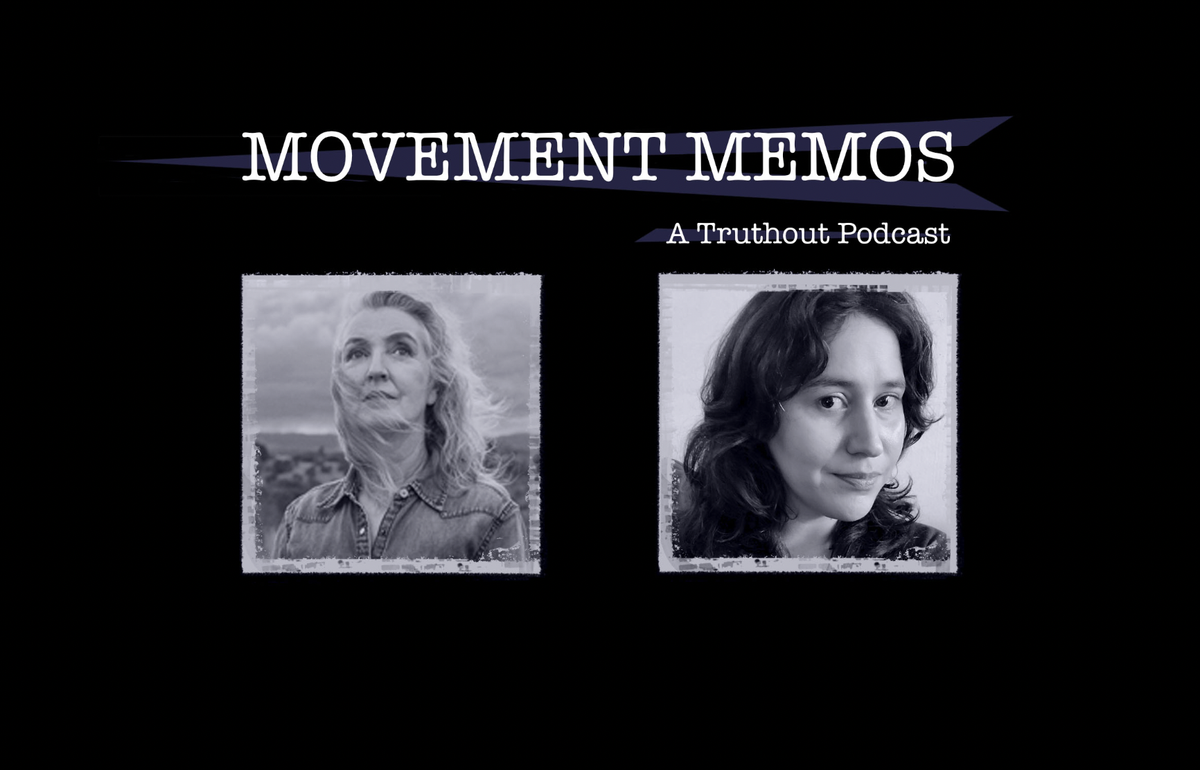
"One of the greatest cures for despair and depression is to do something, and to do something with the people who care,” says Rebecca Solnit. In this episode of Movement Memos, Rebecca and I discuss hope, backlash, political memory, and why history can help us understand our own power.
Music: Son Monarcas, David Celeste & Sarah, the Illstrumentalist
TRANSCRIPT
Note: This transcript was originally published in Truthout. It is reprinted here with permission.
Kelly Hayes: Welcome to Movement Memos, a Truthout podcast about organizing, solidarity, and the work of making change. I’m your host, writer and organizer Kelly Hayes. Today we are talking about hope, backlash, political memory, and what history can teach us about fighting for a better world amid so much crisis and loss. We’ll be hearing from longtime climate and human rights activist Rebecca Solnit. Rebecca has written more than 25 books, including Hope in the Dark, A Paradise Built in Hell, and her latest, The Beginning Comes After the End. Across her work, Rebecca has challenged people to think beyond cynicism and despair, and to recognize long, complicated arcs of collective struggle. In this conversation, we talk about backlash as a reaction to real gains, why our enemies sometimes understand our power better than we do, and how people can stay grounded when crisis and catastrophe are everywhere. We also talk about climate grief, misogyny, authoritarianism, interdependence, and why the stories we tell about change matter so much in moments like these.
If you appreciate this podcast, and you would like to support Movement Memos, you can subscribe to Truthout’s newsletter or make a donation at truthout.org. You can also support the show by subscribing to Movement Memos on Apple or Spotify, or wherever you get your podcasts, or by leaving a positive review on those platforms. Sharing episodes on social media is also a huge help.
Truthout is an independent news organization, publishing stories that the craven corporate press won’t touch. We are a union shop with the best family and sick leave policies in the industry, and we could not do this work without the support of readers and listeners like you. So thank you for believing in us and for all that you do. And with that, I hope you enjoy the show.
[musical interlude]
KH: Rebecca Solnit, welcome to Movement Memos.
Rebecca Solnit: Thrilling to be with you, Kelly. Hello, Chicago.
KH: I’m so glad to be in conversation with you today. How are you doing?
RS: I’m a bit euphoric, because not only am I in San Francisco, but the most San Francisco thing that could possibly happen to a person happened to me. The Sisters of Perpetual Indulgence, at their annual Hunky Jesus Easter extravaganza, canonized me as a saint whose name, which I helped with a bit, is Esperanzapedia.
KH: That’s amazing.
RS: And so, what better than to be canonized lovingly by the most flamboyant drag queens in service of the community, on a hot summer day in Dolores Park with 10,000 San Franciscans hooting and cheering, and trying to stay hydrated in the hot sun. Which of course gave way to fog this morning.
KH: Yeah, none of my recent stories can top that.
RS: Yeah. Well, this doesn’t happen to me every day either.
KH: Well, I’m really glad that happened. You deserve every recognition.
RS: Bless you, my child.
KH: Thank you. That’s a blessing I will gladly accept.
RS: I’m not sure how to be a saint, but we’ll get back to you about that.
KH: Well, when you figure that out, we can circle back and do another episode, because I feel like people need to know.
RS: Yeah, well, so do I.
KH: Well, I’m sure many of our listeners will be familiar with your books, including A Paradise Built in Hell, Hope in the Dark, and your latest, The Beginning Comes After the End. But for those who haven’t had the chance to engage with your work, what would you want them to know about who you are and what you do?
RS: Oh my gosh, I’m a San Franciscan. I’m a feminist. I’m a climate activist. I’ve worked on Indigenous, and lots of other issues, over the years. And really, being an essayist to me means an invitation to dive into what do things mean? How do they matter? How are these things connected? What are the relationships between them? How did we get here? And how do we retrace the steps to understand how to go forward?
I’ve been thinking lately that my formative years as an exceptionally unpopular kid were probably really helpful to me in leaving me room to not belong, by having my own opinions, positions, thoughts. And I’ve often felt like I’m swimming upstream against a certain kind of white left habit of despond, despair, defeatism, and in climate doomer-ism. I started writing about hope when people really felt all those things, when the war on Iraq broke out in 2003, and it’s been part of my work ever since.
KH: I was in my early 20s when Hope in the Dark was published. It was a brutal political moment, and for a lot of people who were trying to keep their bearings, that book helped make hope feel intellectually honest. I’m grateful for that. Because people often treat cynicism or pessimism as the more informed stance. And sometimes, it just isn’t.
In your new book, The Beginning Comes After the End, you write about the importance of understanding where we have been, not only to measure what has been lost, but to recognize what people have already changed. What do you think people are missing when they look at this moment without that sense of history?
RS: I saw something on social media yesterday that was just a graph of Japanese people recording when the first cherry blossoms bloomed going back, I think, to the 10th century. You can’t chart change if you don’t have what scientists call a baseline, a starting point. What were things like then? And I often feel when we talk about where we are, people don’t really have a baseline. I’ve been told half my life that feminism didn’t do anything, or feminism failed, by people who have no idea how bleak, marginalized, repressed, excluded, the condition of women was in the world into which I was born. And I’m 64, so I’m a little older than second-wave feminism. And my God, the world I was born into no longer exists.
So a lot of what I wanted to do with this book is give people back the baselines, first to see that we have changed the world profoundly, the we that believes in universal human rights, the rights of nature, inclusion, equality. I might as well say DEI, although that’s become such an acronym. Can we do JEDI, justice, equity, diversity, and inclusion, which is a much more fun acronym? And something that I think isn’t visible if you don’t have the baselines is what the right is basically doing internationally, and especially with Trumpism in the USA, is trying to make history run backwards. I always picture old men trying to push the rewind button on a video cassette player, because that seems like the right technology for them.
Because if you listen to what MAGA, and Trumpism, and the right is saying, they’re telling us five things. The last two will sound super familiar to everyone, but I don’t think people are hearing the first three clearly enough. So here’s my little list. You all are very powerful, number one. Two, you’ve changed everything. Three, all those different things you do are actually all connected. All the queer rights, human rights, anti-racism, feminism, environmental, climate, anti-colonialism, et cetera. Those are the things we don’t hear clearly enough, maybe because they’re shouting so loudly, “You did all those things and we fucking hate it,” that’s four. And, “We want to change it all back.”
Because if you look at what their agenda is, well, I’ve said for a long time that Make America Great Again really means make America 1958 again, and sometimes 1858 again. They really want to return to their gilded, fantasy version of a world in which queer people, people of color, women, are not equal to white men, especially straight white Christian men. They want to go back and forget everything we’ve learned since Rachel Carson about the natural world, that everything we do has consequences, that nothing we do goes away. There is always downwind and downstream bioaccumulation, and all the rest, so that they can pollute and destroy nature unhindered.
And I don’t think that’s a successful program. There is no rewind button on history. And once people have power and agency, and have seen what it’s like to have rights, voting rights, reproductive rights, they’re not interested in going back. And we are the majority. So we’re in this epic struggle. And in the short term, we have lost a lot of things. Roe v. Wade could be an example, but in the long term, it’s all pushback against what we’ve gained, including Roe v. Wade. Women had no reproductive rights, pretty much. In that world I was born into, people forget, for example, that Griswold v. Connecticut gave not all women, just married couples, the right to use birth control. More struggle had to happen for single women to have access to birth control not interfered with by the state. Roe v. Wade came about in 1973, because abortion rights were not among our rights.
So we have changed the world profoundly. They want to change it back. Our job is to not let them, partly by remembering how powerful and successful we’ve been in changing it. By celebrating our victories, our heroes, understanding the forces of change, and that begins with having a baseline.
KH: I really appreciate what you’re saying about having been born into a different era, and how that shapes your perspective. I was born in 1981, and as a child, I never would have imagined that queer people would win some of the rights and freedoms we’ve seen realized in my lifetime. I just wouldn’t have imagined it, because the weight of homophobia, and homophobic policies and violence, was so crushing. If you had told me then that, eventually, mainstream TV shows would have gay and trans characters who came out to their families and were embraced with love and respect, and that this would be fully normalized, that would have blown my mind. Same sex marriage is another thing that I just wouldn’t have begun to dream about, because it seemed so far outside the scope of anything that might be possible.
Of course, the right is actively working to dismantle the rights people have won and take away the freedoms people have now—and they’re trying to censor the media landscape as well. But when I was a scared kid who couldn’t tell anyone I had a crush on a girl, I couldn’t imagine that the terrain of contestation would include so many people who know what it’s like to access the care they need, to love openly, and to invoke legal rights that people had long been denied.
When I was a teenager and young adult, homophobia was normalized virtually everywhere. The most progressive people I was exposed to used “gay” as a pejorative and made gay jokes all the time. So while we have never gotten where we deserve to be, in terms of sexual freedom, safety, or what I would regard as liberation, we have seen that massive changes are possible, and that they can happen more quickly than we might imagine.
And on the subject of how things have changed over the course of our lives, in The Beginning Comes After the End, you wrote, “In some ways, 2025 was wilder than 1965.” What did you mean by that?
RS: I think I meant that 1965 could not have imagined or comprehended 2025. In 1965, it’s late for the civil rights movement, the official civil rights movement, but of course it also begat Latino, Asian American, Indigenous and other civil rights movements. The feminist movement was just gearing up, and the world is just so radically different than anybody anticipated. And I was a voracious reader as a kid, and I read one of my older brother’s sci-fi books, when he was very into sci-fi. And it was always spaceships and interstellar travel with completely conventional racial and gender stuff, it was easier to imagine inhabiting Mars than imagining women as equals for some of those unimaginative sci-fi writers. Which is why people like Elon Musk are such fans of their essentially retrograde visions of the future. And people really didn’t imagine how much things would change in so many ways.
And that’s something that’s easy to forget. That’s why I talked about baselines. If you don’t have a thousand years of when cherry blossoms bloom, you don’t know that they bloom earlier now because of climate change. If you don’t know what things were like then, you don’t know how we’ve changed them. I love that you brought up marriage equality, because something I find incredibly exciting, first that we liberate each other, that all these movements as the right believes and we sometimes forget are related. I think the reason why marriage equality, as in equal access to marriage for same-sex couples or couples of whatever gender was possible, is because feminists had in the decades before transformed marriage itself from a legally and culturally instituted, unequal relationship in which the husband was essentially the master, the wife, essentially the chattel, servant, subordinate.
And that came to me when I was thinking, “Why is the right so upset about what we call marriage equality?” And I was like, “Oh, they don’t want marriage equality of the kind that we officially talk about, because they’re deeply committed to marriage inequality, which is a subordinate wife and a dominant husband.” And I think that marriage equality in the legal sense was made possible by feminists creating marriage equality in the sense of equal relationships. There was this glorious moment when Terry Gross asked Gloria Steinem this question. She said, “So, you didn’t get married until your 60s?” And Gloria Steinem laughs and says, “Yeah, first I had to reinvent the institution of marriage.” And then she describes, if she had gotten married when she was young in the 1960s, she would have given away so many of her rights, including bodily self-control. Marital rape only became illegal in all 50 states in this country in 1993, when the last one did that. And there’s still some caveats, but wives had so little jurisdiction over their own property, their bodies, et cetera.
People are constantly coughing up the credit card thing, and it’s like credit cards, yeah. But there’s so much more, and there’s so much more beyond the law that was just culturally normal, including domestic violence, and the kind of infantilization of women that changed. And my mom had a friend a little older than her, who took a job on the other side of the country and then told his wife that they were moving. And I don’t think a lot of people can imagine a woman not participating in deciding what part of the world she would live in, and just being expected to suck it up and obey. And that was the normal world of the 1950s. So, we changed it. And I think it laid the groundwork for marriage equality because marriage could be imagined as a freely negotiated relationship between equals who weren’t necessarily traditional male, female, because it had been transformed for traditional marriage between men and women. We liberate each other.
I grew up in San Francisco and gay men have liberated me, a tragically heterosexual woman, by just modeling as all the queer and trans people in San Francisco did. As they like to say, “We’re all born naked, and the rest is drag,” that there’s so many ways to be human, so many ways to be sexual, so many ways to be attracted to other people or not. And that rules are there to be broken, in those cases.
KH: I think the rights and freedoms that trans people have won, and that the right is currently trying to claw back, represent some of the biggest gains we’ve seen in my lifetime. And the backlash in recent years, especially under this administration, has been so violent and so dehumanizing.
This is, of course, tied to the fascist practice of doubling down on gender roles, because patriarchy, and the idea of families as their own little authoritarian fiefdoms, are deeply ingrained in fascist projects. We’re seeing that very clearly right now, not only in attacks on trans people, but in the misogyny of this moment.
Can you talk about the state of misogyny in historical terms? How would you describe this backlash?
RS: As for the state of misogyny, I think it’s really important we pay attention to the backlash, to the manosphere, to the attempt internationally in the countries that have gone right-wing, like Russia and Hungary and Argentina as well as the US, to roll back women’s rights. But roll back, because we rolled them forward. But something that I think is equally important is, there’s a very astroturf attempt to convert young men to a much more sexist, misogynist worldview, and it’s pretty successful, but it’s very astroturf. It’s very much about the manipulative technologies of the internet, about people making money off it, about the way the tech oligarchs allow a lot of deep fake porn and misogyny, hate, and harassment to live on the internet because it slightly increases the profit margins of the already richest men in the world.
And yet at the same time, I think it’s really important to notice that, yes, we have to pay attention to the new misogyny in the manosphere. But quietly, most men across much of the world have become feminists without really knowing it. The way that men behave around women in public, in the workplace, in families and relationships, is very, very different than what was considered normal and acceptable when I was young and sexist jokes, grabbing somebody’s ass, wolf whistles, sexual harassment in the workplace — and sexual harassment was named by feminists. The term had to be coined, and then laws were passed. And then Anita Hill, in 1991 at the Clarence Thomas hearings, really gave the public a huge education in what it is and how it happens, and what the limited options were at that point to respond to it.
But you just see, in so many heterosexual marriages, that men are much more involved in child raising. And they may not be doing their equal share with kids, or domestic work, but the expectations and the norms are radically different than they were. Women have entered the workplace and are earning their own livings in many cases, and sometimes they’re earning more. And part of the manosphere crisis is, women don’t have to put up with men because we are not economically dependent the way we were when we were not supposed to work at all, stay home, or were not even eligible or encouraged to become doctors and lawyers and professors, and all those more high-paid positions. And because we’re not dependent, we partner when somebody actually meets our needs, including our needs for respect. And that seemed like it should be a lovely thing for everyone concerned, but the manosphere backlash has tried to convince men it’s a crisis.
It’s also tried to convince men, and I was looking at something about this last night, that somehow all men were like some kind of lords of the earth, kings of the jungle, reigning in pride and majesty. When in fact, if you go back a hundred years, most people were really, really poor. Most men were poor. They were subordinates to their bosses, they were subordinate to poverty. If they were non-white, they were subordinate in a racial hierarchy. And the idea that they were all this, I don’t know, Clark Gable, having someone make them a martini is a very dry dream.
So I want people to take the backlash seriously, but again, with a baseline to see that it’s a backlash against how we’ve moved forward, and that it doesn’t involve all men. And a lot of men are not into all that stuff, and they should be recognized too.
KH: What you’re saying makes me think about how, when I was a small child, I told my parents that if I ever got married, I wouldn’t take my husband’s name. And I remember them saying, “Oh, that’s cute, but we’ll see.” They just thought it was this cute, funny thing that I was saying, because I didn’t understand the world yet. But I did grow up, get married, and keep my name, and I have rarely encountered anyone who thinks that’s strange. And what’s more striking to me is how many other assumptions have shifted, around marriage, sexuality, and how relationships are supposed to work.
Recently, I was having drinks with some folks of varied political backgrounds here in Chicago, and someone made a joke about women over 40 being bitter and tired of their husbands. And I said something like, “Well, I’m 45 and madly in love with my husband, but I’m also crazy about my girlfriend.”
Not everyone laughed, or seemed as delighted by that as I was. But nobody reacted negatively, either. And I feel pretty certain that a person saying that, in mixed company, in the 80s, 90s, or even the early 2000s would have gotten a very different reaction. Obviously, some people still have a lot of contempt for nonmonogamy, but I do think we’ve come a long way in terms of how much more room people have to define their relationships and their lives — however insufficient or contested those changes may be.
What do you make of that shift?
RS: One of the things that’s changed is that there’s just so many more ways to be. Marriage, heterosexuality, childbearing, don’t feel like the inevitabilities for a lot of people the way that they once did. And I look at so many people of my parents’ generation who were deeply unhappy because they were closeted and in a heterosexual relationship, or hadn’t really thought whether marriage and parenting was what they actually wanted to do. They did it by rote and then it didn’t work for them, or there was something else they hadn’t worked out.
So there has been this huge liberation, and I think it benefits everyone, because part of the backlash against feminism is men thinking that they want women to become unfree rather than that men need to catch up in being free. And some men have, a lot of men haven’t, and they’re now being sold this bill of goods, as everyone on the right is, that un-freedom is somehow a better condition. And I think it really appeals to people with authoritarian personality disorder, who need neat, airtight categories and hierarchies, and want a world organized in those ways that I don’t think you and I think the world needs to be organized in.
KH: Yes, it’s really alarming, the way so many young men are getting roped into fantasies about having power over women, and the idea that domination is the fix the right is offering them for everything that ails them.
I also have a lot of respect for young people who aren’t buying into the bogus narratives they’re being sold about this moment, or about what’s going to make life better for them. Because this is a tough time to make sense of the world, and our place in it.
And for young people who are frustrated, who feel let down, who are experiencing all of these catastrophes that they aren’t responsible for: I get it. I understand how discouraging that can be. I experienced a lot of depression as a young person, and a lot of it was rooted in my awareness of injustice, and how fucked everything felt even then.
So I am not trying to minimize anyone’s feelings about how dire things are, because the stakes really are sky high, but I do think there is some strength, and a sense of potential, we can glean from zooming out and recognizing that the world is changeable in ways that may not feel obvious at any given time, while also acknowledging that change can leave us with contradictions that we have to hold together.
RS: Absolutely. And I know a lot of really wonderful young people who are benefiting from that liberation, but also struggling with a lot of other things in this era, including climate chaos, and the anxiety about the future it generates. But also the fact that here in the U.S., Reaganomics began the ongoing dismantling of the relatively economically comfortable and equal society we had constructed. It was far from perfect, and there was still dire poverty, but there was so much more generosity, so much more fairness in taxation, tuition, housing, health care were so much more affordable. Taxation was more progressive. It was just a radically different economic reality. And I’ve been on my own financially since I was 17, and I feel like I sprinted through my education and early years with all the doors clanging shut behind me, as just these things got harder.
And I think, I try not to be the kind of boomer who dumps on young people, because I think generational segregation and generational conflict is kind of gross when it’s perpetuated in those ways. At the same time, I do want young people to know that they live in a world that is just so much better, but also so much worse, because people often hear something I say and they turn it into an all or nothing. Things have gotten both better and worse.
And I also think being young with the internet and the ways that people get bullied and harassed, and taught to obsess about their appearance and their body and their sexuality, by Instagram and all the rest, is really hard. All the traps laid for young men with the manosphere and online gambling, all the gross forms of pornography out there that teach people sadly brutal versions of how bodies can connect. We didn’t have to contend with that in the same way. And when I talk about things changing, I think the ways they’ve changed in the last 10, 20 and 30 years is as important as the ways they’ve changed in the last 40, 50, 60, 70. And the book tries to take stock of all of that, partly because I’m ridiculously ambitious and… Well, nevermind.
KH: I appreciate your ambition. And I’m glad you mentioned that there was still dire poverty before Reaganomics, and before the organized abandonment of the 80s and 90s, because there was already so much suffering, exclusion, and exploitation, both here in the U.S. and in terms of what this country was exporting and maintaining globally. And at the same time, there has been a real dismantling of public goods and economic supports, and young people are living with the consequences of that, alongside so many other crises.
One of those crises is climate chaos. What would you say to a young person who is feeling hopeless about the climate crisis?
RS: First, I would say that a lot of people are doing a lot of absolutely heroic and beautiful things for the climate. And one of the greatest cures for despair and depression is to do something, and to do something with the people who care. I sometimes hear that nobody’s doing anything or nobody cares, you cannot believe that if you’re in the climate movement. Where you not only see the great activists, but the great scientists, the politicians who are engaged, et cetera. One of the really important things to always remember is, the great majority of human beings on Earth want to see climate action adequate to this crisis. They want to see public money spent, they want to see the way we live change. They’re ready to do all that. The obstacles are political, and they’re political because a small, powerful minority wedded to the fossil fuel industry, including the Trump administration, is committed to profiting off the old order.
And I think also, people don’t know something else important to know. We have the solutions. We have plans being implemented to leave the era of fossil fuel behind. Although when I was younger, 20 years ago, that was described as entering an age of sacrifice and renunciation. But in fact, it could create an age of abundance. The people supporting fossil fuels are trying to convince us we’re rich because we can eat a lot of hamburgers and drive big trucks, but we’re poor in hope. We’re poor in time for each other, for leisure, for social engagement, for our inner lives, our creative lives. We’re poor in connection to nature. We’re poor in confidence that nature is okay, and time to spend in it. We’re poor in health, often. Fossil fuel directly kills eight million people a year just through airborne particulates. It kills a lot of other people, gives them asthma, cancer, et cetera. It destroys huge amounts of land.
It corrupts and contaminates almost everything, including our politics. Look at the current crisis in Iran with the Strait of Hormuz. All renewable energy is local. Once you build those devices to collect sun or wind, and have them drive the generation of electricity, the machines are… The lithium and other stuff in them is endlessly recyclable, we can just stop gathering more of it. The wind and sun are free, and they’re local, along with geothermal, hydro, some of the other things. Nobody’s going to load up a cargo ship with sunshine or steal your wind, because they can’t, and they don’t need to. It would radically change the grotesque geopolitics that have driven a lot of the colonial stuff over the last century. And Iran has been violated repeatedly by Britain and the U.S. because of fossil fuel, going back to the 1953 coup against a democratic Iran that installed the Shah, who was overthrown in 1979, leading to the current kind of authoritarian regime, earlier with the ancestor of British Petroleum, which was the Anglo-Persian Oil Company.
So I want people to know that a better world is waiting for us, we just have to shove aside and overpower the minority preventing us from getting there. And we will definitely lose some things through climate change. Even if we stopped burning fossil fuel tomorrow, sea-level rise and melting ice would continue, but lots of other stuff would immediately discontinue. So we have really good options, it will take heroic effort to seize them, but let’s seize them. Join us.
KH: Thank you for that. I also want to name that, as Mariame and I say in Let This Radicalize You, hope and grief can coexist. We can practice active hope, in the tradition of Joanna Macy, by moving toward what we believe should happen, and toward the values we want to see expressed, while also honoring what’s being lost, and grieving for the people and creatures we aren’t able to save.
I had a conversation for that book with Anoa Changa-Peck, who was navigating a very serious cancer diagnosis, one that would have proven fatal by now if it had happened only a few years earlier. She talked about grieving the life she thought she was going to have, and the things she might miss. But she also talked about how organizing had taught her to look for possibilities and move toward them, even when they seem unlikely, because in organizing, the odds are almost always stacked against you.
So I really agree with what you’re saying about action, and about acting alongside people who share your values and want a better world. I believe those people, and this world, are worth fighting for, come what may. That’s how I want to spend my time on this earth: cherishing people, cherishing this world, and defending people, water, and land, because they’re worth it. And because whatever hope we have lives there, in the work of loving and defending what we can.
In The Beginning Comes After the End, you write, “I’ve often thought that our enemies believe in us, even when we don’t believe in ourselves.” What do you think our enemies understand about the changes underway that we sometimes fail to grasp?
RS: I mean, something I’ve seen the reaction against feminism, Occupy Wall Street, Black Lives Matter, et cetera, express, is that they’re afraid. They think these movements are very powerful. They think they’re going to change something. And there’s something in the kind of white English-speaking left that is very prone to dismissiveness, despair, premature surrender, which is a lot about not recognizing our own power. And so often I’ve seen, global capitalism really quaked around Occupy Wall Street, which did all these things I still think people don’t recognize. I joke if I’d had a daughter, I would have named her Indirect Consequences, because that’s my favorite thing.
And something like this, the Standing Rock Lakota protests against the Dakota Access Pipeline, Occupy Wall Street, Black Lives Matter. All these things created a lot of indirect changes that were incredibly important and influential, even if… Standing Rock was trying to stop a pipeline because Native people have proven to not give up over the course of centuries. I don’t assume that’s over, but all those things do all these other things that matter. Occupy Wall Street exposed the brutality of capitalism during that weird boom that crashed in 2008, the exploitativeness of subprime mortgages, and all the other forms of debt, student debt, medical debt, et cetera. It put forward candidates like Bernie Sanders, and Elizabeth Warren, and their worldviews. It led to practical reforms of many kinds. In California, we changed some laws to prevent some of that predatory lending, and just so much changed. And because it was often slow, indirect, wonky, technical, et cetera, people don’t always see it.
And something that makes my head explode is that people are constantly writing obituaries for feminism. The New York Times just did one this weekend, yet again suggesting that #MeToo had failed. And yet again, my head exploded in a kind of festive, firework-y kind of way. First of all, #MeToo was not a thing, it was just one more outcome of a surge of feminism that began about five years earlier. And the long work feminism had done, particularly since second-wave feminism started in the ’60s, and it actually changed all these laws. In California, for example, the non-disclosure agreements where you could silence women about sexual abuse, that got banned. So many other things changed. Men went to prison.
You look at the revelations about Epstein, which the stupid New York Times piece was trying to say shows that #MeToo failed, and there would’ve been no Epstein case without #MeToo, which I think gave Julie K. Brown at the Miami Herald’s editors a sense of the importance of this issue. So they essentially funded her to do a year’s deep dive in 2018 and 2019, into the whole situation, which is why Jeffrey Epstein went to jail, why all his records were seized and are now the property of the federal government that is trying to not release them. Why everything got shaken up.
And so you see people not understanding the nature of change itself. And I talked earlier about having the baselines which is, “What was the starting point? What were things like before this happened?” But also then, what was the impact? And a lot of it will be indirect. Sometimes it’s just, we think about the world in a radically different way, we understand it. We talk about it in different ways. Sometimes it’s really practical things, new legislation, laws, et cetera. And that often escapes the people who are dismissive, because they’re not down in the weeds, and they’re trying to tell all-or-nothing stories.
One of my good friends, Leah Stokes, worked on the Inflation Reduction Act. And I think her head is prone to explosion too, because a lot of people, including funders of climate action, are acting like the Trump administration killed the Inflation Reduction Act. They definitely stopped some of the things it does or did, they definitely have not stopped a whole lot of other things that it does. So we need to tell more complicated stories, stories that understand the nuances of things that didn’t work in some ways and worked in others. We need to have the long timeline of things playing out. We need to see how something like Standing Rock inspired AOC to run for office. And she’s been a huge force for good, including for climate, so that’s a victory for Standing Rock. It also changed the way a lot of Native youth felt about themselves, their culture, their agency, their possibilities, in really positive ways. That’s a lot harder to measure than a pipeline that was stopped, but I would never say that it matters less.
So I want people to have not just these longer time spans but this sort of more complicated algebra, rather than simple arithmetic, about how change works. And since I wrote Hope in the Dark 20-something years ago, that’s been a lot of what I’ve been trying to give to people as equipment. And I think of a lot of my writing as equipment. “Here’s a tool that is just a vision of how things work. Now go out and change the world with these tools.”
Okay, that sounded a little immodest, but you know what I mean.
KH: I think I do know what you mean. And as someone who was deeply involved in Occupy, and as a Native person who was involved with Standing Rock, I also get frustrated with the way struggles get reduced to these abbreviated summaries. I also think that the rapid fire nature of the news cycle, and the way folks are constantly bombarded by overwhelming world events means that a lot of younger people have never had the space to really process what happened even ten or twenty years before they began to process the news and how it affected them. And I think this is especially true in the era of social media, when people are really being handed history in meme-ified quotes and sound bytes without any coherent thread, any way of forming their own analysis about how one thing inspired or facilitated another. Not that we would have fully formed answers for them anyway, about what Occupy or Standing Rock meant, in the scheme of history, or what’s to come.
The truth is, we have not yet begun to understand the reach of those moments, or what they set in motion. People, ideas, relationships, practices, and entire social ecosystems grow because of moments like that, and we don’t know yet what they’re going to yield.
We have seen some things happen, and some things fail to happen. But the things that grew out of those years are still growing. We nurture things, we begin things, we inspire things, and we rarely know, and often have no control over, the totality of what that’s going to mean in the world.
RS: It’s funny, I did this interview with The New York Times a little while ago and I said, “What if changing the world looked more like care than like war?” And a lot of times changing the world is more like planting a forest than it is like cutting down a forest. You can cut down a forest in a day, let’s not get complicated about acreage and stuff. But you plant a forest, and it takes a while for the acorns to become saplings, to become full-sized oak trees. And so much works that way. I just saw something fascinating yesterday, Thoreau’s essay on civil disobedience which hugely influenced Gandhi and Martin Luther King [Jr.], was published only once in his lifetime, in a little tiny journal that only succeeded in putting out one issue, and not a lot of people saw. The kind of people I deal with all the time would be like, “Oh, Thoreau was a total failure.” And his impact in his lifetime was not huge. His impact in the 20th and 21st century continues to be profound.
So I like to say, “It’s always too early to go home,” and something that really kind of gets my back up and sends me into opposition is people who give up prematurely, people who announce that we’ve already lost when we’re in the middle of the battle or we haven’t really joined battle, when the outcome isn’t known. And a lot of… In a way, I feel like the right is a really obvious enemy. We know what it is, we know why we oppose it, we kind of know how to resist it. But there’s another enemy which is within ourselves, our own defeatism, our own lack of faith in ourselves, our own lack of understanding how change works. Often, our own lack of an ability to be in coalition with each other, when the perfect is the enemy with the good, and people start nitpicking at minor differences when we have major things in common.
So really, maybe because I kind of grew up in the left, while a lot of people’s focus is on the right, a lot of mine has been on what we call the left, although I don’t think anybody actually knows what the left is. I think it’s a grab bag for a lot of different things. Progressives, people who care about equality, human rights, the climate, the environment. So that’s felt like part of my work these last 20-something years.
[Musical Interlude]
KH: You write about the authoritarian investment in rigid categories and punished transgression. Why are fluidity, complexity, and non-conformity so threatening to these movements?
RS: The right is authoritarian. Authoritarians almost have a psychological disorder, where they see freedom and fluidity as chaos and turmoil, and a threat. And so they see security and safety in airtight categories, rigidity, hierarchy, a kind of immobilized world of solid objects that do not intersect. And I think we can talk about the ways that benefits some people politically, but I think it goes deeper than that, as a kind of psychology. And it’s interesting how often people on the right claim that something threatens them in a kind of zero-sum game, if women get to be treated like human beings with rights, somehow that harms men. But it doesn’t, really. Wouldn’t you rather have a partner who’s human than subhuman?
And so, a lot of it I think is capitalism is driven by scarcity, often false scarcity, the sense that there’s not enough for everybody and therefore we’re in competition. And that’s one of the ways that Darwinism was distorted into social Darwinism. His idea of the survival of the fittest was, “Fitness means you’re best adapted to your environment, or adapting to a changing environment,” versus , “you’re ruthlessly competing with others of your species.” And so out of that scarcity comes a sum that if you’re living in freedom and abundance and joy, then somehow, “You’ve taken it from me, there’s not enough to go around.” And you can see it in personal life if you’ve ever dealt with malicious envy, people who think that they would be more beautiful or happy if you were less beautiful or happy. So I think that that scarcity, and that obsession with category, is characteristic of the right, and maybe characteristic of capitalism.
And this book, which is very much a book trying to synthesize ideas moving forward in the last 70 years, in a lot of different fields, looks at the way that nature used to be described as essentially capitalist, as competitive. But people like Suzanne Simard showed us that, for example, a forest is a community. And somewhere in that book, I quote Margaret Thatcher, one of the godmothers of the contemporary right saying, “There is no such thing as society,” meaning that we’re all just individuals doing our own thing, not beholden to each other necessarily. Whereas Suzanne Simard showed that there is society even when there aren’t human beings, because a forest is a society exchanging resources and information, cooperating. Because actually different species depend on each other for their survival, they are not competing, they are cooperating.
And it’s interesting because nature has been, for the last few centuries, the ultimate touchstone. We claim that heterosexuality is natural, or white supremacy is natural, or male supremacy is natural. Nature tells us very different stories. And in the last several decades, science has gotten much better at listening to nature, and often has come back to what Indigenous people never forgot. We were never separate from nature. Nature is abundant, collaborative, symbiotic. Nature is a lot more socialist than it is capitalist. So I want people to see those things too, because I think that’s part of the kind of beautiful and exciting thing that’s happening right now, this convergence of Indigenous and contemporary scientific worldviews into this beautiful, elegant, orchestral understanding of the natural world and our place in it, and our inseparability from it.
I know that rambled a little bit, but it’s very hard to connect all the dots without meandering across all fields. Or even connect some of the dots, I should say. All the dots is a tall order.
KH: Well, there are a lot of dots, and this episode just isn’t spacious enough for us to connect them all. But can you say more about how the idealization of the traditional family helps normalize authoritarian values and ways of relating?
RS: I was really struck when I was writing this book and some other things, that on the one hand, the right is obsessed with the autonomous individual, the self-made man who pulled himself up by his own bootstraps. As though somebody else didn’t give birth to him, as though somebody else didn’t make most of the material objects and systems he depends upon. So you get this story of autonomy, but you also constantly get this story of family values. But if you look at it really carefully, first of all, it’s only one kind of family. It’s not chosen family, queer family, extended family, non-traditional family. And what it really is a little patriarchal empire in miniature, with father-knows-best patriarchal authoritarianism over women and children.
But I think what it also says over and over is that yes, there are actually some people to whom you do owe something. There is such a thing as society, but it’s the airtight nuclear family. And in saying that you are connected to these people, it really kind of licenses saying, “Oh, and also, you’re not connected to all these other people.” You get told you owe something to your family in a way that also says you don’t owe anything to anyone else. And that also relies on a kind of fiction, because your family is not an autonomous unit.
One of the things that cracks me up about survivalists is they have this fantasy of absolute autonomy in the wake of catastrophe, even though as I wrote about in my book, A Paradise Built in Hell, our survival depends on the community around us, it’s not individual. But how do you become a survivalist? You fucking go shopping, you buy a bunch of shit that other people made. And the idea is if you store up enough stuff other people made, food, clothing, tools, fuel, et cetera, then you can live off the stuff other people made for a while. And maybe you can also shoot some deer with weapons other people made, and cut them up with skills other people taught you, and eat them after cooking them on stuff that yet other people made.
So if you look at the fact that everything exists within systems, you see that in that sense, there is no such thing as an individual. And that does not mean we don’t get to be our quirky, creative, liberated selves, but it means that we are those selves within a system, an ecological system, a social system, a system of ideas. That we weren’t born into a void, and we did not form ourselves in a void. That what we do has impact on others, what others do has impact on us. That ultimately we live in this grand orchestra, and it’s really helpful to ourselves and others to understand how the music we want to play was shaped by and fits in with, and might shape others’ music.
KH: This resonates so much. Something people have sometimes gotten annoyed with me and Mariame Kaba about is our insistence that you need to find your people. You need friends. You need co-strugglers. You need to be in relationship with other people.
And some people get frustrated with that, because they’ve been so hurt or let down by other people that they don’t want to be told to practice interdependence. But what we’re always saying is: You are already interdependent.
RS: There’s no opt-out feature.
KH: There is no opting out. You can live a more isolated life while still being entirely dependent on other people, or you can try to become more intentional about that dependence — who you build trust with, who you care for, who you allow yourself to count on, and what kinds of relationships you want your life to be shaped by. It’s never really a question of whether we are going to go it alone, because no matter how much other people have hurt us, our lives are already entangled with theirs.
RS: Yeah. And I get the heartbreak of that. And I spent a bunch of years, of my younger years, being fairly isolated. I mentioned I was wildly unpopular, and kind of a misfit in school. And going back to an earlier part of the conversation, because young people often have these very sort of resilient and attractive bodies, we often act like your teens and your 20s are this kind of sexy golden age. And I just always look at young people and I’m like, “You are in the hardest decades of your life. You hit adolescence, heading towards adulthood and into early adulthood. You are doing the most creative and the most difficult job there is. You are creating a self. Who are you going to be? What is your life about? Who are your people? What are your values? What do you live for? Where do you want to be? What do you want to be?” That is more creative than writing any opera or novel or screenplay.
And it’s so demanding and difficult, and I feel like we don’t even really talk about it. We background it, or pretend that getting a formal education is the whole job. And you might learn to be a biologist, or a kindergarten teacher, or a prison rights lawyer. But there’s so much more to it. And yeah, people are not really optional. And I get that a lot of people have had toxic people in their lives, been lonely, et cetera. And the loneliness epidemic makes me feel so sad, and Silicon Valley makes me so angry. The rhetoric of Silicon Valley, again, is capitalist scarcity. You need your AI girlfriend, or therapist, or grief counselor, because there are not enough human beings to go around. Mark Zuckerberg, that despicable idiot, claims that most people only have three friends. But how can there not be enough people to go around when there are eight billion people on earth? Once again, we see what capitalism does, that we have no scarcity, we just have a distribution problem.
The internet, Silicon Valley has rearranged our lives, so we are so much less connected to each other than we were even a few decades ago. And breaking free of it and reconnecting, which I’m seeing people of all ages doing consciously in a lot of interesting ways, I’m hoping becomes a grand movement like a kind of Occupy. And somebody said to me once that part of what made Occupy so compelling, from what they could see, was people having unmediated face-to-face experience and kind of breaking out of that isolation. So yeah, we need each other, we are not separate from each other. Finding where it feels good, where it’s safe and kind and generous and inspiring, is hard work. It took me a long time to get there, because I was doing that work of making a self and finding my people. It never really stops, but I think it stabilizes a little.
KH: That point about Silicon Valley rearranging our lives feels so important, because in the age of social media, people are constantly being battered by the immediacy of crisis, catastrophe, and cruelty. And I don’t think many of us are conditioned to see history as a source of hope, given how deeply historical injustice has shaped our lives. But this book asks readers to take a long view, and to understand that a lot of the backlash we’re living through is a reaction to a long, slow era of meaningful change. Can you talk about the kind of engagement with history that can help us remain hopeful right now?
RS: There’s a theologian named Walter Brueggemann who once noted that memory breeds hope in the same way amnesia breeds despair. And I feel like so much of my work, like Howard Zinn’s work, and a lot of historians of Indigenous America, Black America, feminist America, and beyond America, has been trying to give people back their own history. And there is a history of oppression that runs throughout this country. There’s also a history of resistance to oppression. And I was just reading a letter from an 18th-century Quaker to James Madison, telling him we need to abolish slavery, and that’s even before the abolitionist movement gets going.
And you can also look back on history and see how differently people lived, how differently their values were, how unequal so many of us were. And how we didn’t even have language for some of the rights and wrongs that we now have so normalized as part of our equipment, our vocabulary. But I also think that, mostly the history that gets taught in school, although it’s gotten a lot better in a lot of places, tends to be great man history, change from above, the history of wars and revolutions and governments, and politicians. And the kind of social history, environmental history, cultural history, histories of ideas that in some ways matter more. I mean, does the American Revolution happen without the enlightenment? Does the enlightenment happen without, as David Graeber and David Wengrow argue, in The Dawn of Everything, the Indigenous influence in the 17th and 18th century on European ideas, bringing them new visions of what it would be like to be free and equal for both men and women?
So how do we actually find a history that invites us to recognize that ordinary people together have changed the world, that beautiful new ideas can be born, and that ideas have power, that we have power? And I often think it’s not that people are depressed by the past, by the genuine and authentic real past, it’s that they settle for these kind of super simple versions. And one of my go to aphorisms, attributed to Albert Einstein is, “Everything should be as simple as possible, but not simpler.” And we so often get versions of how change works, who we are, what happened in history, et cetera, that are simpler than serves us. Including the all-or-nothing stories, the instant gratification stories in which our protest on Tuesday either got the desired results on Wednesday, or did nothing.
So I’m always trying to just give more shades of gray from the black and white, more context, more measuring, and appreciating indirect consequences. More baselines, more stories of history from below, more stories about the power of ideas and how they play out, both good and bad ideas.
KH: Well, I really appreciate that framing. When people are feeling battered by the 24-hour news cycle, and disheartened by the trajectory we appear to be on, history can start to feel like a litany of harms and failures, with a few inspirational moments mixed in. So I really appreciate this invitation to take a more complicated view, and to recognize just how changeable the world is, even if we haven’t yet seen the changes we need most. In a cycle of victories and backlashes, we have seen flashes of what’s possible. And there is no reason to believe that we can’t build something better in the wake of this moment if we keep fighting.
I know that sometimes it takes work to rally our spirits, and to rally each other. But I take your work as a reminder that that labor is truly worthwhile. So, Rebecca Solnit, I’m so grateful to you for joining me today.
RS: A pleasure and an honor. Thank you so much.
KH: I also want to thank our listeners for joining us today. And remember, our best defense against cynicism is to do good, and to remember that the good we do matters. Until next time, I’ll see you in the streets.
Show Notes
Don’t forget to check out Rebecca’s new book The Beginning Comes After the End: Notes on a World of Change.