Repair Is a Survival Skill Under Fascism
Too much urgency to resolve conflict can close us off from what repair really requires, says Kelly Hayes.

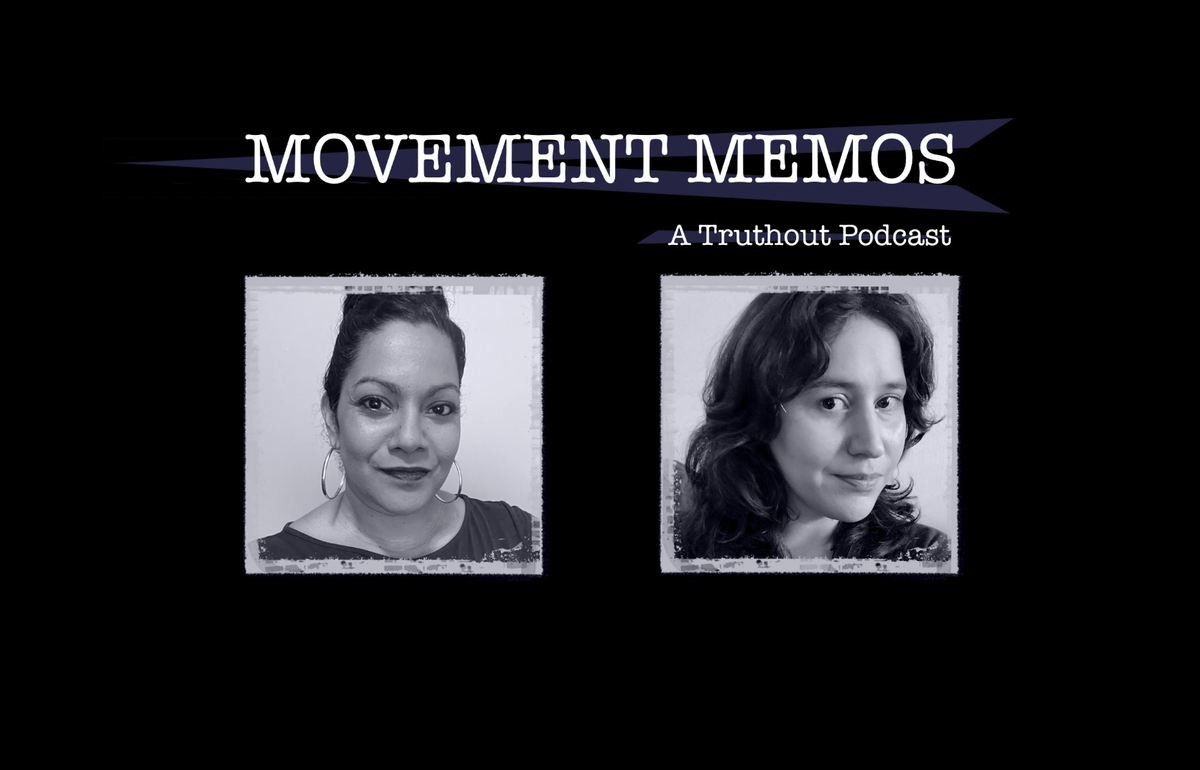
In the second part of my conversation with Tanuja Jagernauth, we talk about why conflict transformation can be so difficult, what happens when efforts at repair break down, and why conflict resolution skills are survival skills in fascist times.
Music: Son Monarcas, Katori Walker, and David Celeste
TRANSCRIPT
Note: This transcript was originally published in Truthout. It is reprinted here with permission.
Kelly Hayes: Welcome to Movement Memos, a Truthout podcast about organizing, solidarity, and the work of making change. I’m your host, writer and organizer Kelly Hayes. In our last episode, Tanuja Jagernauth and I began a conversation about conflict in movement spaces: how we talk about harm, how conflict gets misnamed or weaponized, and why so many people are trying to navigate difficult situations while exhausted, overwhelmed, and under enormous pressure. Today, we are continuing that conversation, and digging into some of the methods and tools people use to navigate conflict — and why those approaches can sometimes leave people feeling disappointed or let down. We also talk about how to make better apologies, how to receive feedback, and other social skills that are often lacking in our movements, and in society at large. Whether we realize it or not, conflict resolution skills are survival skills. Because building movements together is going to generate conflict, and the truth is, we can only survive together.
If you missed our last episode, you’ll definitely get more out of this one if you start there. You can also learn more from Tanuja by checking out her new zine, Healing Justice & Our Call to Practice, which is available from Haymarket Books.
If you appreciate this podcast, and you would like to support Movement Memos, you can subscribe to Truthout’s newsletter or make a donation at truthout.org. You can also support the show by subscribing to Movement Memos on Apple or Spotify, or wherever you get your podcasts, or by leaving a positive review on those platforms. Sharing episodes on social media is also a huge help.
Truthout is an independent news organization, publishing stories that the craven corporate press won’t touch. We are a union shop with the best family and sick leave policies in the industry, and we could not do this work without the support of readers and listeners like you. So thank you for believing in us and for all that you do. And with that, I hope you enjoy the show.
[musical interlude]
KH: Tanuja, welcome back to Movement Memos.
Tanuja Jagernauth: Thank you so much, Kelly. I am really excited to continue our conversation.
KH: Well, the response to our last episode, where you and I began this conversation about conflict resolution, has been huge. People have been saying that they really needed this, and that they’re getting a lot out of it, so I am really grateful for the chance to dive back in on this topic, and of course, I am so grateful to you for making the time to join me again for this sprawling two-part conversation.
TJ: You too, Kelly, and this could easily be a 10 part. So we will do our best and hopefully this can be just a jumping point for folks’ exploration and dialogue.
KH: Absolutely. Since we’re going to be talking a bit today about mediation, restorative justice, and transformative justice, can you start by saying a little about your own relationship to these frameworks and the experiences that shape how you think about this work?
TJ: Absolutely. Thank you, Kelly. So I basically learned everything that I know about conflict transformation and transformative justice from Black and Brown and queer sex workers, drug using activists and organizers, and other people who are literally trying to figure out how to survive and shift their own conditions without involving the police or the state or social services and harmful institutions.
And so when I talk about restorative justice and transformative justice and mediation, my positionality is very much rooted and aimed toward transformative justice and things that I’ve learned from experience. And so I want to really lift up and express gratitude for Shira Hassan, who taught me and some others the Clearing Circle, which Shira writes about and offers in Fumbling Towards Repair with Mariame Kaba.
I want to thank folks like Rachel Caidor and Coya Paz and Vickie Sides from the Chicago Rape Crisis Hotline where I worked decades ago, but it really set me up and oriented me toward Black feminist teachings and feminist work in general and a form of prison abolition that is deeply feminist. And I’m also grateful for what I’ve learned from and keep learning from Spring Up and their offering. So as I respond to these questions, that’s where I’m coming from.
KH: So, these processes — transformative justice, restorative justice, and mediation — can be incredibly helpful, but we’ve also heard from people who’ve felt let down by them. Can you talk a bit about what these processes are and why people are having mixed experiences with them?
TJ: Love this question, Kelly. And so I think of restorative justice, transformative justice, and mediation as related frameworks and processes, but they’re very distinct, but they’re all ways of addressing conflict, harm, and sometimes abuse and violence. So starting with mediation, it’s usually a facilitated process for working through conflict where people are hopefully partnering, rooted in their self-determination and their agency, to better understand one another and leave a process of mediation with clear agreements, new boundaries perhaps, and next actions that they will both agree to taking.
Restorative justice is a way of responding after harm has happened, and it centers the needs and the obligations that emerge from the harm that occurred. It gives the person who did harm an opportunity to take responsibility for the harm that they’ve created and to meet some of the new obligations and hopefully do what needs to be done to bring about some form of repair.
Then transformative justice includes the work of seeking repair, but it, in my opinion, goes further and it goes deeper, and it asks what conditions were present that made the harm or the violence or the abuse possible in the first place. And it really asks us collectively to reflect on what needs to change on the level of conditions so that we are not reproducing the harm or the violence or the abuse.
All of these processes, while they are distinct, and there’s so much good content out there you can dig into if you want to learn more, but what they have in common is that they’re all really trying to help us address our difficult situations and our harm and our conflict without simply throwing people away. We are all so deeply mired in patterns and practices of punishment. And as we know, punishment can feel satisfying. As Jenny Viets says, “punishment is quick.”
So when we are able to blame someone or point the finger at someone or expel someone, we might feel like, “Okay, the problem’s over. We solved it.” But when we try to engage with RJ [restorative justice], TJ [transformative justice] or mediation, we’re really asking something much harder of ourselves and each other. They really ask us to see each other not as flat characters in a binary story of I’m innocent, you’re guilty, but really to see each other as whole and complicated people, all capable of harming others and being harmed.
These processes are asking us to stay complex, to stay with each other, and to grapple together with what repair, accountability, and change are actually going to require. All of these processes, when they’re working well at their best, they are invitations for us to become more human with each other. So all of these processes ask us to be honest with ourselves and each other, not just about what someone else has done, but about our own shadow sides too.
So these processes ask us to be honest about our defensiveness, our tendencies to desire punishment, our pettiness, our fear, and our wish for quick resolution, or our wish for a time machine in which we could go back and make it all go away. If we’re not grappling with these parts of ourselves and being really, really honest and creating a process that is ready and able to intervene when these things emerge, not if, I really feel we can see these shadow sides hijack our processes and can lead to some of the disappointment that people experience.
When people say they’ve had mixed experiences with RJ or TJ or mediation, that makes a lot of sense to me. And one reason that these processes can be disappointing to folks is sometimes they’re being asked to do too much. They may be being used in situations they are not actually suited for. So for example, mediation can be useful in some conflicts, but it may not be the appropriate response or the container for handling abuse. I would look to transformative justice processes for something like that. And so when we’re approaching conflict transformation, clarity matters so much. We have to be clear and honest about what kind of situation we’re dealing with and what method is going to be best suited for that situation.
Going back to the terms we defined in the last episode, we can ask ourselves, “Are we dealing with a disagreement? Are we dealing with a harm, or are we dealing with abuse?” Again, if we misname the problem, we are much more likely to reach for and apply the wrong process, and that can absolutely lead to a dissatisfying outcome.
Another reason I think people have mixed experiences with these kinds of processes is that they are not quick. They require real preparation, lots of pre-work, pre-conferencing. They require real willingness to be in it and stay in it. They require real support, not just for the people who are involved, but for the facilitation, we need to take the time to set that up.
So in total, these processes require a lot of capacity from everyone involved. In RJ, in restorative justice, there may be a real effort to understand what the harmed person needs and what obligations now exist after harm has occurred. We also will take the time to figure out whether the person who caused harm is willing and able to take responsibility and participate meaningfully toward making the situation right. At the same time, this kind of process can feel hollow or it can even do further harm if that person who caused harm is feeling coerced or being coerced into participating. And that, in my opinion, really asks questions about, how did we prepare for the process?
The process can feel unsatisfactory if a community is rushing to bring two people together toward closure. If we’re too invested in the appearance of or the performance of accountability, than actual accountability, I think we’ll also set up a process that doesn’t really bring us to repair.
When we’re trying to practice transformative justice, the challenge can be even bigger because transformative justice is not just asking, how do we respond after harm? It is asking us to look at the wider conditions in which harm occurred. It relies upon and requires real relationships, and it’s really asking us to take an honest look at the systems that made the harm possible in the first place.
Transformative justice in contrast to restorative justice doesn’t always have to look like a circle. I think that’s really important to raise. Transformative justice processes can be a wide variety of interventions that happen over a longer period of time. It’s going to ask and really make us create ways to prevent the harm that took place. It’s going to bring in various ways to intervene. It’s going to point us toward what repair needs to look like, and again, the transformation of the conditions that made the harm possible. So it means our community has to be ready, our relationships have to be in the right place, and we really have to ask ourselves if we have the collective capacity to hold this kind of process over time.
So many of us are trying to do this work in imperfect conditions, and we do this work imperfectly. We’re carrying our own trauma, we’re carrying our own exhaustion, and we’re holding all of the contradictions that we hold. And so, of course, the results can be mixed. Of course, facilitators are going to make mistakes. And I think as we set up these processes from the very beginning, we can build in an acceptance of these things, and that’s where setting up really solid, honest, clear agreements can really help us.
Many folks who do this work are doing very deep and careful work. And at the same time, I think folks can be disappointed in these processes when the language of these processes is being used, but sometimes without the depth or the skill or even the political grounding that really makes them meaningful and rooted. It makes me think of institutions sometimes that adopt the language of RJ or TJ and end up flattening them or diluting them or simply misusing them.
And one thing that I took away from a recent webinar from Spring Up is that it’s actually important to acknowledge that institutions like nonprofits, while they can do really important accountability work, they can be more accountable to community, they actually aren’t situated to do transformative justice work. Transformative justice work is truly meant to be done by individuals outside of institutions and social services and any other containers of the state.
TJ is meant to be done with folks who are in community as much as possible. And so that can also be a dynamic that we’re seeing when folks come away really disappointed by a process that claims to be transformative justice, but it’s being held by, say, a nonprofit or a different kind of institution where we have to be careful that we are using the right language for what it is that we’re doing.
KH: So once people are in one of these processes, what do you think tends to help it go well, and what tends to get in the way?
TJ: So folks can be let down by the process of conflict transformation. Potentially if they are missing one of the three things, one of the three conditions that Kazu Haga recommends for a generative conflict. And those three conditions are relationships, skills to handle the conflict, and structure to handle the conflict. So I think according to Kazu Haga, we want to have at least two of the three of those conditions in order for the conflict transformation process to go well. So I think if folks are feeling let down by a process, let’s look at, okay, what was the state of the relationships, skills, and structures? And some questions that I think I would ask folks if they’re feeling let down by a process is did we actually choose and use the right process or container? Were we taking a mediation approach when maybe we should have taken more of a transformative justice approach?
Were we clear on what we were trying to do? Did we set a reasonable and achievable goal together? Was that goal clear and articulated? How did we set up our container? One of the things that I’ve learned from folks doing this work and that I’m also learning from Spring Up is the deep importance of pre-conferencing and pre-work before we get into a conflict transformation process. So if I’m the facilitator, did I meet with enough folks? Did I thoroughly understand the context? Did I analyze the conflict? And did I bring folks together too soon for a process? Should I have done maybe some more one-on-one work with people, for instance? Did we set the right agreements and did we all understand the agreements before we got into our process? So I would ask some questions about that.
I think sometimes a process can feel incomplete like, “Oh, we didn’t get to everything or I don’t feel like this was complete.” And to that concern, I would actually lift up—Spring Up talks about incompletion as an expectation in the process itself, as an agreement. So we really cannot expect one circle or even four to really do every single thing. Because if we’re talking about addressing violence, addressing harm and potentially abuse at the very root of it, it’s going to take time. So I think accepting incompletion has to be a huge agreement and something that we really honor and invite.
If folks are feeling let down by a process, I would ask, did we come in actually wanting and needing catharsis, but we weren’t really aware of that. I think sometimes when we come into a process, we may or may not be aware that we want some sort of dramatic showdown. And I’ll tell you, mediation, restorative justice and transformative justice are not going to be the space for that. But they can be a place for catharsis rooted in self-awareness and embracing of our own growth and our own humanity, and the humanity of the person we’re in conflict with.
I think if folks are feeling let down, I would investigate our relationship to change. Did nothing “change”, or did something change? And we’re struggling with that. Did we agree on the change that we wanted to see? Was that communicated clearly or are we missing the expansive nature of what change can look like? Leah Lakshmi Piepzna-Samarasinha talks about the things that people do to build new lives and communities is a form of accountability and change, and it counts. So are we missing that change actually has occurred or is taking place, but because we are looking for something different, we may be missing it.
I think there are so many reasons why we might be disappointed by a process. And I think with the right facilitator or facilitators in place, you can be held in that discomfort and keep on addressing the conflict. One thing I want to say is going back to our shadow side, sometimes we also want punishment in a process and when that doesn’t happen, we can feel let down by the process. I think that’s really important to sit with. And I say this with love and total acknowledgement of how deeply ingrained a desire for making the other person suffer, the person who caused harm, making them “pay.” And I think it’s really hard to talk about this and it’s really hard to admit that this is what we want. But I think sometimes that can be a part of why we feel let down in a process.
Sometimes people can feel let down by a process because it took too long and it did not deliver the “swift” results that maybe we wanted. And so I would remind us that the real transformation that we needed, if it’s going to happen in the context of relationships and if it’s going to be really for real, it’s going to take time, and it requires time, and it deserves time, right? But I think sometimes folks can feel like it’s all taking too long. Sometimes people are disappointed because the facilitator or facilitators made mistakes and they fumbled. And so I would invite us to really remember that any facilitator or facilitators of an RJ process or a TJ process or a mediation, they’re human too. And I talked to several people before this interview, Kelly, and I reviewed all of my materials and it really, I want to emphasize the need for embracing our own complexity and humanity of everyone involved, of the facilitators, of the people who did harm, of the people who were harmed.
Everyone’s humanity has to be held with respect and as much grace as possible, because ultimately we’re not trying to involve the state. So that means we are what we have. What are some other ways that you’ve heard folks be let down by a process, Kelly?
KH: What you said about people wanting punishment, I think that is one of the biggest things. People come into these kinds of processes carrying expectations and impulses shaped by carceral mentalities under racial capitalism. The urge to make the other person hurt because you are hurting. The urge to want everyone to stand in judgment of them. Those impulses come up in us even when we don’t want them to, and even when we are trying to speak a different political language.
I’m actually trained as a transformative justice facilitator, though I have not done that work in a long time. (Listeners, please do not contact me about facilitating anything, because I do not have the capacity to hold that work anymore alongside everything else I do.) But I have done it, and I think I am a better organizer for having done it. And in that work, I definitely saw iterations of what you are talking about in terms of a process feeling like maybe it failed, while something actually did change.
I have worked with people who did not necessarily get the outcomes they were hoping for, but who came to appreciate that the act of offering someone the opportunity to transform harm still mattered. Opening that door mattered, even if the other person didn’t walk through it. At the very least, that person knows the door exists, and maybe they will walk through it someday. Meanwhile, the person who is ready and willing can keep moving forward, knowing they are living their values, doing their best, and making space for themselves and other people to change, so that we can create as much safety and justice along the way as we can. Maybe that means something more is possible in the future than would have been otherwise.
In my overall approach to conflict and transformation, it helps me to remember that the way I engage with people is an expression of my values, and not an expression of their value. And that can be hard to hold onto in practice. Sometimes I handle something in a really fair and measured way, and later I’m reliving it in my head, telling them off, cutting them down verbally, saying all the things I might have wanted to say in the moment, and even getting mad at myself for not having done that. Because part of me longs for the satisfaction of doing that, and part of me feels like they deserve it. But satisfaction isn’t justice, and it doesn’t create safety, and I know that. And I do not want to become the arbiter of what people do and do not deserve. I do not want to assume I know enough to make those kinds of assignments of value, or to decide who should be met with harm or cruelty.
And I want to be clear that I am not talking about Nazis here, or about people whose politics are fundamentally opposed to my well-being and survival. I think we also need to be strategic, and not just reactive, in how we deal with those people, but I’m never going to be in a process with one of those people, or trying to repair a relationship that we don’t actually have. But I really want to hold onto the distinction between someone who is actually my enemy and someone who is talking out of their ass, or making me mad right now, or who has hurt me, or become my opponent in a particular moment. Those are not all the same thing. And if I start treating them as though they are, that distorts my politics and makes me worse at navigating conflict. When I am dealing with my own communities, my responses actually help define, not only who I am, but who I am in relation to those people, and if I am treating them like the enemy anytime we disagree, I am going to become their enemy, whatever my intentions are.
I also want to mention that sometimes, there is no actual need for a process, and moving something into that realm only serves to overcomplicate the situation. There was a period when the idea of having a process became really trendy in certain movement spaces. If somebody felt deeply hurt, the answer was suddenly, we need a process. And those of us facilitating processes in the 2010s were constantly getting asked to facilitate for every kind of disagreement, for breakups, for all kinds of situations. It was overwhelming. I had a lot of conversations with people about whether a process was actually what was needed. Did this really require that kind of container and a facilitator? Did it really call for all of that? Because sometimes what is really needed is for us to marshal our skills and our values in everyday life, and to have the support we need to navigate things more directly.
I was just talking to someone yesterday about what it takes to repair a situation when people in movement spaces let each other down. And I really think we need to be able to honestly name what is happening and name our own needs. If I fucked up, I need to be able to name that. And if I have been hurt, and a simple apology is not going to repair the situation, what am I actually asking for? What do I need, not to punish this person, but to transform the harm?
I’m thinking of a situation with a friend and co-struggler, I think over a year ago now, where I felt really let down by something. As I was thinking through what it would take to repair that relationship, I realized I was going to have to be able to say clearly what I needed in order to feel that trust was restored. And the truth is, I did not know right away. I knew it was more than the beautiful apology I had received, which reminded me that I did not want to lose this person, but I needed time to think deeply about what it would actually take to restore that trust.
I was really lucky, because I never actually had to name those things. This person was already all over it. They were taking steps that went way beyond what I would have asked for, in terms of showing me how seriously they took their mistake and what they were doing to make sure they did not hurt me or cause that kind of harm again. That was a really beautiful thing. But most people are not going to have that construction project figured out for us.
Most of the time, we are going to have to be able to say, hopefully in non-punitive terms, “these are the things I need in order to repair the trust that was damaged, or to repair the harm that happened here.” And we are not used to having those conversations. We are not used to having them honestly, which I think leads really well into my next question.
One of the major crises that comes up in these moments is that we need to be able to take feedback well. We need to be able to hear, “Hey, that was not fucking cool,” without getting defensive, collapsing, or turning the whole thing into a fight about intent. So when someone receives feedback, or is told they have caused harm, what does it look like to respond well?
TJ: Yes. Thank you for that, Kelly. I think one, let’s understand we are harmful people. I had a conversation with my dear friend Kiara this past fall and they just really laid it down. I was twisting myself into knots trying to not cause harm here and not cause harm here. And they were just like, “We are harmful people. We are going to cause harm.” So I really like if we can embrace that first of all, we all cause harm. We have caused harm, we will cause harm. And when someone lets us know that we have done them harm, it is a gift. When someone gives us any kind of feedback, it’s a gift, right? It’s a gift.
It takes a lot, I think, for people, especially in the midwest or if you grew up in a context that is more conflict avoidant, or if you struggle with people pleasing, it is really hard to give feedback and to be honest and say, “Hey, wow, I actually need something from you here. I was hurt here.” So be really, first and foremost, grateful that someone actually came to you and didn’t just ghost or just fade out and just stop talking to you or stop reaching out. Feedback is a gift and being told that you’ve done some harm to somebody is a gift. I want to normalize also when you do receive that feedback, the response that you may have on a visceral level, that is also normal. So I want to really just say that. And give us the invitation to take some time and maybe you need to tell the person, “Hey, thank you for giving me this feedback. Give me just a second. I’m going to process this information. I appreciate you, but give me a moment.”
And then you can take a beat, take a day, take however long you need, but not too long, and get into your response, feel the feelings, notice what is coming up for you. And if people don’t take anything else away from this episode today, you’re going to take away a lot, I hope, but please take away this. When you get feedback that you’ve done harm or other kind of feedback that is impacting you in a kind of way, this is a great opportunity to reach out to your accountability pod, okay? Highlight and bold, accountability pod. What’s an accountability pod? Great question. I learned about this from Jenny Viets and it just blew my mind because thanks to Bay Area organizers, we have this concept of the pod mapping, building out folks you can reach out to should something happen, right?
Who’s got your papers? Who’s got the keys to your apartment? But what if we all had an accountability pod, right? Two, three, maybe even one person who you know you can text or call or meet up with to talk through the fact that you fucked up. So reach out to your accountability pod and invitation to homework, build that accountability pod. I’m going to be working on that myself. But in lieu of that, a journal, take a walk, have a cry, do what you got to do to process the feelings that come up when you learn that you hurt somebody that you love or somebody that you care about. It’s okay. And then let’s come back to the conversation. And when we come back to the conversation, I think there’s a few options. I think asking the other person what they need. If you are ready and able to give an apology, you can ask for consent to give that apology. If they’ve given you a specific method that they would love an apology, great, use that method. And whatever you need to do, do your best to give a thorough apology. Don’t give a half-assed apology. Don’t say, “Oh, I’m so sorry you feel that way.” No. Yeah, there’s a lot of stuff you shouldn’t say. Here’s what you should do.
You want to express that you understand the impact of what you did on them. Express your remorse, express exactly what it is you’re apologizing for. Name that thing that you did. And if there are things that you are ready to do to make sure you never or that you minimize the chances of you doing this thing again, what are those things? What are the commitments that you are willing to make so that you minimize the chances of doing this thing again?
I think when you make an apology, we’re not going to presume that the other person is going to accept your apology. We’re not going to presume that your relationship stays the same. It doesn’t have to. And that’s okay. I think the very big important thing here, if you’ve gotten feedback that you’ve caused harm, if you realize you’ve done harm, this is a moment to check in with your values, with your actions, ask yourself, “Okay, have I become misaligned in my life? Have I gone astray from my own values?”
It’s okay because it happens. I’ve been there. So this is an opportunity to return, to return back to those values and practicing of those values and trying to embody those values better and better. And I think you want to express your commitment moving forward. I think there’s so much to it and there’s no perfect formula, but I really appreciate Mia Mingus’ writing on how to make a thorough apology and we’ll include their article in the show notes.
KH: You’ve already touched on apology a bit, but can you say more about what tends to make an apology fall flat, or actually make things worse?
TJ: I think what can make things worse, at least in my experience, is when the person just doesn’t express that they really get it. Going back to that example I used earlier, like, “Oh, I’m sorry you feel hurt,” no, no, no, no, no. Being vague, that usually doesn’t really hit. If there is no commitment to change behavior, I think that’s going to make things worse. Sometimes if there’s a “I’m sorry, but,” that can definitely make things worse.
And I have done this. If I’ve apologized, but I haven’t… If I’m apologizing and I’m actually activated while I apologize, right? If my goal in apologizing is just to make this conversation end, that can make things worse. I’ve been there before too, having done that. I think just not actually receiving the feedback and expressing that receptivity and that understanding of your own impact, that can make things worse. What do you think, Kelly?
KH: I really relate to what you’re saying about apologizing when we’re still activated, or just wanting the conversation to end. I think a lot of us do that with the best of intentions. We panic. We think, this person I care about is hurting, I need to fix this right now, I cannot let this sit. I cannot handle the uncertainty of this unresolved conflict. But that sense of urgency can actually close us off from the kind of reflection and honesty that repair really requires.
So I really appreciate your point that it is okay to take some time. It is okay to say, “I take what you’re saying seriously, and I want to think about it so I can respond in a way that honors our relationship and the work we’re trying to do here.” Because sometimes what gets in the way is not just our defensiveness toward the other person, but the way we start reacting to ourselves.
If somebody says, “Hey, you said something hurtful,” and that lands on top of some deep fear I already have about being selfish, or careless, or a bad friend, I may stop responding to what actually happened and start defending myself against a much bigger accusation that isn’t even being made. I’m no longer responding to the feedback. I’m in an imaginary court, acting as my own defense attorney, trying to beat a charge nobody actually filed.
And I think people do that all the time. So, we have to remember: a harmful action is not the sum total of who you are. When people bring us feedback, they usually aren’t saying, “This is your essence as a person.” They’re saying, “This happened, and I need us to address it.”
So, with that said, I want to ask about something I think a lot of people struggle with, which is that, sometimes there really is context that matters. Maybe I lost my cool and said something that was not okay, or made a bad decision, but it also happened in a situation where I felt cornered, or where the other person had been treating me unfairly. How do you name that complexity without becoming defensive or derailing the conversation?
TJ: Oh, absolutely. I think that’s really common and the way we navigate that scenario is really important. And I think two things. First, we want to do this exchange in the right order. So I think for the person who brought the concern, let’s address their concern first. Let’s do that process first. Let’s focus on that thing first. I hurt you. What do you need? What do we need to change in the conditions, et cetera? First.
Then, if I’ve done that and if we’re good and we feel like that part is complete, then maybe I can ask, “Now, are you open, Kelly, to hearing some of the context or some of my experience in that as well?” And chances are, if we’re in a loving friendship or loving relationship, yes, the other person having felt heard, having felt seen, having had their really valid concern received with love and with an eye toward repair and doing better, they may be open to hearing like, “Yeah, tell me what the fuck was going on with you.”
And then that gives an opportunity for the other person to express themselves. I think that’s beautiful. But I wouldn’t start with that being like, “Well, yeah, Kelly, I did say that, but first of all, me, I.” We don’t want to make the thing about ourselves first. So back to, I may need just to take a moment and deal with my own disappointment and my own behavior first before flooding you with all of that.
“Well, this happened because,” da, da, da, da, da. I hope that makes sense, but I think there’s room for all of that. And that’s what I mean when I say whether we’re using TJ or RJ or mediation, conflict transformation is an intimate process and ideally we’re coming at it with love and a commitment to maintaining the relationship. So yes, it’s going to involve both people having a perspective. And I think that’s beautiful to make space for understanding where the other person’s coming from.
KH: So let’s talk about what happens when a process is being misused. Since we both have more experience with transformative justice than mediation or RJ, let’s ground the question there. In a TJ process, what does it look like for a facilitator to respond when someone is using the process to manipulate, retaliate, avoid accountability, or keep causing harm?
TJ: So in this scenario where we’ve got an individual, and I’m presuming it’s the person who did harm, acting in a way that is actually causing damage in the process. They’re not taking accountability. They may be resorting to some of the practices they have rehearsed already in this context, retaliation. These are things that are well practiced for them and for many of us.
So it makes sense. You’re stressed. You’re activated. You’re going to default back to what you have already rehearsed. So if I’m the facilitator of a process like that, I see it as my responsibility to stay close to that person. So in that moment, I’m going to press pause. So let’s say we’re having a group conversation and I see this behavior showing up. I’m going to, as a facilitator, give us a pause, give us a break.
I’m going to remind us of the agreements that we have made to each other in this process. And I’m going to ask that person, “Hey, reminder on what we agreed to do. Can we try this again with our agreements in mind?” And if we’re in a situation where they’re activated, they’ve activated others, we are going to have to pause for the day and we’re going to have to come back.
We’re going to have to come back together. However, after I’ve had some conversations with folks one-on-one, so backing up and zooming out. As a facilitator, it’s my job to be in relationship with everybody, hold what’s called omni-partiality. I’m on everyone’s side because I want everyone to come out of this hopefully closer together at bare minimum and I want them to achieve the goals they have set.
So I’m going to keep in mind that, especially in a transformative justice process, these processes can be long. These processes will involve people testing the boundaries of what they can do. Sometimes I think this behavior comes from a person, and I get it, comes from a person feeling attacked. They’re feeling super stressed. They might be coming from a really scared place.
They can see the change coming or they can see the threat of losing something in this situation, whatever it is. So I’m going to work with them. Hopefully they have their own support people and we’re going to ask them, “What do you need here? How can we resource you? How can you resource yourself in this moment so that you can come back to this process and be in alignment with the values and the agreements that we’ve already made?”
I talked to Staz from Spring Up about this and they had just wonderful things to say. They’re the person I’m getting a lot of this guidance from right now. If I as facilitator overreact in that moment, if I get stuck in my own stress response and go into my own stories of like, “Oh, I suck at this. I never should have done this. Oh, I’m out of my…” Okay.
And if I shut it down, if I say, “You know what? Fuck it. Fuck this. Fuck it,” if we allow that behavior to shut the process down, then what we actually end up doing is affirming a narrative of the person who’s doing that behavior that, yep, see? See? People just throw me away. I’m disposable. We dispose of each other. This stuff doesn’t work.” It’s a script that we’ve been given.
It’s a script that we have co-written together, and our task in a moment like this when the shadow emerges is to stay in it, I think. It’s really just stay in it. And so me and my co-facilitator or co-facilitators, we have to get with our supports. We have to check in with everybody who is in that scenario to see what they need now. And we have to check in with the person who did the behavior.
But ideally, we’re going to stay in it and we’re going to get curious and ask, what does this show us about the needs of this person and the needs of this group and the needs of this conflict and the needs of this overall context so that we can basically come back and help this group rewrite another way of being together. So those moments, as painful and disruptive and disappointing and frustrating as they can be, can actually be an indicator that we’re really close to the juice. Does that make sense?
KH: Absolutely. So I’m wondering, how do we know when repair is possible and when the real task is boundary setting, separation, or protection?
TJ: Great. Great question. And actually all of those things that you mentioned, Kelly, can actually be the repair. And I think repair needs to be defined at the very beginning of the process by the person who was harmed, but also by the group, if we’re using a TJ process especially. For me as facilitator, one of the questions I’m going to be asking is, “Okay, this may be a conflict between two people. But is this conflict between these two people an indicator of a larger group dynamic, or a larger cultural dynamic, or a social dynamic that needs some intervention?” And so, I’m going to ask questions about all of that. And for the person who was harmed, I really do need to make sure I do not proceed with any process unless they have clearly articulated, “Here is the thing that I’m seeking.” And as facilitator, and this is my approach to it, I get to push back on that too.
If I’m working with someone and the person’s like, “You know what would be repair for me? If they move to Canada. If the person who harmed me would just drop off the face of the earth or at least move to Canada, so I never have to interact with…” I’m not personally going to sign up to support that, but I might say, “Okay, I’m hearing you need space. You need some distance from this person. How can we achieve that in a way that preserves your self-determination, their self-determination, your dignity, their dignity?” And I get it, people who’ve been harmed, we’re mad, we’re mad, we’re mad and we want punishment, we want catharsis, we want it big, we want doors to slam and we want glass to break. Speaking for myself, what we sometimes want is an acknowledgement of how fucking much this hurt, right? But punishing the other person is not going to get us that and there’s nothing that anyone can do to take away the thing that happened. And now that this thing has happened, change is inevitable and sometimes we resist that too.
We have to be able to grieve, we have to be able to rage, we have to be able to be held in our complex feelings, and then we have to be able to articulate. If we’re involving other people to help us through a process, we need to be able to articulate, “Okay, what can repair look like here? What can be the measure of success, so that if we achieve this thing, then we know we’ve done our part here?” Part one maybe out of 20? Fine. And we can ask questions like, “Yeah, so what are we repairing? And for whom is this repair? Will the repair cause harm to the person who did harm?” Then I don’t think we should sign up for that. What is the purpose of the repair that we’re asking for?
Who will benefit from the repair? Is it like an individual thing? Is it a collective thing? Back to the point about sometimes one-on-one conflict is an indicator that there’s bigger stuff to address. Are we not addressing that bigger stuff? Then we need to. We need to get into it. Is the repair achievable? What’s the timeline we can envision this repair happening? It’s not going to happen tomorrow. It’s not going to happen next week. Can we ground this in a reasonable timeline? And then can everyone agree, it doesn’t get to be sneaky? Like, “Well, we’re going to plan on repair looking like this and we’re going to sneak attack the person who did harm so that they’re going to find out.” No, no, no, no. We’re building a world rooted in consent. Hopefully, ideally that’s the world I’m trying to build. And so, we’re transparent about what repair is going to look like.
You know what I’m saying? And so sometimes repair, it’s a new boundary. It’s a boundary where we didn’t make a boundary before. I think this happens all the time. Or it could be new agreements. It could be, “Hey homie, okay, I’m just going to stay over here in my lane and you’re going to be over there doing your thing in your lane and we just don’t collaborate.” That can be a form of repair because it’s agreed upon next action together. I think I’ll leave it there for now, but do you have stuff to add to that, Kelly?
KH: I think I just want to add that sometimes, we’re going to need to set boundaries, and arrange some separation and protection, and it’s not going to come from the kind of process we’ve been discussing. Because not everyone is going to be willing to engage with these processes, or to engage in good faith. And sometimes, people may simply be unwilling to consent to something that others believe is necessary in order to create as much safety and justice as possible.
For example, someone might be prone to violence when they drink, but in a process, or even conversations about a process, they might tell you that their substance use is non-negotiable, and that you’re trying to violate their bodily autonomy. They might persist in showing up drunk and shoving people around. I’m not saying this to single out people who use substances—these refusals can take many shapes—but simply to offer an example of how a behavior or pattern that others might clearly view as inextricably tied to the problem might be non-negotiable for someone who keeps recreating the same harms.
At that point, we might be looking at separation, protection, and boundaries, and the person causing harm may not be part of shaping that course, beyond being informed about the limitations being set. We might have to do some safety planning for the people most affected by their behavior. Sometimes, we do our best to interrupt harm, to restore people’s safety and dignity, and to change the conditions that allowed something to happen, and it’s not going to look like a TJ process you can summarize in a podcast episode or a workbook. I think everyone I know who’s involved in this work knows that, but I still think it needs to be said.
We don’t want to treat people as disposable, but some people are not ultimately going to act in ways that allow us to keep them close. I think it’s so important that we try, but I also want to be honest about some of the things I’ve seen and experienced, and the seemingly dead-end situations some folks have encountered. Those situations don’t mean transformative justice and restorative processes don’t work, or that people shouldn’t try. I just want to name that it’s not always a matter of people not knowing what they’re doing, or having the wrong expectations, even though that happens a lot. Sometimes, the best efforts you could be expected to make are just going to hit a wall.
There’s no path for conflict resolution where that isn’t true, by the way. Just ask all of the people who are still relying on, or more likely, just fantasizing about punishment for the people who’ve wronged them. That is a framework that, as a general rule, is not delivering. I just want to say that sometimes, doing the things I believe we should try to do, it doesn’t get us where we need to go, and we wind up having to work the problem from there.
I’m not trying to tie that up neatly. I just want to name that sometimes the best efforts and intentions in the room do not yield a shared, workable path forward. Because I know some people are experiencing that, and need to hear it named.
TJ: Yeah, absolutely. Thank you for that, Kelly.
[musical interlude]
KH: How should movements think about the tension between not letting conflict consume everything and not treating conflict as a distraction from the work?
TJ: Yes. Yes. I have absolutely been in situations where even feedback, Kelly, has been treated as a distraction from doing the work. For me as a systems thinker, as somebody who usually works in the administrative and operation side of things, it’s extremely frustrating. And so, I want to hold space for people who tend to be the people who raise feedback or point out conflict or name the tensions. And then, sometimes in our spaces, that person who names it gets punished or ostracized or targeted or any number of things. And it’s really painful. And my opinion is it’s really detrimental to look at conflict and to look at feedback as a distraction from “the work.”
What is the work? In our work, we are encouraged to build relationships, our movements are encouraged to be relational and I don’t see work in movement being disconnected from conflict transformation because again, we’re trying to build a different world, a better world that is outside of and beyond, and it makes the prison industrial complex obsolete. And so, if we really, really want that, then we need to take ownership of all of our behavior, the full range of all of our behavior. We need to know how to make mistakes and receive feedback together and solve our problems together. So, yes, dealing with conflict is inconvenient. I will own that. You have to press pause on some things to divert some capacity to dealing with the conflict. It takes time, takes resources, but as I keep on being reminded, being in community is inconvenient. It requires being “Inconvenienced and uncomfortable.”
Personally, my opinion is we’re not going to build the movements we need without doing this work that requires our attention and our resources. And I do want to just say, if we approach conflict and really find a way to transform it, our movements will be stronger. Our groups will be stronger. Conflict is inconvenient, it sucks, and it can also be beautiful. Like we were saying last time, attending to our differences and our disagreements can be so generative. We can’t treat everything that’s inconvenient as a distraction from the work. From an administrative angle, we’ve got to attend to the receipts. We have to attend to the logistics of meeting agendas and whatever, right? Those things are inconvenient, but they make the whole thing run. You can say doing all that stuff is a distraction from the work too, but what’s going to be the consequence of that to the work?
So I’m a little salty about when people look at conflict transformation as a distraction from the work, because to me, it is the work. It is. It’s part of the work. It’s a key component of the work. In building our containers for doing the work, I think a great practice that I’ll invite us to is having a branch of our work that is about conflict. That is about when we hurt each other, when we make mistakes, when we find a juicy disagreement, how are we building in a little space to address this from a generative standpoint? And then how are we building the relationships that we need between ourselves so that we trust that when I mess up and you come to me with feedback, I trust that you’re not going to throw me away because we’ve built a relationship. The relationship building is part of conflict transformation, which is part of doing the work and that can be fun.
Kelly, you and Maya are hosting Struggle Hour. That’s relationship-building, that’s beautiful. And creating spaces where people can get together and be silly and have fun and let loose, that helps to build that mycelial network of care and connection that can make conflict transformation more possible. So that’s what I have to say. And just the alternative to avoiding conflict, my dear friends, is what we have right now, where sometimes there’s a blowup in a space because there’s too much conflict and tension that’s been festering. And then, what happens to the group? The group disappears or the work stops and it’s sad and it’s common. That’s already what we’re living in some cases. I think we have this beautiful opportunity to ask ourselves, what are we really trying to do here? What are we trying to build here? And can we please try to learn and hold the work of conflict transformation alongside all the other work that we do? I think we can.
KH: I think we can too. And I just want to leave people with the understanding that what we are talking about here is a form of risk-taking. I think a lot of people want to see themselves as potentially brave resistors right now, as courageous people who are going to stand up for what’s right, who are going to fight fascism. And we really do need collective courage right now. But one of the first places we need it is in our willingness to engage with each other, to stay with other human beings through the mess, discomfort, and uncertainty of being in relationship.
And most of the time, what we are talking about is not the absolute worst thing that can happen. A lot of what pushes us apart is much more ordinary than that: differences, misunderstandings, people not communicating well, people feeling like they’ve been shown disrespect, or like their needs and feelings aren’t being taken seriously. That is the terrain where a lot of alienation actually takes root, and if we can’t stay with each other there, we are going to have a hard time staying together through bigger challenges too.
Being human together is tricky stuff. Think about how selective we are, in general, about who we spend our time with, and how few people we actually wind up choosing, or who wind up choosing us in that way. In the scheme of what we’re up against, that’s not enough people. So we need to be able to work and build with a lot of folks we would never otherwise connect with, and that can be beautiful and rewarding, but it can also be squirmy, messy and uncomfortable. Because we don’t always know how to connect or communicate. We annoy each other. We disappoint each other. But we have to take a chance on each other, again and again, because if we don’t, we’re not gonna make it.
So take some risks. Know that you’re gonna mess up, and that you’re gonna mess up in concert with other people. Try to meet those moments with courage, too. Learn how to be more accountable. Learn how to make better apologies. Learn how to give and receive feedback in a good way. Because these are all crucial survival skills, even if they don’t feel that way in an immediate sense. And when you’re doing the messy work of repair, understand that it’s not going to happen quickly, or perfectly, or all at once.
If we learn how to take these risks, and how to navigate conflict together, we are going to be so much stronger down the line, in our most difficult moments, when the stakes are unbelievably high. And if we can figure out how to stay together, in spite of our fuck-ups and frustrations, we are going to have what we need most in a crisis, which is each other.
Tanuja, I am so grateful for the opportunity to have this conversation with you. We didn’t get to talk about Understory very much. For those who don’t know, Understory is a spiritual and emotional support group for activists that Tanuja and I co-facilitate. But we’re actually working on a toolkit about how you can create your own version of that project. So, maybe Tanuja can come back later this summer and we can talk a bit about that toolkit when it’s done?
TJ: Definitely.
KH: Wonderful. Well, thank you so much, friend. I appreciate the work you do so much, and I’m just so grateful for you.
TJ: So grateful for you, Kelly, and so grateful for everybody who feels like they can approach conflict transformation just a little bit more after listening to this.
KH: I also want to thank our listeners for joining us today, and remember, our best defense against cynicism is to do good, and to remember that the good we do matters. Until next time, I’ll see you in the streets.
Show Notes
- You can find worksheets, care plans and other resources from Spring Up here.
- Interrupting Criminalization’s TJ Help Desk offers by-appointment thought partnership and one-on-one consultation for groups and individuals developing projects and community-based interventions to address violence without relying on police or other carceral systems.
- TransformHarm.org is a resource hub for ending violence. This site offers an introduction to transformative justice and includes selected articles, audio-visual resources, curricula, and more.
Suggested reading:
- The Four Parts of Accountability & How To Give A Genuine Apology by Mia Mingus.
- Pods: The Building Blocks of Transformative Justice & Collective Care by Mia Mingus
- Healing Justice & Our Call to Practice by Tanuja Jagernauth
- Fumbling Towards Repair: A Workbook for Community Accountability Facilitators by Mariame Kaba and Shira Hassan
- Love in a Fucked Up World by Dean Spade
- Let This Radicalize You by Kelly Hayes and Mariame Kaba
- Read This When Things Fall Apart: Letters to Activists in Crisis edited by Kelly Hayes