How We’ve Resisted ICE: Street Lessons From Chicago
“I cannot imagine doing anything else in this moment,” says community defense organizer Gabe Gonzalez.

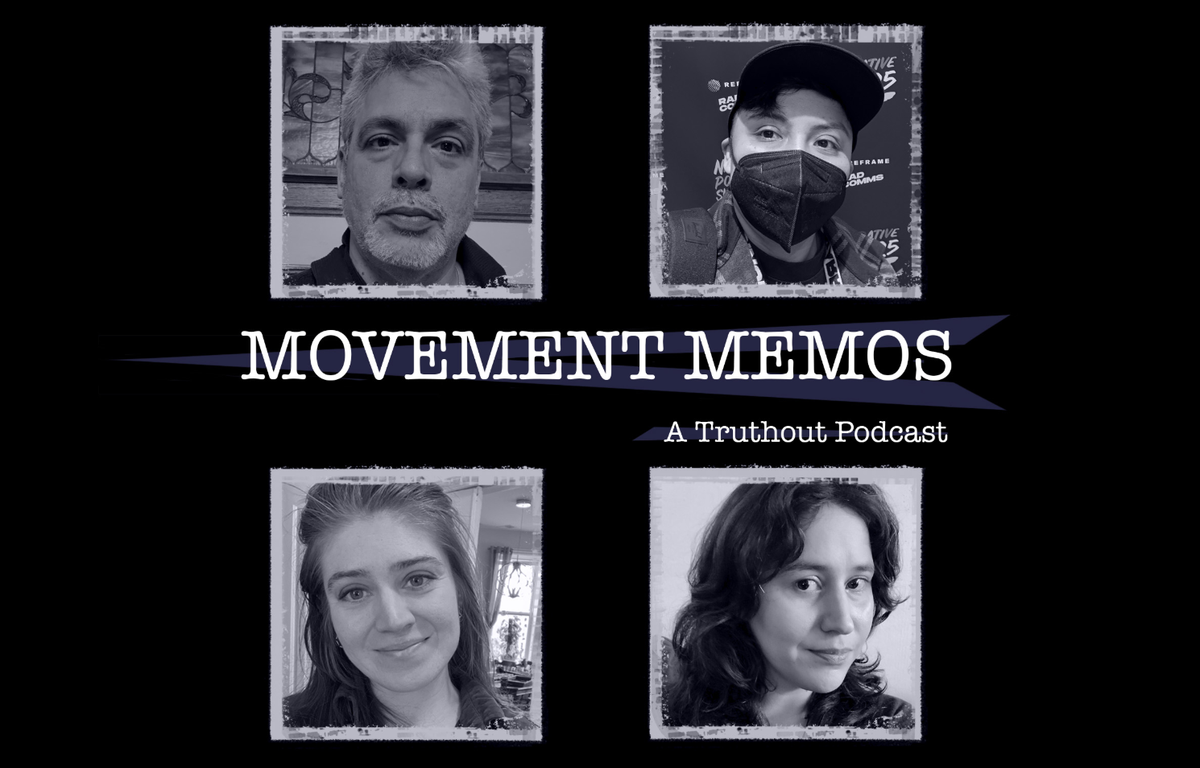
“The best way to respond to fear and intimidation tactics is to show we’re not afraid. We’re going to keep showing up. We’re going to keep speaking out,” says musician Jocelyn Walsh, who is facing federal charges for protesting ICE activity in the Chicagoland area. In this episode of Movement Memos, I talk with Walsh and Chicago organizers Gabe Gonzalez and Rey Wences about what activists have learned from months of raids, repression, and escalating authoritarian violence.
Music by Son Monarcas & Songs for Liberation.
TRANSCRIPT:
Note: This transcript was originally published in Truthout. It is reprinted here with permission.
Kelly Hayes: Welcome to “Movement Memos”, a Truthout podcast about organizing, solidarity, and the work of making change. I’m your host, writer and organizer Kelly Hayes. Today we’ll be talking with three Chicago organizers about what we’ve learned from two months of intense immigration raids, community defense, protest, and state repression. We’ll be hearing from Rey Wences, the Senior Director of Deportation Defense at the Illinois Coalition for Immigrant and Refugee Rights; Gabe Gonzalez, a neighborhood rapid response organizer, and Jocelyn Walsh, a frontline musician who’s now facing federal charges. Jocelyn performs with a group called Songs for Liberation, whose music you will hear a bit of today. Our guests today are among the many Chicagoans who have shown up with courage and care over the last few months, and I am proud to have struggled alongside them.
As raids expand to other cities and the Department of Homeland Security signals that Chicago may be hit even harder in the spring, these lessons feel urgent — both for our own preparation and for anyone, anywhere, who may find themselves facing what we just lived through.
If you appreciate this podcast, and you would like to support “Movement Memos,” you can subscribe to Truthout’s newsletter or make a donation at truthout.org. You can also support the show by subscribing to “Movement Memos” on Apple or Spotify, or wherever you get your podcasts, or by leaving a positive review on those platforms. Sharing episodes on social media is also a huge help.
Truthout is an independent news organization, publishing stories that the craven corporate press won’t touch. We are a union shop with the best family and sick leave policies in the industry, and we could not do this work without the support of readers and listeners like you. So thank you for believing in us and for all that you do. And with that, I hope you enjoy the show.
[musical interlude]
KH: Welcome, friends. Could each of you take a moment to introduce yourselves and tell the audience a bit about the work that you do?
Rey Wences: Hi, everyone, and thank you for the invitation to join this conversation today. My name is Rey Wences. My pronouns are they/them, and I am currently working at the Illinois Coalition for Immigrant and Refugee Rights, or ICIRR for short. We are a coalition of member organizations and have been working on advocacy organizing for almost 40 years. I joined the team this past March in 2025, but I have known of the organization for over a decade.
Gabe Gonzalez: I’m Gabe Gonzalez, he/him. I live in Rogers Park, and I’m a founder of the organization Protect RP, which stands for Rogers Park, which is a rapid response and community defense organization on the North Side of the city of Chicago.
Joselyn Walsh: Hi, I’m Joselyn Walsh, she/her pronouns. And right now I’m very involved in organizing with Songs for Liberation and Nourish Community Co-op. Songs for Liberation is a collective for musicians and music lovers who create and share music in movement for liberation of all people. And we do our best to bring the power of song to protests and other public contexts whenever and wherever we can. And my work with Nourish Community Co-op, a worker and community-owned cooperative currently in formation, which will be less relevant to our discussion today, but I bring it up just because so much of my work with communities being targeted in Chicago right now has been not through singing, but through food mutual aid, which is often a less visible work that people do, but is a really essential part of building the networks of care we need to stay connected and grounded through these moments.
KH: I’m so grateful to the three of you for making time for this conversation today. I think we’re all trying to catch our breath here in Chicago, after a two-month campaign of terror waged by the federal government against our communities. Each of you played a role in the struggle against that onslaught, within the broader ecosystem of resistance in this city. To start us off, can you talk a bit about how you entered this moment — what work you were doing, and how this crackdown first hit your world? Rey, could you kick us off?
RW: Yes, I can get us started. I entered the work back in 2024, I would say right after leaving the Mayor’s Office of Immigrant Migrant and Refugee Rights. I was there for some time, and after leaving in October, transitioning out of that role in October of 2024, I decided to take some time to clear my head, and then also was paying attention to what was happening politically, and was very concerned about the potential of a second Trump administration. And so, I took November, December to also talk to, reconnect with many local and national organizers, and getting to hear how they were preparing and thinking about 2025, and so then by the beginning of the year, I ended up joining the Illinois Coalition for Immigrant and Refugee Rights, or ICIRRR for short.
This is a coalition, right? So, I had known the organization before and decided to use my skills, and really also find a way within the role that I took on at this organization to continue working on building the infrastructure around deportation defense. I had already worked with organizers at OCAD, Organized Communities Against Deportations, on this during the first Trump administration. I think, after having seen the statements from Tom Homan in December of 2024, it was clear to me that this was going to be a different administration we were going to be facing. I think I landed in a place that has given me the opportunity to also have access to see how the crackdown has been evolving since day one. And so, while it’s been a very heavy and busy year, it’s also been a year full of lessons and collaboration, and I think a lot of reflection too, especially at the end of this year.
KH: Thank you for that.
Gabe?
GG: So Protect RP was formed, it’s an all-volunteer organization, and we were formed in 2017 in the first Trump administration in reaction to their rhetoric around [it] wanting to see a huge uptick in deportations. And we were active, but not at the same scale during the first Trump administration. And then when the pandemic hit, many of the folks who were active in Protect RP became part of mutual aid work that was being done here in Rogers Park, much of it through Alderwoman [Maria] Hadden’s office.
Under the Biden administration, while there was a lot of problems at the border and a lot of over-enforcement, and there were obviously problems that were created by the sort of dumping of newcomers here in the city, it wasn’t as deep, I don’t think. And so the organization, while it still existed, was not as active. And then with the outcome of the election, we reconvened and recommitted ourselves to engaging in community defense work in… Actually, I think it was in December of 2024, because we knew that this time they were going to be a lot more active and a lot more serious about attacking people.
And yeah, and then that’s pretty much what happened. So while we restarted the organization and began reorganizing, it was really not until the summer that it took off when we saw a number of invasions here and a number of kidnappings here in Rogers Park, and we saw a huge response from the people that live here because they don’t stand for that stuff in Rogers Park. I mean, obviously that’s true everywhere, but there’s just been a really huge outpouring of activism and support on behalf of people that live here to fight back against ICE. And that’s been pretty incredible to see.
KH: It really has been incredible to see, and to participate in. For our listeners who don’t know the Chicago area, Rogers Park is an incredibly diverse neighborhood on the North Side of Chicago. It has a large immigrant population, a lot of students, working class families, artists, and highly politicized folks. And I remember, the first day when Rogers Park was heavily targeted by ICE, there were literally hundreds of us in the streets. We were all getting texts, early in the morning, and just running out the door to respond. I was wearing the clothes I slept in, when I rushed up Clark Street, toward Clark and Lunt, where two people had been abducted. When I got there, there were so many people showing up — some people I’d known for years, and a lot of people I had never met. And we were all sort of looking around, trying to figure out what we were supposed to do next. And there were Protect RP organizers there handing out orange whistles and giving us directions. I remember how those whistles helped bind us together as an organized force. Anyone moving down the Clark Street corridor, which was an area ICE would target heavily that day, and in the future, could see that this street was protected. I was really grateful for Protect RP’s leadership that day, and also grateful to organizers on the Southwest Side, where immigrant communities had been under siege for weeks before the North Side was targeted, who were sharing their knowledge, and helping other communities prepare, while also defending their own streets.
Jocelyn, I’m really interested in your perspective as someone who’s played an artistic role in this struggle. How did you enter this moment?
JW: Well, Songs for Liberation actually first formed in October 2023 as Songs for Ceasefire. And we were very vocal and singing a lot of songs, coming to a lot of protests, singing about freeing Palestine and ending the Israeli occupation and the genocide going on there. And as time wore on and the genocide has continued, and we have seen that the meaning of “ceasefire” has changed a lot, and we also were starting to get pulled into different ongoing movements for liberation. And so we changed the name to Songs for Liberation and we’re showing up at different places. And I feel like the way that I really entered this moment in the context of Songs for Liberation was when we first went to Broadview to sing.
And the level of militarization there was pretty shocking from the outset with the ICE agents all over the roof of the building, all around the building in full tactical gear. And having the experience of singing with this protest group for a few years, we weren’t strangers to militarization of law enforcement at protests, but this immediately felt really amped up.
KH: Well, as someone who has had the privilege of protesting alongside Songs for Liberation during Palestine liberation protests, and at the Broadview ICE facility, I want to emphasize how important that artistic contribution has been to our struggles in Chicago — and I think this is always true of art, but I think it’s important to emphasize here. During some of the uglier moments outside Broadview, when we were being gassed, and hit with pepper balls and foam baton rounds, you all kept playing and singing, and encouraging people to sing with you, and that music felt like a spiritual lifeline. There’s actually an iconic photo that I took of Jocelyn, with her gas mask on, playing her guitar on the frontline, that I really think captures the spirit of that day, and those protests. Because the beauty and energy you all brought to those moments really helped us stay grounded in our love for each other and our neighbors while we were trying to take moral action. And I hold a lot of gratitude for that. Because, as you’ve said, those were some jarring moments of escalation.
Thinking about that escalation more broadly, I’m curious where each of you felt that shift into extremity. Because, in my experience, there wasn’t a singular tipping point. There was a lot happening, on many fronts, across Chicagoland. So, when did the gravity of the situation really become evident, in your own work, and how did your groups and networks adjust?
RW: So in my role as the director of ICIRR’s newest department, which is the Deportation Defense Department — just for some background, this new department manages the Family Support Network hotline, which, as ICIRR, we have been encouraging people to call to report ICE activity. And then that also plays a role in activating the teams that are part of the Rapid Response Network. And this infrastructure is something that, as Gabe was talking about, some of the teams got started in 2017 during the first Trump administration. And here in ICIRR’s support in coordination and collaboration with OCAD, Organized Communities Against Deportation, that has been the focus in terms of building in that infrastructure. What are the tools that we have, the infrastructure, and then how can we connect people to legal representation?
And that said, I think for me, the escalation and the turning point started in waves. Definitely when we talk, for me, the escalation, there was an escalation that was very insidious and hidden and an escalation that was very public and bold. And some of the things that we started seeing early on in the spring is how people that were being targeted by ICE… they were being moved rapidly from one detention center to another, therefore preventing them from getting that legal representation, which under another administration could have happened. It was never really perfect or the perfect system, but attorneys and advocates, we had some access.
And so to me, one of the first escalation points in terms of just how heinous this administration is around forcibly removing people started early in the spring. Then there was another point of escalation where we started seeing more visibly that aggressiveness, that physical violence, and that was on June 4th, that was actually coincided with another tactic that I think goes back to another escalation from the Department of Homeland Security, which was sending out these text messages to people that had been paroled into the country and telling them to show up at their check-in and essentially people were going and being detained.
And there was a protest that broke outside of one of the offices, and we saw how dozens of agents came in and the way that they pushed out the crowd and were also being violent. And I think, again, there was another instance right on Father’s Day weekend where they sent text messages basically telling people to show up on June 15th at the Broadview Processing Center. And so there were many escalations or things that happened all leading up to Operation Midway Blitz and Operation At Large, which I think to me just opened up the gates to even more violence for many agents to be emboldened. And it was more, of course, the number of agents that were here, and I think a real escalated attempt to create propaganda for the operation.
GG: Yeah, I think that all tracks with our experience. So what we saw locally in the beginning was individual sets of ICE agents, two, maybe three, at most four people coming to specific addresses, pretending to have warrants. They usually did not have judicial warrants. You could tell because they would knock on the door instead of knocking the door down. And we saw that if we had word of ICE in the neighborhood, we had a fairly… it seemed then like a short time, but now it seems like a very lengthy time, somewhere around eight minutes to respond to what they were doing. And there were a few instances early on where we were able to get there and it was clear that these agents were not particularly well-trained because we would show up and they would leave because they knew they were on tenuous ground and because they didn’t know how to handle crowds and they didn’t like being filmed and all of that stuff.
And then I think we saw, yes, in the time period that Rey was describing, a change, a shift to larger groups of agents, gangs of agents roaming the streets much more aggressive[ly], much more in people’s face. We saw what began to happen on the Southwest Side where they began using pepper balls and tear gas on people. I don’t like this term “non-lethal.” They talk about that… like somehow using that term makes people sound like an expert, but I think it really takes away from the impact of what is happening in streets where people live. We saw them tear gas people on the Southwest Side on a day when it was a warm day, people’s windows were open, people were stooping. And so to be subjected to that at the hands of officers of the state was awful. And we saw how they were shifting and how they were beginning to change their operation.
And then that was really a moment, I think, when there were two things that became clear to us. One was that terror and punishment, collective punishment were part of the program, that all of their rhetoric around community safety and the “worst of the worst,” we knew it was a lie to begin with, but it was made so clear that what they were attempting to do was terrorize communities in order to control them. And it had nothing to do with “immigration enforcement.” That was the excuse for authoritarianism. And so that became very clear to us. And it also became very clear to us that then our response had to be about defense against authoritarianism in this moment being about what they’re doing to our immigrant brothers and sisters, but not… We think they’ll change over time and morph because authoritarians need an enemy and they will look for a new enemy.
I mean, you can see what they’re doing right now in Minneapolis, where they’re targeting refugee communities. I mean, refugees, people who had to run here and who have some form of status generally speaking, and they’re targeting them all the same because to them, anybody who doesn’t look white and uptight is like the enemy.
So we tracked all of that and began to respond to all of that as well. And one of the things that we started doing in the summer and continue doing is teaching our folks not only how to document and how to bear witness to what’s happening, but also nonviolent direct action. How do we use our bodies? How do we move collectively? How do we communicate if we’re in a large group with each other? How do we respond to the tactics that they’re using as a group? And that has been really, I think, an important learning for us about how to keep ourselves safe, but also how to remain effective in a moment of a great authoritarian escalation.
KH: What you were saying about the shift in tactics and intensity that we saw makes me think about the difference between ICE agents and Customs and Border Patrol agents. Because, as Gabe mentioned, ICE agents would sometimes show up really unprepared, and seemingly out of their depth. I don’t know if that’s because ICE agents are being cranked out so rapidly by this administration, or what the deal is. But the Border Patrol agents seemed more hardened and the street violence, the snatch and grab kidnappings, that all seemed like second nature to them. And part of the reason for that, I think, is that Border Patrol routinely gets away with extreme violence and cruelty that the broader public never sees, targeting people who are trying to enter this country or have just arrived. This is what they do, and how they treat people. We’re just not used to seeing it out in the open in our neighborhoods. We’re not used to seeing our neighbors tear gassed, including children and families, who are just trying to get home, and I think that’s the kind of thing you can’t unsee.
Gabe, I also really appreciate what you’re saying about defending our immigrant neighbors while also recognizing the inevitable expansion of authoritarian violence. We’ve seen glimpses of that, with US citizens being targeted by ICE agents, and also with what’s happened in Washington, D.C., where, due to that city’s unique legal status, the administration was able to take over the police department. With that legal range of motion, we saw unhoused people being targeted en masse, regardless of their immigration status, and we saw Black and brown people targeted with abandon. And so I think it’s really important to think of community defense and building community safety in broad terms, as part of an anti-authoritarian project — and one that will I hope will endure after we bring down this administration, because the violence of policing and the threat of authoritarianism won’t fade with the Trump administration. And I think one of the most powerful things we’ve found in this moment is each other, and our ability to create as much safety and justice as we can, on our own terms, in our communities. We’re not out here calling the police — even though some people occasionally got confused about why we couldn’t do that, and why that wouldn’t help. But we’ve held, as a community norm amid all of this, that we don’t call them, because they won’t help us, and will actually pose a danger to people. So we’ve turned to each other for solutions. And I hope we keep turning to each other, and I hope those bonds endure.
Jocelyn, what was your experience of a turning point, or recognizing the severity of the escalation here?
JW: For me, it was a pretty personal inflection point of escalation when I experienced the violence of ICE directly when they shot my guitar with one of those “less than lethal munitions,” which really does not feel less than lethal when it goes through the front of your guitar, through the back of your guitar, and can still leave a really nasty bruise on your leg even after the blow is softened. I mean, I hate to think of what would’ve happened if any of those had hit anyone in the head. And I know people had some pretty serious injuries. And again, like Gabe is saying, it’s like they’re trying to create this atmosphere of terror by pretty randomly using force in ways that seem designed to put everyone on edge.
They’re acting with impunity, letting off these gasses and munitions. And unfortunately, I also feel like for some state actors, moments like that, they’ve been used to say like, “Hey, look, we need the Illinois State Police to protect these protestors from ICE.” But then that felt like another point of escalation where I felt even less safe having it even more completely militarized there at Broadview. And we have dozens of Illinois State Police standing close range, slapping their batons against their hands threateningly. And people might ask, “Well, don’t you feel more safe with these trained Illinois State Police who know how to deal with crowds versus ICE agents shooting at you randomly?” And you can’t really choose between being gassed and being beaten with batons at close range. They’re both violence and if anything, I felt safer before the Illinois State Police were there because at least I knew there were that many less ICE agents going out and kidnapping people in the city because they were there listening to the concert we were providing for them.
KH: As someone who witnessed the violence of the state police at Broadview, and experienced the violence of federal agents while state police were also on the ground policing us, I wholeheartedly agree with what you’re saying, Jocelyn. I understand that this was J.B. Pritzker’s legal strategy — that by taking over crowd control at Broadview, he was trying to undercut the government’s argument that the protests justified Trump’s efforts to deploy the National Guard. But I believe the governor should have made his case against deploying the Guard by defending the protesters.
And as we saw with Chicago Headline Club v. Noem — the case brought by protesters and journalists against ICE for excessive force — it was entirely possible to make that case in open court. The government’s claims that federal agents were under attack simply weren’t true. I’m grateful to the people who brought that suit, and to the lawyers who documented — on the public record and for the historical record — the many lies Bovino and his agents told about being the victims of violence. Time and again, it was shown that their stories were fabrications, and that they were the perpetrators, not the targets, of violence.
Our governor could have pointed to that reality, instead of sending in the state police to ensure that ICE’s operations at Broadview could proceed without interruption. In fact, an internal DHS email referenced in the court case about the Guard shows Peter Sukmanowski, assistant director of ICE’s Chicago field office, telling Russell Hott and others:
DHS did not have to intervene with any protesters Saturday or Sunday [October 4 and 5]. The support from this unified command, and the communication with their on-site incident commander, has been great thus far this weekend. It’s clear that ISP is the difference maker in this scenario, and we are grateful for their leadership. Hopefully, we can keep it up for the long haul.
I think our state’s leaders should feel shamed by those words. And I think we should make it clear to our elected officials that we don’t want them to be the “difference maker” for ICE — whether in enabling ICE’s operations in our communities or in shielding ICE from the protests their violence inspires. I wanted to say that here, since we’re talking about our takeaways from these events. I think the lawyers, journalists and activists who challenged ICE’s actions in court, rather than accommodating them, collaborating with them, or capitulating to them taught us something about defending resistors and telling the truth — because that’s how you fight authoritarianism.
So with all of that in mind, as these attacks and acts of resistance were unfolding, what stood out to you? What surprised you about the federal escalations we witnessed, or about how your communities responded?
RW: What surprised me about the federal escalation definitely was the increased violence, the way in which we saw the evolution really of that violence from January through now. It surprised me how evil these agents have been and can be. And it is very worrisome that there is no way of holding agents accountable, especially those federal agents. There’s actually specific people that we saw, agents that we saw in the communities that were enacting a lot of violence and on purpose. And it’s surprising still to this day that there is no accountability at the local level nor at the federal level. That said though, I don’t think I’m so surprised because Chicago is such an organized city. I am very grateful and hopeful because of all the community response that really looked like what Gabe was describing, the recording, the making sure that people know their rights, people just started self-organizing.
I think networks were created during the pandemic and even before that. I think what surprised me maybe was how fast we came together. I think speaking from the ICIRR perspective, again, we knew that we had access to managing the Family Support Network Hotline. We have access to pushing legislation at the state level and also advocating in different ways. So that response to me, staying in that lane, it also, I think, allowed for us to collaborate with other groups that were coming out and self-organizing. I think ultimately the strategies that felt possible were around connecting with neighbors.
It was about also creating and providing a framework. Early on when as ICIRR, we started doing or resumed doing rapid response trainings, one of the challenges that we were having was that people were using Rapid Response and Migra Watch interchangeably. And so one of the strategies that we tried to use for also creating space for people to support regardless of their immigration status was this framework around Rapid Response being how we prepare our communities before, during, and after a raid. So before a raid, doing all the talking to your neighbors, canvassing, sharing Know Your Rights information, coordinating workshops at the very hyper-local level. During the raid, that’s when the Migra Watch gets activated. That’s when people go out and document. Calls can come into the hotline or people can just find out about it through word of mouth or social media. But the intent is to go out and verify and then connect people to those resources that are available if they wish to.
And then the third part is being the advocacy, which that piece, the post-raid efforts or the strategies felt more real and possible to me personally after we started seeing the impact of all of the documentation that people were doing either in an organized manner or on their own. We knew that we had, as OCAD and ICIRR had had this win with the Nava settlement back in 2018. And so we were also in deep conversations with legal partners like the National Immigrant Justice Center and others that could help us push these strategies that felt more possible when we can actually take them to court. So we took them to court for unlawfully arresting hundreds of people. There were other ways that also the community came together, which was also one of the responses that surprised me is just, again, the way that the legal community also came together, all the attorneys to provide support.
And I think it also speaks to the intention to build a movement lawyering community here in Chicago, not just for this issue, but it’s been for many other issues. And we’re seeing how it all intersected, especially when people started getting arrested at Broadview and we started seeing citizens that were responding to raids also getting targeted and arrested by federal agents.
GG: Yeah, I agree with that point that Rey is making around everybody playing their role. That was really, well, I don’t know if we were surprised, mostly because we were just focused on what we were doing, but what became a really important aspect of the work was the response to these invasions was collective, and the collective was so large. I was talking with somebody about this just yesterday, because I’m old, way back in 2006, and we thought we had a chance to pass comprehensive immigration reform. We really felt like we were part of a movement. Well, it turned out we were only a part of a movement amongst ourselves, and there was a much broader American community that was not paying attention or didn’t like the issue. And it feels so very different now. So many people are engaged and throwing down. And to Rey’s point, playing the role that they can, and that includes… We have a channel here on the North Side. It’s, I don’t know, I’m going to say 20 elected officials on it, and nobody’s trying to bigfoot, nobody’s trying to get the spotlight.
They’re all saying, “What can we do?” And they’re making plans collectively and they’re backing each other up. And we have another one with school principals, and it’s the same thing. Now, it wasn’t always easy. And sometimes it required some of these local institutions to realize the nature of the threat. But once that happened, we’ve seen doors open up and people think very creatively and willing to take risks that have just been incredible to see.
And that’s been really… And again, I don’t know about a surprise, but it’s been great to see it and to feel like we were part of that.
I would say what surprises me about them is, and maybe it shouldn’t, but it’s just how stupid they are. They really felt that they were so untouchable that they could go into Anglo communities like Lincoln Park or Old Irving Park and tear gas people, or they could steal people out of their place where they worked with children and just get away with it, or that they could beat people in the street, or that they could rip children away from their parents, and that people wouldn’t see it and people wouldn’t be revolted by it. They really thought they could just do it. And that’s been….
I remember when we were at Oakton and Dodge and they were beating that guy and we’re screaming at him like, “This isn’t right. You got to know this isn’t right.” And I remember one of them all masked up, but you could see his eyes and he looked me right in the face and you could see the glee in his eyes. And I’m astounded that they think they’re going to get away with this. That is so surprising to me.
JW: Yeah. Again, as someone who’s been singing at protests for the last couple years, I’ve just been shocked at the level of unprovoked force being used by agents against protestors in ways that even as a somewhat long-time protestor, I just have not seen before. And that’s been shocking to me. And I’ve been so grateful for the response that people have had of solidarity with each other, of caring for each other, protecting each other, just trying to figure out how to respond in the face of this violence. But that’s been really shocking.
KH: I would agree with that. As someone who’s spent a lot of time organizing against the violence of policing, I always expect the worst from law enforcement. But local police departments tend to have certain norms or patterns that activists can study to get a rough sense of our risk level on the ground — or to guess when an escalation might be coming. It’s never a perfect formula, but there are signals we can read that can help us understand how much danger we’re in.
That simply does not exist when you’re dealing with Border Patrol or ICE in this context. And I wasn’t prepared for it. The first time I showed up at Broadview, within three minutes I took that footage — which has now been everywhere — of Reverend David Black being shot in the head with pepper balls by agents on the roof, while he stood on the sidewalk pleading with them to have a conscience. And within minutes, the air was barely breathable because those agents were firing pepper balls indiscriminately into the crowd. The level of recreational, unpredictable violence was truly shocking, even for me.
It was also really unpredictable in the streets, for people out on patrol, who were filming ICE, or accused of following ICE in their cars, or obstructing the actions of federal agents. A woman in Brighton Park was shot. Of course, the government made a bunch of wild accusations against her, but now, all of those charges against her have been dropped — because upon investigation, most of their stories fall apart.
A lot of people observed ICE or alerted people to their presence without incident, but sometimes, we would see ICE watchers threatened, assaulted, sometimes pulled from their bikes or cars and arrested. But, as Gabe said, a lot of folks continued to take risks, because they simply couldn’t allow these things to happen without pushing back. ICE killed a man in Franklin Park. Silverio Villegas-Gonzalez had children who needed him. They snatched a teacher from a daycare center in front of small children, and marched small children naked into the street, in the middle of the night, when they raided an entire apartment building in South Shore. These actions pushed a lot of people to think about who we are, in relation to this violence, and about what we owe to each other.
I was also so moved by the response — by how broad it was, by so many people from different backgrounds, with different beliefs, who united in opposition to these attacks. People who ran into the streets, sometimes in their pajamas, sometimes before brushing their teeth, because whistles were being blown, or alerts were going out, and they were ready to take moral action. I thought I knew how much I loved this city, and over the last few months, Chicagoans made me love it more. I really didn’t think that was possible, but here we are.
So I want to ask: In this moment, what did you all learn about what solidarity demands of us?
GG: I can start. It’s all so cliche, but it’s true: patience, generosity. I don’t think there’s an individual word for this, but one of the things that we say among the leadership of Protect RP as a constant mantra for all of us is take the work very seriously, don’t take yourself very seriously. Trying to be there for the community and for the work that we’re doing, but it’s not about aggrandizement. And also being willing to learn. We learned a lot. So there’s organizations like Rad RP and others that exist in Rogers Park that we really learned a lot from and had a big influence on how we operate and creating a more distributed model and wanting to see a really expansive kind of leadership. Honestly, I was a professional community organizer for a very long time, and I have learned so much in the past six months.
Yeah, I’ll stop there. But it’s been an awful time, but also we’ve seen just so much grace and beauty in the people of this city.
RW: I agree. Along those lines, I think early on and going back to the conversation around just roles, we learned that solidarity also requires leaving the ego at the door and giving clarity as well as asking for clarity. And that became specifically really important, especially around coalition building. And I think there isn’t one manual to get this done from A to Z perfectly, but I think we are all learning and have leaned in and also practice curiosity because I think in every space that I’ve been in since I came into this role, the task is clear. We are showing up for our communities, for each other, and for ourselves.
JW: Completely agree with all of that too. And I think something we say a lot in food mutual aid work is, “Solidarity, not charity.” And I think something that that really means in this moment is recognizing that when we are out there in the street, we really all are in this together. And if say you were approaching that in a charity mindset of, I’m out here for someone else, not for myself or something, a lot of the time people will ignore their own needs or think of themselves as more of a robot than a human and end up lashing out or letting the ego get in the way or not attending to your own humanity in it.
And I think one of the things that solidarity demands of us of the many things is to recognize that we need to take care of ourselves in this too, and also ask for the support that we need when things happen and not be afraid of conflict in our communities or being able to say when asking for support, “Hey, this is actually what I really need right now from my friends or from my comrades.” And I think it does require our willingness to collaborate with boundaries.
We’re often singing with all kinds of different religious groups that we may not necessarily agree with every creed of when we’re singing in Songs for Liberation. I think last Friday we were singing with the American Baptists and you can end up getting these really beautiful moments where you’re able to find common ground on the things that you can while still being yourselves and being willing to learn, willing to experiment. It’s been an incredibly generative time for all members of Songs for Liberation to be writing so many new songs and trying things out and being willing to be vulnerable or say, like, “Hey, that sounded great.” Or, “No, man, maybe I wouldn’t play that one again.” And talking through the lyrics also helps us talk through and clarify our political beliefs and strategies with each other too.
KH: All of that resonates so much, and I really appreciate what Rey was saying about leaving ego at the door. Community defense work is such an important opportunity to rehearse our values, and it can be a real exercise in humility. I think some leftists associate action with the sense of confrontation we might experience in frontline protest situations, but when we practice community defense, we’re all just nodes in a larger ecosystem of care and defense. Like when I’ve done school patrol work, monitoring school zones for ICE activity at the beginning and end of the school day — a good day is an incredibly low key experience. You are just holding down your corner, observing, communicating, and hopefully, you just watch a bunch of parents pick up their kids. I think a lot of leftists would benefit from engaging with that kind of work, which I think helps us recognize that we’re not gonna win through individual acts of heroism, but through our willingness to play our part in something much larger than ourselves.
But, of course, some volunteers did have intense days on school patrol, when ICE attacked people in proximity to schools in our city. And we also had a lot of tough days in the streets, when despite our best efforts, many of our neighbors were kidnapped. And we know that there has been a lot of violence and repression, targeting resistors in recent months. So, I want to ask, what were some of the material, emotional, or political consequences of the choices you and your co-strugglers made? Jocelyn, would you like to start us on this one?
JW: Yeah, I can start on this one. The political and personal consequences have been very real. I was at work one Monday last month when I started getting repeated calls from someone who said they were a special agent at the FBI who needed to speak with me. And I called the National Lawyers Guild and initially spoke with Molly Armour who said she would figure out what was going on. And in the meantime, got another FBI call saying that if I didn’t respond, they’d be at my door at 8:00 am the next morning to detain me with a warrant for my arrest. And I was really shocked and confused. And the NLG soon called me back to tell me I had been federally indicted and I would need to self-surrender at some point to avoid an arrest. The first few days with this news, I was incredibly unsettled because the indictment hadn’t been unsealed and I had no idea what the allegations were.
And I really racked my brain trying to imagine how simply protesting while being a victim of ICE’s violence myself could have resulted in me being charged. But once I was appointed a lawyer, Brad Thomson from the People’s Law Office, we discovered I was being charged with felony conspiracy and misdemeanor assault along with five other individuals who I had never met or even spoken to previously. And the news broke around the same time we learned that the other defendants either were holding some sort of political office or working in politics. So it became very clear that this was a targeted political attack. Although I was still confused as to how or why I was being pursued, but as more details emerged and I had more conversations with both my lawyers and other organizers, it increasingly seemed like we were being singled out because federal officers had assaulted us in very public ways.
With my guitar being shot and with Kat Abughazaleh being thrown to the ground, we could only conclude that this was some kind of intimidation tactic and a desperate misguided attempt to control the narrative through that. So this is sadly consistent with the way my other fellow organizers have been brutalized and detained at Broadview simply for speaking out about the conditions our neighbors are facing and how their constitutional rights have been trampled. So we’ve been told to stand in these designated free speech zones. And even when we comply, police and federal agents have kettled us, forcibly backed us away from the facility, thrown us to the ground, and in some cases detained us overnight and brought more completely baseless charges. And this all seems like an attempt to criminalize protesting and free speech while the federal government and state government break the law on a daily basis, detaining people without due process, violating the TRUST Act by having these state agents collaborate with ICE, terrorizing our communities and denying those who are detained those basic guaranteed rights of pastoral care, medical care, and clean spaces to eat and sleep.
And as scary as this all is, I do want to also point out that, if these are the things they’re willing to do in broad daylight, what are they doing to people that they’re detaining in this atmosphere? And when I’m being able to get this due process through the indictment and at the same time, I’m hearing stories of people who are held in conditions so bad and being lied to about what they’re signing and being forced to sign these self-deportation papers and people who are getting no due process with all of this violence being brought against us.
So yeah, the political and personal consequences have been real, but I also don’t want anyone listening to this to think, okay, now I’m too afraid to protest because I think as someone who has been targeted in that way for protesting myself, I can say there’s so much support. There’s so much support from the NLG, there’s so much support from other organizers. And I know that I’m going to make it through this and I’ve still been out protesting since then and it feels like the best way to respond to fear and intimidation tactics is to just show we’re not afraid. We’re going to keep showing up. We’re going to keep speaking out.
KH: Joselyn, I really appreciate the depth and honesty of what you just shared. What happened to you — being shot with a foam baton round, then targeted with a conspiracy charge alongside people you’d never even met — really captures the logic of repression we’ve been talking about throughout this episode. It’s about flipping the narrative, punishing the witnesses, and trying to terrify anyone who might step forward next time.
The brave and generous spirit that you are bringing to this situation is an example for us all, and I am so grateful that you are being supported right now. I want to remind folks that, too often, people who are targeted for repression in moments of mass activation wind up being forgotten by the broader public, and even by other highly politicized people, as the news cycle moves on, and that’s a norm we need to break. We have to support our people, and remember that it’s not over until everyone — including all of our target neighbors and all of our resistors — are free.
Gabe, what has your experience of consequences been like during this time?
GG: It doesn’t really compare, but I mean, similarly, it’s scary. I don’t know if my in-laws are ever going to hear this podcast, but I quit my job to do this because I wasn’t really working. I was just doing this anyway and it didn’t seem fair to them. So there’s been a significant financial cost to us. But yes, my wife and I were both deeply engaged in Protect RP. We’ve had multiple conversations about personal safety and making plans in case they start targeting a broader set of us in the way that they’re targeting Jocelyn.
And they’re awful conversations to have. But yeah, absolutely the same thing. We talk a lot about courage and risk assessment at Protect RP and we can’t talk about those things and encourage people to do those things without doing it ourselves. And so I would also say, and the emotional toll, watching them be so violent, even if they weren’t violent towards me personally, I grew up in a violent atmosphere, and experiencing that or re-experiencing that can be very traumatic. But I cannot imagine doing anything else in this moment. I don’t think I could live with myself if I didn’t do what I could to be in solidarity with others in this moment. So yeah, it sucks, but I don’t know. What are you supposed to do?
KH: I feel what you’re saying really deeply, Gabe. I think my worst moments over these past couple months have involved documenting things that I and others couldn’t prevent. It’s really hard to see, and it can be traumatizing, but like you, I can’t imagine not trying. In fact, I know it would be worse to live through this without trying. Because that’s where all of my hope and strength have come from — from moving, and acting and building alongside people like you all, and creating as much justice and safety as we can in opposition to this violence. That has kept me going.
And since you all mentioned work, I also want to give a shout out to my colleagues at Truthout, who have really had my back over the last couple of months. There were days when our area was getting hit really hard when I just told my colleagues, “I’m sorry, I might blow this deadline, but ICE is abducting my neighbors, and I have to get out there,” and people weren’t just understanding — they stepped up harder so I could be there for my community. And I have so much love and appreciation for my colleagues, because I really needed that support, and they came through.
Rey, what has your experience been like, around consequences?
RW: Thank you for sharing that. Material, emotional, and political consequences. For me, I think about just the emotional impact of choosing to be part of this work, especially, I mean, I’m thinking about the operators. As I mentioned, we have this hotline and we have, as ICIRR, we manage operators that are answering the hotline and essentially talking to people that are calling in crisis. So that has definitely had an impact on people’s emotional wellbeing. I think over time, I have also seen the physical impact of just doing this work every day almost nonstop. And I definitely have heard from members of the Rapid Response Network also feeling on alert all the time. And even now that the activity has lessened a little bit, still that feeling like someone is watching you or being on high alert. And then I think as an organization, the political consequences that we all have to be ready for long-term, short-term and long-term, which can include, and we’ve been in the mouth of members of the Republican Oversight Committee.
We know that there have been organizations that we work with at the national level that have been included in investigations. Whenever we would do, even at the beginning of the year when we were looking at the material, the language, how are we going to present this to the public? And will doing this Know Your Rights or talking about this thing put us at a higher risk of being a target? Ultimately, I think we recognize we’re already a target. And so yeah, I think the political consequences is an area that we try to push when we can. And especially I think at the local level, we have a little bit more room, but ultimately that doesn’t mean that the federal government cannot come for the organization, our funding in the ways that we have seen them go after organizations that support trans communities. So yeah.
KH: Thank you for naming all of that, Rey. I’ve also heard a lot of rapid responders talk about the hypervigilance that can set in when you’re living your life on high alert, ready to respond to an incoming threat. It can be hard to shift gears and feel something else. One thing I learned during all of this is that I sometimes have to forcibly make space to feel something else, even when my body and brain feel stuck in go-mode. We need to make space for laughter, and we need activities that soothe our nervous systems, and it’s not always going to feel natural to access the things we need. Sometimes, it’s going to feel awkward at first, but we need to attend to ourselves as whole people, and we need to attend to each other. I was really grateful to people who hosted healing events, including somatic healing and PTSD prevention workshops during Midway Blitz, and people who participated in direct actions that were really acts of political communion, that grounded us in our values and our sense of connection to each other. We have a long fight ahead, so we really need to take care of ourselves and each other.
And speaking of that long fight: Sources inside DHS have stated that they’re going to come back with four times as many agents in March. We obviously don’t know if that’s true or yet another lie from this administration, but we obviously have to prepare as though it’s true. Without giving away anything that you don’t want to reveal in public, what kind of work do you think needs to be done at the grassroots level here in Chicago to prepare for another surge of federal attacks and the escalation that could entail?
GG: We’ve been talking a lot about this with the leadership of Protect RP. We’re in a process right now, as I think many groups across the city are, of analysis and evaluation. What did we do well? What do we need to do better? What do we need to change? I think a lot of the folks here have touched on a lot of this.
Well, first off, let me say, we don’t know if they’re coming back either or not because they lie all the time. Regardless though, we do believe that there will be, as I said at the beginning, some other form of oppression because they can’t afford to lose. They’ve already done too much to too many people. They can’t afford to lose. So we know that there will be some form of oppression and we know that the answer to that lies in community. So over the winter, we’re going to be focusing on continuing to build community and to engage as many people as possible and to listen as well as explain what we’re thinking.
And then come the spring, we’re going to ramp up again as much as possible. I would say this, if there is a reinvasion in the spring. We’re assuming they’ll do it around the election and not because they particularly care about the Illinois primaries, but because it’s a practice for them. And if they can successfully interfere with polling places, then they’ll do it in force in November. That’s what we’re assuming because there’s precedence for this. If you think before January 6th, those bunch of militia guys showed up in Michigan and I think a couple of other states as well at their state capitols, they were practicing and we would assume that that would be one of the things they would do first. And so we are thinking about not only reinvigorating the patrols in the way we do community defense here, but thinking about that kind of thing as well.
What does it look like to defend a polling place? What does it look like to… What’s the message that we want to bring to this around democracy and around freedom and liberty and all those sort of good old-fashioned words… that seem so meaningless now. Yeah, but that’s what we’re thinking about right now.
RW: Similarly, we want to be ready and part of that is also looking at the hotline, the quality control really of how calls are coming in, how they’re being answered, how we are connecting people to the legal referrals. So all of that, that’s part of, again, we want to make sure that we don’t run into issues. Scaling up is going to be another part of the planning. We had to scale up this year. The hotline actually just started with live operators at the beginning of this year. And when Operation Midway Blitz started, we had to triple the number of operators that we had just answering the ICE-sighting calls. And so with that in mind, having some standard now or some understanding of what that looks like, if they’re coming three, four times or whatever, we have to figure out a plan. That’s to just keep the system going.
And then the other piece is as a statewide coalition, the Rapid Response Network teams that we have been helping build out outside of the city, there are some in the suburbs and it is our intention to continue helping other groups and organizations anchor their own Rapid Response teams since we’re also looking at data and looking at different communities where we know there’s a large immigrant population, but maybe we’re not getting as many calls because of the infrastructure there doesn’t exist. So looking towards preparing for if they come back, as well as also looking into building longer term where we know there’s communities and where we could go and support.
JW: I want to mostly echo here, but I think through the winter, continuing to do that work of building relationships with each other, learning from each other, I know we’ll continue to have rehearsals and shows and things for Songs for Liberation. We’re getting ready to sing some anti-imperialist Free Palestine Christmas Carols at the Christkindlmarket this winter. And I think things where I know protesting for Palestine is not the same as doing Rapid Response, but I think all of these fronts are connected where we find ourselves connecting to each other. And that puts you in touch with the next person who then when they say, “Hey, there’s something going on. It’s actually really close to where you live. Can you go respond to this right now?” And I think there’s so many ways that we can keep forming these relationships with each other. And I think I’m going to be working on memorizing all of the lyrics to all of my friends’ new songs.
There’s some really great ones there, some of that kind of work. Working on our messaging where I’m also in a local band called Weird Rabbit. We’re writing a lot more songs about this. We’re writing about the guitar getting shot and we’re really trying to combat that propaganda that’s being put out saying that somehow joining ICE is some kind of heroic, play call of duty in real life thing that you are going to do for your country and kind of poking fun at the idea of cosplaying as this GI Joe when you’re really joining the state’s secret police force, and just really trying to flip the narrative on them as much as we can in that way to showcase the reality of what’s going on. And then I think the last thing that I would say there is just continuing to build the infrastructure that can sustain us through this.
I know a lot of folks, like Gabe, you’ve mentioned, and Kelly too, there’s days where you gotta be out there and you feel the need to respond to something and that can clash with us sustaining ourselves and getting our paychecks. And so as much as we can, building some infrastructure to support each other with things like food cooperatives that we’re working on, which is often hard to pull away from things that feel really urgent to focus on some of that deeper infrastructure building, but feels so important. And work with the Chicago Food Sovereignty Coalition, people who are forming networks of mutual aid to deliver groceries to people who can’t get out. And some of that work, again, that maybe feels more mundane, is less front and center and at the same time is so important for us to be doing as well.
KH: Thank you, Jocelyn. I really appreciate how you’re naming the whole spectrum of what sustains us — the creative work, the relationships, the messaging, and the infrastructure that lets people keep showing up when it matters. I believe community defense is a form of mutual aid, so this really is all one struggle and one fight. And I also think it’s important to name all the ways food-based mutual aid and material support have been crucial over the last couple of months — people bringing food to their neighbors who didn’t feel safe leaving the house, people buying out street vendors, to help them get off the streets, and then distributing the food. There are so many ways Chicagoans have taken care of each other, and I really think caring for each other has been at the heart of this struggle, and I think we should be proud of that.
As we close things out today, I want to ask, what have you all been hearing from folks in other cities that have recently faced these mass raid operations? And what do you want to communicate to folks who haven’t seen this violence yet, but expect to?
GG: So we’ve been talking to folks in Charlotte, Minneapolis, Memphis, and New Orleans, and it’s all some variation of, “My God, this is awful. What did y’all do? We’re doing this.” Usually sometimes asking for specific help, sometimes more general, like, “Just tell us everything you did so we can figure out our own solutions here.” But there is a lot of the same sense of solidarity. And I think the other thing that I hear a lot is that while I think we can all agree, it often felt very, very lonely when they were attacking us and it felt like nobody was there for us, and they were all watching. I know this because I talked to them and they were all watching and they were all cheering us on and they’re all ready to learn now. And that has been both humbling and gratifying to hear, and will help us, I think, if they come back, to know that we’re not alone.
RW: Yeah, I think what I can share is from the ICIRR perspective, the conversations that our legal team has been having, our organizers and others have really been focused on organizations or groups in different states trying to learn more about the hotline, how it operates, how we run it, how to scale it up, all of those questions. I think people are looking to figure out either how they repurpose what they already have and/or developing other infrastructure. And then the other piece that I think we have also been able to share more about has been on the legislative side toward the veto session here in Illinois. ICIRR was able to push a couple of bills that look to try to prevent ICE agents from being in hospitals or at least setting some parameters there since we started seeing the presence of ICE agents, federal agents at hospitals, at schools, parking lots, et cetera.
So people and organizations have also been curious in terms of some of the partnerships that made that happen, the language, and then also have just been sharing some of the pieces around the Nava consent decree and how we have been building this case against ICE for years in terms of accusing them and finding them guilty for unlawfully arresting people. So that has also been something that I think, like Gabe was saying, people are watching and are really curious what they can also get moving.
Of course, I think one reality is that not everything that works here is going to work in other places. So yeah, we have been making ourselves available to share. Ultimately, we trust the leadership of the local groups, and then we’re also looking out for what enforcement looks like in those cities because it will also help us prepare. Prior to being hit during Immigration Midway Blitz and Operation At Large, we were also in conversation with people and organizations in LA and in D.C., and that helped us put some of the planning that we did ahead of that.
JW: So, my partner is from Memphis, and we’ve been talking to family and friends there about more of those indiscriminate and unlawful kidnappings that are happening now in Memphis. And even people who lean a bit more conservative or moderate have been shocked and outraged by how wrong this is. And I think just continuing to not discount that you won’t be able to count on people or maybe they haven’t necessarily shown up in a movement space before, but just to try reaching out to people and try to make those connections. And I think you might be surprised by where you can find those moments of solidarity and just a reminder to everyone to do some research on digital security and be considerate about how you take pictures and share pictures in protest situations as we can expect them to continue to escalate violence against protestors, just not giving them the moments to find ways to twist.
KH: Well, I want to thank you all so much for joining me today. I am so grateful for the work you do, for this conversation, and to be in the struggle with you.
JW: Thanks for having us, Kelly.
RW: Thank you.
GG: Thank you for the time.
[musical interlude]
KH: I am really grateful for that conversation, and for all of our listeners and readers who are thinking about how they can best defend their communities. We’ll be including some resources in the show notes that some folks have found useful in their brainstorming around these issues.
This is our last episode of 2025, and since I’ve spent the homestretch of this year thinking and talking about our work here in Chicago, I want to close by reading an excerpt from something I wrote last month about how much I love this city right now. In a piece called, “In Chicago, We Run Toward Danger Together,” I wrote:
I see you, Chicago. I see you brave and beautiful in your cars, tailing ICE vehicles. I see you charging out of your homes before you’ve brushed your teeth to blow your whistles, shout down ICE agents, and hold onto your neighbors. I see you getting arrested and facing charges. I see you defending each other in the face of repression. I see you singing in the street, on a chilly Monday night, holding a lighted message that reads “RESIST ICE.” I see you gathering, hundreds at a time, to learn, to keep watch, and bare your teeth. I see you running toward danger, together, and loving each other more fiercely than you ever knew you could.
I thought I knew what it meant to love Chicago — to feel something settle inside of me when I saw her skyline from the expressway, or her lights from the window of an airplane, after crossing the cloud line. I thought I knew what it meant to love her brick and steel towers, her annoying street preachers, her chorus of accents and the poetry of her activists, the grit of her workers, awaiting buses and trains in icy air, her guerrilla gardens, bookshops, bucket boys, and crashing winter waves becoming shelves of ice — so many corners that feel like home, even though you’ll never live there. I know this place. I love this place, and I thought I knew how much, until you made me love it more.
When you check your alerts, when you rush to the corner knowing you probably won’t get there in time, when you film the abduction you couldn’t prevent, or hold onto someone the fascists would rip away — or get ripped away yourself, because you tried — you are reminding us what we owe to each other, and what it means to fight fascism.
And with that, I want to say, thank you, Chicago — and I also want to thank our listeners for joining us this year. And remember, our best defense against cynicism is to do good, and to remember that the good we do matters. Until next time, I’ll see you in the streets.
Show Notes
You can follow Protect RP’s work here.
You can find resources for organizing against ICE raids in your community in this edition of Kelly’s newsletter.
You can learn more about the work of the Illinois Coalition for Immigrant and Refugee Rights here.